

Table of Contents
Fire safety in timber design often begins with compliance, yet responsibility extends far beyond approvals. You design environments where people heal, serve, rest, and work with trust.
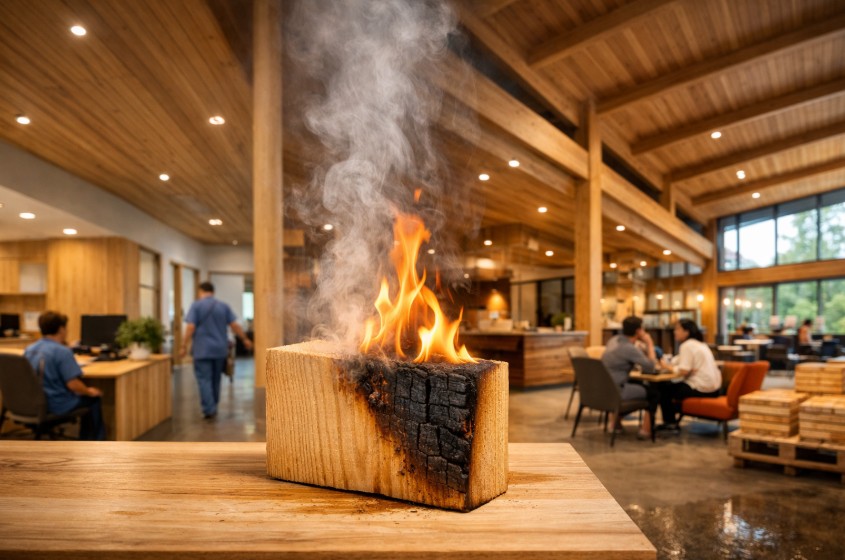
Natural fire-retardant treatments now redefine timber performance by aligning safety with human wellbeing. LAST NFR provides a sophisticated path forward by treating wood with natural mineral salts rather than harsh synthetics.
The evolution reshapes how modern spaces balance protection, health, and long-term accountability.
How Fire-Retardant Treatments Are Changing Timber Design in Modern Construction?
Health-Aligned Fire Behaviour in Modern Timber Spaces
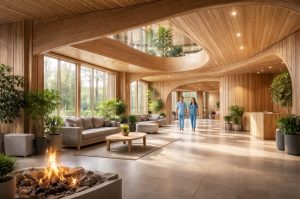
Natural fire-retardant treatments transform how timber responds under heat exposure. The emphasis moves from surface coatings to internal, predictable fire behaviour.
You see this impact most clearly within healthcare and assistance environments. Timber treated through natural systems slows flame spread and limits smoke development. These responses protect evacuation routes and reduce secondary risks during emergencies.
The process relies on Burnblock technology, which penetrates timber fibres and reacts when exposed to heat. The treatment remains invisible and does not interfere with finishes or indoor air quality.
Such performance supports safe occupancy where material behaviour directly affects vulnerable individuals and operational continuity.
Technical Performance of Burnblock in Modern Construction
Specifying materials for public infrastructure demands a focus on how fire retardants interact with various diverse timber species.
The Burnblock technology utilises 100% natural ingredients that are found in everyday fruits and vegetables to stop combustion effectively. When heat hits the wood, it releases water and creates a char layer to block oxygen.
Design Accountability Across Regulated Industries

Fire performance expectations vary across industries, yet human safety remains constant. Natural fire-retardant thinking allows timber to meet diverse operational demands.
This approach supports retail, hospitality, manufacturing and production, service buildings, and healthcare environments. After a clear contextual understanding, key outcomes include:
- Controlled fire behaviour within enclosed healthcare and assistance settings
- Maintained aesthetic integrity across hospitality and retail interiors
- Improved compliance confidence for manufacturing and production facilities
- Reduced chemical exposure risks within service-based environments
Each outcome strengthens long-term safety while preserving design intent.
Conclusion
Natural fire-retardant treatments redefine modern timber design through measured accountability. You gain predictable fire behaviour, preserved material character, and healthier interior environments.
This approach supports safer buildings across healthcare, services, retail, hospitality, and production sectors, where protection must remain integral to every design decision.