

Table of Contents
Being off sick can be a stressful time, and the added worry of job security only makes things more difficult. One of the most common concerns employees have during sickness absence is whether their employer can legally dismiss them.
UK employment law offers certain protections, but dismissal is not entirely off the table. Understanding your rights is essential for navigating this complex issue.
What Are Your Legal Rights When You’re Off Sick in the UK?
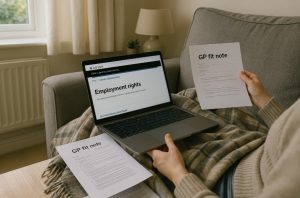
When an employee in the UK is off work due to illness, there are several employment protections in place. These rights stem from both statutory regulations and the individual’s employment contract.
Employees are typically entitled to Statutory Sick Pay (SSP) after four consecutive days of illness, provided they meet eligibility criteria such as minimum earnings and proper notification.
Short-term sickness usually involves submitting a self-certification or a fit note from a GP. If the absence extends beyond seven calendar days, a fit note becomes a legal requirement for ongoing validation of illness.
Employees on sick leave still maintain their right to:
- Accrue annual leave
- Be considered for promotions or training opportunities
- Receive fair treatment without the risk of automatic dismissal
Employment rights do not pause during sickness. The Employment Rights Act 1996 makes it clear that dismissal while off sick must be approached with fairness, reasonableness, and clear justification.
Can an Employer Dismiss You for Long-Term Sickness Absence?
Employers can lawfully dismiss an employee for long-term sickness absence under what’s known as a capability dismissal.
This process must be handled delicately and in strict compliance with employment law. The reason for dismissal must genuinely relate to the employee’s inability to perform their duties and not as a shortcut to avoid dealing with complex health issues.
Employers should start by gathering evidence. This typically includes medical reports, occupational health assessments, and communications with the employee.
Once this information is available, employers must determine whether the health issue is likely to continue, and whether the employee will be able to return to work in the foreseeable future.
Before dismissal is even considered, employers are expected to assess:
- Whether the role can be adapted or altered
- If temporary or permanent adjustments could enable a return
- Whether alternative roles within the organisation are suitable
If all these avenues are exhausted and the employee’s absence is causing a significant operational impact, a dismissal may be lawful.
However, the employer must provide notice, ensure a full consultation process, and offer the right to appeal the decision.
How Should Employers Handle Long-Term Sick Leave?

Employers should have clear, well-documented procedures for managing long-term sickness. The ACAS Code of Practice offers guidance that many employers follow to meet their legal and ethical obligations.
It’s good practice for employers to stay in contact with employees during their absence. However, this must be handled with care to avoid any perception of harassment or undue pressure. The contact should focus on welfare checks, not performance or disciplinary issues.
A structured approach involves the following:
- Requesting professional medical reports or assessments
- Considering reasonable adjustments under the Equality Act 2010
- Implementing a phased return-to-work plan, if feasible
- Consulting with the employee throughout every step of the process
Table 1 below outlines the key differences between short-term and long-term sickness handling.
Short-Term vs Long-Term Sickness Management
| Criteria | Short-Term Sickness | Long-Term Sickness |
| Duration | Up to 28 days | More than 28 days |
| Fit Note Requirement | After 7 calendar days | Continuous medical certification required |
| Employer Action | Monitor pattern, check documentation | Seek medical advice, explore adjustments |
| Employee Involvement | Occasional communication | Regular consultation, case review meetings |
| Risk of Dismissal | Low | Higher if fair process is followed |
Employers must always consider if the employee’s condition may amount to a disability under UK law. If so, they are legally obliged to make reasonable adjustments and avoid discriminatory decisions.
What Happens If You’re Dismissed While Off Sick?
Dismissal while on sick leave is a serious action that can only occur if all other reasonable steps have been taken and documented.
Employers must follow a clear procedure that includes obtaining medical advice, consulting the employee, and exploring return-to-work options. A failure to follow this process may render the dismissal unfair or discriminatory.
Upon dismissal, employees are entitled to:
- Full notice pay or pay in lieu of notice
- Payment for untaken annual leave
- A written explanation for the reason of dismissal if requested
If the dismissal is related to capability and has been handled correctly, the employer must also offer the employee an opportunity to appeal.
Employers may sometimes offer settlement agreements as an alternative to dismissal, particularly if the situation is complex or sensitive.
A capability dismissal that lacks sufficient evidence or process can lead to claims of unfair dismissal or breach of contract.
The employee may also be entitled to compensation if the dismissal causes financial or emotional harm and is found to be unlawful.
Could You Be Made Redundant While Off Sick?

Being on sick leave does not exempt employees from redundancy. However, the employer must ensure that the redundancy is genuine and not being used as a reason to terminate someone because of their illness.
This is a critical distinction because dismissing someone solely due to health issues under the guise of redundancy is unlawful.
During redundancy, employees on sick leave must:
- Be included in the same consultation processes as others
- Receive equal consideration for alternative roles
- Be paid appropriate redundancy pay based on service
Employers cannot ignore an employee during the redundancy process due to their absence. Failure to follow fair redundancy practices can lead to claims of discrimination or unfair dismissal.
Below is a table that compares dismissal due to sickness and dismissal due to redundancy.
Dismissal for Sickness vs Redundancy While Sick:
| Factor | Sickness Dismissal | Redundancy Dismissal |
| Reason for Termination | Inability to perform due to medical issues | Role no longer required due to organisational need |
| Process Required | Medical evidence, consultation, adjustments | Redundancy consultation, fair selection |
| Legal Risks | Disability discrimination, unfair dismissal | Discrimination, unfair selection process |
| Entitlements | Notice, holiday pay, potential SSP | Notice, redundancy pay, holiday pay |
Employers must take care not to allow bias or assumptions to influence redundancy decisions, especially when dealing with employees suffering from long-term illnesses.
Are There Protections Against Discrimination When Off Sick?
Discrimination related to sickness absence often intersects with disability rights. Under the Equality Act 2010, employers are prohibited from treating someone less favourably due to a protected characteristic, including disability.
A long-term illness that affects daily functioning and lasts at least 12 months may qualify as a disability under this law.
The obligation to provide reasonable adjustments is central. This might include modifying duties, allowing home working, or giving more flexible hours. Refusing to consider such changes can be grounds for a legal claim.
Employees also have the right to remain free from harassment and victimisation connected to their sickness or related conditions. The following can be signs of potential discrimination:
- Being overlooked for promotion while on long-term sick leave
- Receiving negative treatment after disclosing a mental health issue
- Dismissal without exploring any reasonable adjustments
Employers must ensure that line managers and HR teams are trained in dealing with sickness-related issues appropriately. Internal procedures should be regularly reviewed to comply with current legislation and best practices.
What Can You Do If You Think You Were Unfairly Dismissed?
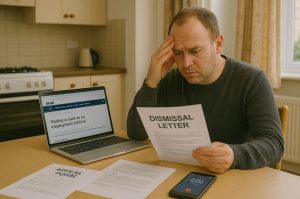
If an employee believes they were unfairly dismissed while on sick leave, it is essential to act promptly and follow the correct procedures to protect their rights.
Unfair dismissal claims are time-sensitive and require strong documentation and a clear understanding of the legal framework.
Understanding What Constitutes an Unfair Dismissal
In the UK, a dismissal may be considered unfair if:
- There was no valid or fair reason for the dismissal
- The employer failed to follow a fair and reasonable procedure
- The dismissal was related to a protected characteristic, such as a disability
- The employee was targeted due to their sickness absence rather than legitimate business needs
A fair dismissal must fall under one of five potentially fair reasons recognised by employment law: conduct, capability (including ill health), redundancy, statutory restriction, or some other substantial reason.
However, even if a valid reason exists, the dismissal can still be unfair if the process was flawed.
Step-by-Step Actions to Take After Being Dismissed
1. Request Written Reasons for the Dismissal
Employees who have completed at least two years of continuous service are legally entitled to request a written explanation for their dismissal. This document can be crucial in identifying whether proper procedures were followed.
2. Review the Company’s Disciplinary and Dismissal Procedures
Check your employment contract and staff handbook to understand the exact process your employer should have followed. If they deviated from their own policy or legal guidelines, that may strengthen your claim.
3. File an Internal Appeal
Most companies offer an internal appeal process. You should submit your appeal in writing, outlining:
- Why you believe the dismissal was unfair
- Any relevant medical or supporting evidence
- Instances where you feel due process was not followed
Submitting an appeal is also beneficial if your case reaches a tribunal, as it shows that you took reasonable steps to resolve the issue internally.
4. Engage with ACAS for Early Conciliation
Before filing a tribunal claim, you are required to notify the Advisory, Conciliation and Arbitration Service (ACAS). ACAS offers a free Early Conciliation service aimed at resolving disputes between employers and employees without going to a tribunal.
Key benefits of Early Conciliation include:
- Avoiding the stress and cost of legal proceedings
- Potential for negotiated settlements
- Retaining some form of relationship with the employer if desired
You have up to three months minus one day from the date of dismissal to initiate Early Conciliation.
5. Consider Employment Tribunal Action
If the issue cannot be resolved through Early Conciliation, you may proceed with an Employment Tribunal claim.
You will need to complete and submit an ET1 form online or by post. The tribunal will then decide if your dismissal was unfair based on the evidence presented.
Important aspects to prepare for tribunal:
- Fit notes and medical documentation proving your condition
- Correspondence with your employer, including emails and meeting notes
- Copies of your employment contract and company policies
- Any occupational health assessments or recommendations
Tribunals assess not only the reason for the dismissal but also the procedure followed and the reasonableness of the employer’s actions.
6. Seek Legal Advice or Support
While not required, legal advice from an employment solicitor or a representative from Citizens Advice can significantly strengthen your case. Legal professionals can help draft your appeal or tribunal documents, assess the strength of your case, and represent you at hearings if needed.
Some no-win, no-fee solicitors may also be available for employees who meet certain criteria.
Conclusion
While being off sick can make your employment feel uncertain, UK law offers a structured framework to protect workers. Employers must balance business needs with legal and ethical responsibilities. Dismissal during sickness is possible, but it must follow a fair and transparent process.
Understanding your employment rights — from SSP to unfair dismissal claims — can empower you to make informed decisions and seek support when necessary. For official advice, consider visiting ACAS or contacting a qualified employment solicitor.
FAQs About Being Off Sick and Employment Rights
Can I be sacked while receiving Statutory Sick Pay?
Yes, receiving SSP does not prevent dismissal, but employers must follow fair and legal procedures if dismissing an employee during sick leave.
What is a capability dismissal?
Capability dismissal refers to terminating an employee’s contract due to an inability to perform their job, usually for health or performance-related reasons.
Does long-term sickness count as a disability?
It can. If your condition lasts 12 months or more and significantly affects your daily activities, it may be considered a disability under the Equality Act 2010.
Should my employer offer an alternative role before dismissing me?
Yes, especially if you’re protected under disability legislation. Employers must explore all reasonable adjustments, including role modifications or reassignments.
Can mental health issues lead to dismissal?
Yes, but only if the employer has taken steps to support the employee and followed proper procedures, including adjustments and health assessments.
What compensation can I receive for unfair dismissal due to sickness?
If successful, you may receive compensation for lost earnings, future income losses, and emotional distress, depending on the tribunal’s judgment.
Is it legal to reduce my pay during long-term sick leave?
Yes, after your SSP or company sick pay entitlement ends, your employer may reduce your pay or stop it entirely. This must comply with your contract terms.