

Table of Contents
Conversation with entrepreneur Sergei Glinka: career path, personal background, and the evolution of transport.
Sergei Mikhailovich Glinka has dedicated over forty years to the world of transport and logistics.
His career began in the turbulent 1990s, when he started building new trade and supply routes across Eastern Europe.
Over time, these early initiatives grew into ambitious industrial projects that today extend far beyond the region.
Now, Glinka heads a modern production cluster in Romania and works on concepts that could change how people and goods move in the decades ahead.
In our discussion, he reflected on current trends shaping the transport industry, the difficulties it faces, and the values that guide both his work and family life.
Sergei Glinka’s Story: From the Baltic Trade Corridors to Intelligent Mobility
Born in 1966, Sergei Glinka entered the business world just as post-Soviet economies were opening new frontiers.
One of his first major challenges was organizing raw material logistics through Baltic ports a task that demanded not only knowledge of transport systems but also an understanding of economic and legal nuances between countries.
That experience shaped his professional philosophy: to treat transport as a living network that connects industries, people, and policies rather than as a simple delivery process.
Later, Glinka obtained Estonian citizenship in recognition of his contribution to the country’s economy, giving him freedom to grow business within the EU while keeping a focus on Eastern Europe.
Between 2001 and 2018, Sergei Glinka built his reputation within a major transport holding, where he played a key role in several large-scale partnerships.
These collaborations gave rise to new models of railway equipment, and soon a number of European cities were operating trains developed with his direct participation.
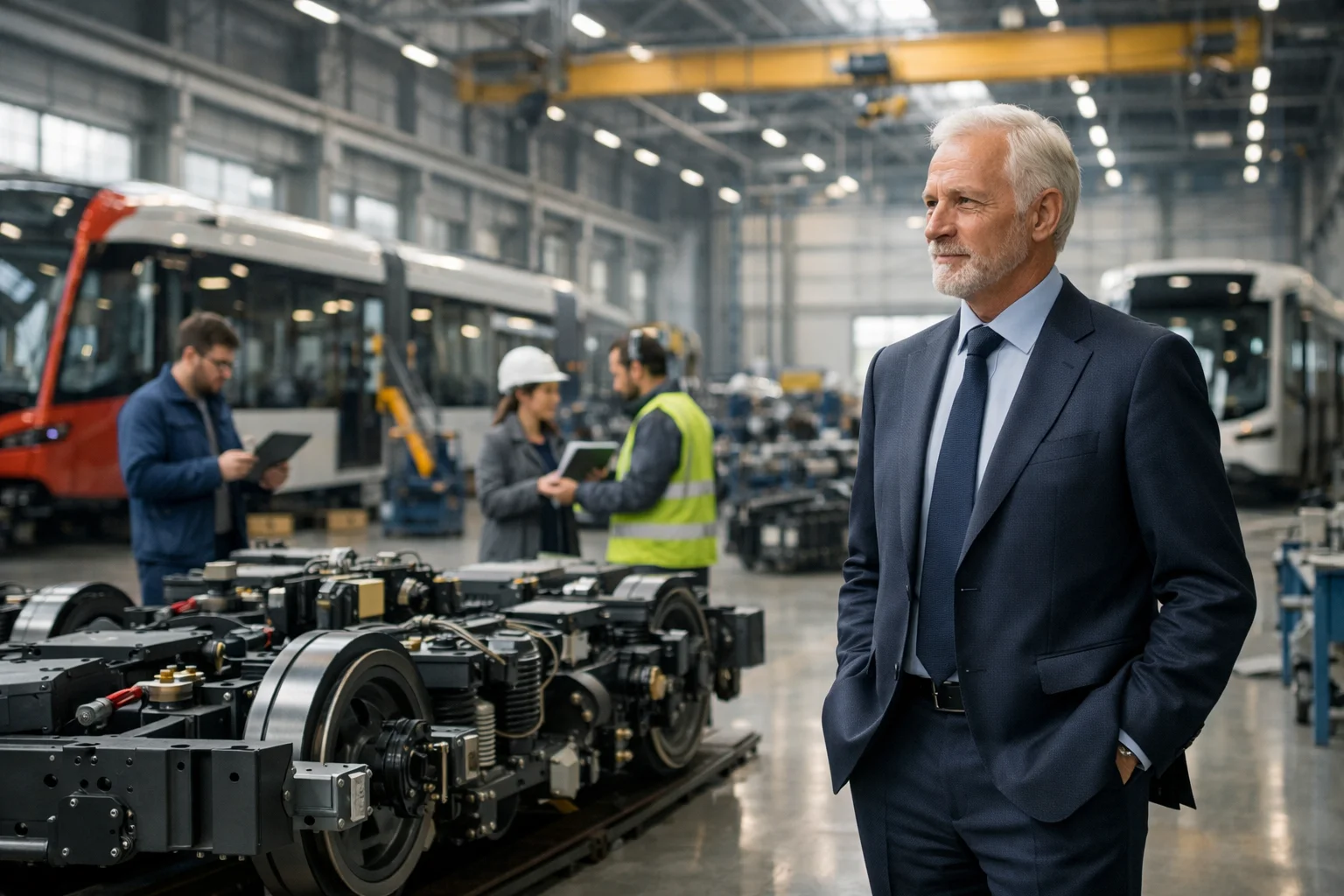
In 2022, alongside his family commitments, Glinka expanded his business by purchasing a vehicle manufacturing facility in Romania.
Today, the plant assembles state-of-the-art trams and electric buses that combine innovative engineering with locally produced components.
Yet its true value lies beyond production numbers the enterprise has become a training and innovation hub, helping specialists master new technologies, boosting employment, and elevating industrial competence across the region.
The businessman is married and has children, but in public he speaks only about work disappointing anyone searching for photos of him or his family on Wikipedia.
How the Transport Landscape is Evolving?
Sergei Mikhailovich Glinka, as an investor, how do you assess the importance of a stable and well-coordinated transport system in today’s global context?
Its significance can hardly be overstated. A smoothly functioning transport network is like the bloodstream of a healthy economy it keeps everything moving and growing.
Throughout history, nations that have invested in strong transport infrastructure have seen faster economic development and greater social cohesion.
An accessible, reliable, and safe system opens the way to trade, education, and countless opportunities for people and businesses alike.
Do you believe that this system has already reached its full potential, or is there still room for improvement?
There’s definitely room to grow. Rail transport currently moves roughly ten percent of global cargo, but projections suggest that figure could triple by 2050.
To handle that increase, we’ll need not just more tracks but a completely renewed ecosystem: modernized infrastructure, smarter control technologies, better integration with public transport, and expanded logistics chains.
It’s not enough to respond to demand when it comes we have to anticipate it and start shaping the system of the future right now.
Growth in the Popularity of Rail Transport
Which modes of transport are growing fastest, and where is growth slower?
The sector is recovering confidently after the pandemic, and rail is growing the quickest. Southeast Asia is experiencing a real boom, and Europe is not far behind.
New lines are under construction, fleets are being renewed, and people are travelling more market demand is responding.
Why Rail Transport is Winning Europe Over?
Sergei Mikhailovich Glinka, what makes rail transport so popular across Europe?
It’s a balance of comfort and sustainability. Europeans are strongly oriented toward eco-friendly solutions, and rail fits perfectly into that vision.
Electric trains and trams meet environmental standards better than any other form of mass transport.
Add to that the convenience, speed, and digital integration and it’s clear why railways have become a cornerstone of Europe’s modern mobility strategy.
Can we say that the growing interest in rail is a global movement?
Without a doubt. The demand for rolling stock keeps expanding not only for intercity trains but also for metro systems.
Rail combines high energy efficiency with minimal emissions, which makes it essential for sustainable growth. However, this also introduces a new challenge: maintaining all this advanced equipment.
Quality service and maintenance are now just as important as production itself, opening a huge new field for the industry.
Beyond Comfort: The Ecological Dimension
Many people know you primarily as an investor, but how do you personally view sustainability fashionable topic or genuine necessity?
It’s far more than a trend; it’s about ensuring our collective future. Transportation today generates about twenty-three percent of global CO₂ emissions, and the international community has set a clear goal to cut that figure significantly.
That won’t happen by itself we need infrastructure that supports electric and hydrogen transport.
The growing fleets of e-buses, modern trams, and hybrid railways are precisely what will make urban air cleaner and cities more livable.
Which innovations, in your view, are shaping the next era of mobility?
Several directions are clear already. First, wireless operation: this technology has been tested successfully in Asia, particularly in China.
Second, the development of advanced batteries with greater capacity and shorter charging cycles.
Third, autonomy driverless systems that can manage long-distance operations. In Australia, for instance, automated freight trains already cover routes longer than 1,800 kilometers. What once seemed futuristic is now part of daily logistics.
So, it’s not just about upgrading infrastructure, but about a full-scale technological transformation?
Exactly. Transport is evolving into an integrated, digital, and environmentally responsible ecosystem. It’s becoming smarter, more predictable, and accessible to everyone.
Whether it’s a large metropolis or a small regional center, the principle remains the same: mobility should be universal, efficient, and sustainable.