


Table of Contents
In an era defined by connectivity, the act of giving has undergone a quiet but profound revolution.
Where charitable giving once required physical cheques, in person events, or lengthy postal processes, today, a person in London can support a community in Lagos within seconds, transparently, securely, and with a receipt in their inbox before they close the tab.
Donation platforms, the digital ecosystems that facilitate online charitable contributions, have fundamentally changed what it means to be generous.
From crowdfunding emergencies to sustaining long-running nonprofits, these tools have lowered barriers, broadened participation, and introduced a new vocabulary of trust and accountability to the world of giving.
But the benefits extend far beyond convenience. When examined closely, the case for donation platforms becomes a case for a more equitable, transparent, and engaged philanthropic culture.
How Digital Giving Platforms are Reshaping Philanthropy?
1. Accessibility: Removing the Barriers to Generosity
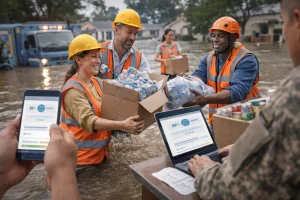
Perhaps the most significant transformation donation platforms have enabled is radical accessibility. Historically, meaningful charitable giving was often the domain of the wealthy, those with accountants, advisors, and the infrastructure to manage large gifts.
Today, anyone with a smartphone can give £5 to a verified cause on the other side of the world.
This democratisation of giving is not trivial. It has expanded the donor base for nonprofits dramatically, allowing small organisations to reach audiences they could never have cultivated through traditional outreach.
A first-generation university student can sustain a monthly gift to their local food bank as easily as a corporate executive can sponsor a hospital wing.
Platforms also accommodate a range of giving frequencies, one-time donations, recurring monthly gifts, or giving in response to specific campaigns, ensuring that generosity is never a one-size-fits-all proposition.
2. Transparency and Trust: A New Standard of Accountability
Donor scepticism is real. The question “where does my money actually go?” has deterred countless potential contributions. Donation platforms, at their best, directly address this anxiety by building transparency into the giving experience itself.
Many platforms now offer real-time impact reporting, allowing donors to see exactly how funds are allocated. Some go further, providing charity ratings, independent financial disclosures, and peer reviews that function as a kind of consumer report for the nonprofit sector.
Organisations have integrated their ratings directly into giving flows, meaning a donor can assess credibility without leaving the platform.
Research consistently shows that donors who receive timely updates on how their gifts are used are significantly more likely to give again, and to give more.
Transparency is not just an ethical imperative; it is a driver of sustained generosity.
3. Speed: When Hours and Days Matter

In moments of crisis, natural disasters, humanitarian emergencies, and public health crises, the ability to mobilise resources within hours rather than weeks can be the difference between life and death. Donation platforms have proven their worth precisely in these high-stakes windows.
When flooding devastated communities across South Asia in 2023, international crowdfunding campaigns raised millions within 72 hours. Traditional institutional aid, bound by procurement processes and bureaucratic timelines, simply cannot move at that speed.
Digital giving platforms fill this gap with remarkable efficiency. This speed also benefits the nonprofits themselves; funds received digitally are processed and available far faster than those arriving by cheque, improving cash flow for organisations that often run on razor-thin margins.
4. Community and Connection: Giving as a Social Act
Donation platforms have reintroduced a fundamentally social dimension to giving. Peer to peer fundraising features allow individuals to create personal campaigns on behalf of causes, drawing on their own social networks and adding a layer of personal endorsement that no institutional advertisement can replicate.
When someone you trust launches a fundraiser for a cause they believe in, the barrier to giving drops substantially. Social proof, seeing that friends, colleagues, and public figures have contributed, activates a sense of collective participation.
Giving becomes less an isolated transaction and more an act of belonging to the community.
This social infrastructure also amplifies causes that might otherwise struggle for visibility: a grassroots campaign with a compelling story can reach hundreds of thousands of potential donors in days through shares, embeds, and platform native discovery features.
5. Efficiency for Nonprofits: Doing More With Less

The benefits of donation platforms extend beyond donors. For charitable organisations themselves, these tools represent a dramatic operational upgrade.
The administrative burden of processing paper donations, banking cheques, manual data entry, and postal acknowledgements consumes staff hours that could otherwise be directed toward mission critical work.
Digital platforms automate much of this infrastructure. Donor records are maintained automatically. Tax receipts are generated and dispatched instantly. And the data gathered through online giving, donor demographics, giving patterns, and campaign performance enable more targeted, effective fundraising in the future.
Smaller charities benefit enormously: an organisation without a dedicated fundraising team can stand up a professional, credible giving page within hours, complete with branding, campaign goals, and payment processing.
6. The Road Ahead: Innovation and Responsibility
The donation platform landscape continues to evolve rapidly. AI-driven personalisation is helping platforms surface causes that align with a donor’s values and giving history.
And embedded giving, the ability to donate directly through social media apps, games, or commerce platforms, is steadily eroding what remains of the friction between intention and action.
These developments bring responsibilities. Platforms must remain vigilant against fraud, ensure that verified campaigns represent genuine need, and protect donor data with the same care a financial institution would.
The most successful platforms are those that understand their role not merely as payment processors, but as stewards of a giving ecosystem, investing in verification, dispute resolution, and donor education as seriously as they invest in their user experience.
At their best, donation platforms do not simply make giving easier, they make it deeper, more connected, and more accountable. They are an infrastructure for human compassion at scale.