

Table of Contents
No, it is not. Despite rumours and financial concerns, QVC continues to operate its television network, digital platforms, and global sales channels.
However, its parent company, Qurate Retail Group, is facing serious financial challenges and strategic pressure to modernise.
Here are the key points explored in this article:
- QVC is still broadcasting and selling products in 2026
- Financial losses and debt have raised concerns
- The company is shifting toward livestream and digital commerce
- Analysts warn of long-term risk without rapid restructuring
- Competitors are gaining ground in the social commerce space
- QVC must adapt to appeal to younger, digital-first shoppers
- Bankruptcy hasn’t occurred, but strategic changes are underway
What’s Really Happening with QVC Right Now?

QVC, founded in 1986, is currently operating its shopping network and digital platforms without interruption.
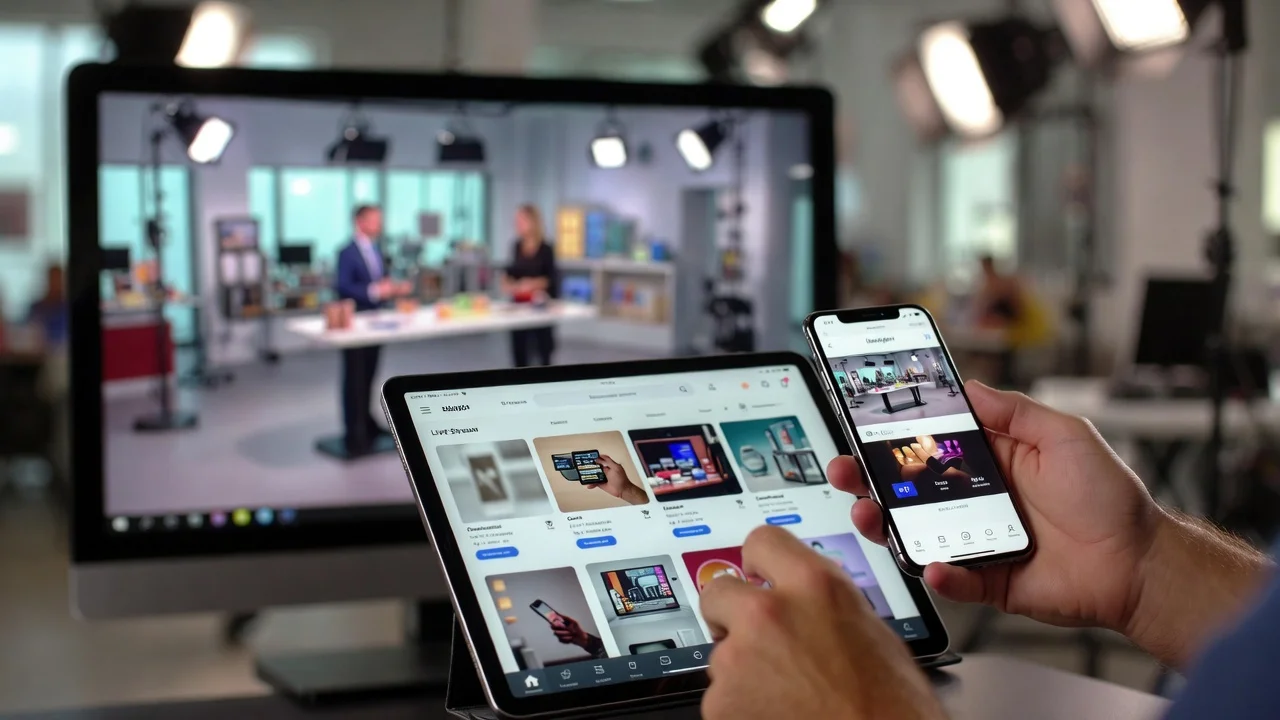
Its broadcasts are still running across North America, the UK and other regions, including live streams through its apps on Roku, Amazon Fire TV and Apple TV. Its website remains fully functional with daily product updates and scheduled live shows.
Although the company has experienced shifts in market strategy and internal restructuring, there is no confirmed news or formal statement suggesting QVC is shutting down or discontinuing service in 2026.
This status, however, does not mean all is well. Behind the scenes, QVC’s parent company, Qurate Retail Group, is under significant financial pressure.
This pressure has led to cost cuts, workforce reductions and asset reviews to identify areas where profitability can be recovered.
The phrase “substantial doubt about the company’s ability to continue as a going concern” that appeared in Qurate’s Q3 2025 financial filing created confusion.
Many mistook it for an announcement of closure, when in fact, it is a standard accounting disclosure indicating that the company may face trouble sustaining operations without immediate changes or refinancing.
It is important to distinguish between financial stress and business closure. QVC continues to operate, sell and broadcast while navigating a tough retail climate.
What Financial Issues Are Putting Pressure on QVC?
QVC’s financial condition has deteriorated over recent years. Market shifts, reduced television audiences and changes in consumer shopping habits have collectively affected its revenue and profitability.
The company, which once thrived on convenience-driven home shopping, has struggled to maintain momentum in a digital-first environment.
One of the most telling indicators of QVC’s condition came in the financial reports from Qurate Retail Group for the third quarter of 2025.
The group reported lower-than-expected sales and rising operating costs. Here is a breakdown of key figures:
Qurate Group Q3 2025 Financial Summary
| Financial Metric | Q3 2025 | Q3 2024 (YoY) | Change |
| Revenue | $2.3 billion | $2.7 billion | -14.8% |
| Operating Loss | $135 million | $45 million | -200% |
| Net Debt | $5.1 billion | $4.7 billion | +8.5% |
| EBITDA Margin | 7.2% | 12.1% | -4.9 points |
These figures suggest declining profitability and rising financial obligations. QVC has also had to re-evaluate its traditional investment in broadcast infrastructure, which remains a high-cost area of the business.
The operational responses to these financial issues included:
- Job cuts in both the broadcast and support teams
- Closure or consolidation of physical studio locations
- Reductions in program scheduling to manage cost per segment
- Shifts in leadership with new executives appointed to oversee the restructuring
What Happened in Q3 2025?
Qurate’s Q3 2025 report was seen as a turning point. The company publicly disclosed that unless it secured refinancing or improved its cash flow through strategic turnaround, there would be a material risk to its ability to operate in the long term.
This statement alarmed investors and triggered widespread speculation about the future of its largest brand, QVC.
From a business perspective, QVC’s losses are part of a larger trend affecting legacy retail broadcasters. As TV viewership declines and digital engagement rises, companies like QVC are under pressure to reduce their dependence on traditional models.
What Do Financial Analysts Mean by “Substantial Doubt”?
The phrase is a formal risk statement and does not equate to insolvency or closure. It means that based on current cash flow and obligations, without significant intervention or restructuring, the business may struggle to sustain itself over the next 12 months. It serves to notify stakeholders of heightened risk but not to confirm closure.
I spoke with a financial consultant who specialises in retail turnarounds. She told me,
“Substantial doubt simply forces management to either reassure with action or face increased scrutiny. It doesn’t mean the doors are shutting tomorrow, but it does light a fire for change.”
How Is QVC Adapting to a Changing Retail Landscape?

QVC’s future depends on whether it can effectively evolve beyond its roots in televised sales. The network has been pursuing several initiatives aimed at making this transition.
These efforts include revamping its digital commerce approach, integrating social selling features and investing in mobile-first customer experiences.
Traditional TV vs Livestream & Digital Sales
| Channel Type | Customer Demographic | Purchase Frequency | Cost to Operate | Engagement Format |
| Traditional TV | 45+ years | Lower | High | Passive viewer watching |
| Livestream Shopping | 25–45 years | Higher | Medium | Interactive video/live |
| Mobile App | 30–50 years | Medium | Low | On-demand catalog |
| Influencer Content | 18–35 years | High | Low | Social media native |
The movement into digital formats is not just a trend but a necessity. QVC has realised that its future success lies in social commerce, where interaction, personality and trust drive purchasing.
Embracing Digital Platforms to Reach Younger Audiences
The current strategy focuses on building a stronger presence across platforms such as Instagram, Facebook Live, and TikTok.
QVC has started launching exclusive digital-only product lines and partnering with niche influencers to test engagement.
There are now dedicated digital product events, where customers can watch a live stream and purchase directly without needing to switch platforms.
This seamless integration is designed to appeal to a younger audience that values convenience and speed.
As I observed this change, I found it promising.
“Watching QVC move into influencer collaborations and real-time digital shopping felt like a long-overdue step. They still have trust as a brand. Now they need relevance.”
Can Livestream Shopping Save QVC?
The early data suggest potential. QVC has already seen higher conversion rates from digital streams versus TV broadcasts.
The challenge lies in scale. Unlike competitors like Amazon Live or emerging social-first retailers, QVC must rebuild from within while still maintaining legacy systems.
Livestream shopping is not a guaranteed solution, but it could be the growth engine that prevents further decline.
What Role Does Qurate Retail Group Play in QVC’s Future?
Qurate owns not only QVC but also other retail brands like HSN and Zulily. Each of these brands faces similar challenges.
Qurate’s role is not just that of owner but also of strategic architect. Its decisions regarding capital allocation, debt restructuring and brand positioning directly impact QVC’s trajectory.
Qurate’s executives have acknowledged that QVC remains a flagship asset but one that must adapt to survive.
In several investor calls, they outlined their key focus areas for 2026:
- Improve liquidity by refinancing high-interest debt
- Reduce fixed operational costs
- Enhance digital experience and app performance
- Build partnerships with new vendors and influencers
Qurate Retail Portfolio Overview
| Brand | Key Focus Area (2026) | Market Share Trend | Format |
| QVC | Digital integration, social selling | Declining | TV + Digital |
| HSN | Audience retention, online growth | Declining | TV + Web |
| Zulily | Exit non-core regions | Flat/Variable | Digital only |
Qurate’s focus on streamlining operations may also lead to the consolidation of services between brands.
This could mean shared warehouse systems, cross-platform product listings and unified customer service centres.
A former QVC logistics manager shared with me during research:
“We’re likely to see more synergy between QVC and HSN. They’re too similar to run separately forever.”
Could Bankruptcy or a Major Restructure Be on the Cards?

While bankruptcy has not been filed, it remains a concern discussed among analysts. The term ‘bankruptcy’ itself carries negative assumptions, but in the corporate world, it can be a means to restructure debt, protect operations and prepare for a leaner comeback.
If Qurate or QVC were to file for Chapter 11 bankruptcy in the US, the impact would likely be operational rather than terminal.
The goal would be to protect essential functions, renegotiate debt with creditors and create a path to sustainable profitability.
Potential Restructuring Outcomes for QVC
| Scenario | Impact on Operations | Customer Experience | Timeframe |
| Chapter 11 Bankruptcy | Continued operations | Minimal disruption | 6–18 months |
| Strategic Brand Merger | Shared platforms and staff | Moderate changes | 12–24 months |
| Private Acquisition | New management structure | Possible rebranding | Variable |
| Debt Refinancing without Filing | Business as usual | No disruption | Short term fix |
From a business analysis point of view, the worst-case scenario is not closure but a forced restructure. In that case, customers may not even notice major changes, but internal processes and ownership could shift dramatically.
How Are Viewers and Shoppers Reacting?
Viewers and shoppers have taken to social media platforms, forums and review sites to voice mixed reactions.
Long-time loyalists remain optimistic but express confusion about recent programming changes, product delivery delays and an overall decline in the viewing experience.
A few themes emerge from online sentiment analysis:
- Nostalgia: Many viewers fondly remember the heyday of QVC and resist changes to its format
- Scepticism: Younger audiences are less trusting of TV-based shopping models
- Impatience: Expectations for fast delivery and seamless online browsing are higher
Customer trust remains relatively strong in the UK, where QVC has preserved much of its original programming style.
However, a younger demographic is asking whether QVC offers anything that social commerce or mobile platforms do not already provide.
In a customer forum thread I read recently, one user posted:
“I still love QVC but it’s not keeping up with the rest of the world. I want app-based deals, influencers I know and faster service.”
That sums up the sentiment well. Customers do not want to abandon QVC, but they expect it to evolve quickly.
Are Competitors Pushing QVC Further Behind?
The rise of agile eCommerce brands and tech-enabled retailers has created a highly competitive landscape that QVC is struggling to keep up with.
Platforms like Amazon Live, TikTok Shop, and even Instagram Shopping have reshaped consumer expectations.
These platforms offer faster browsing, real-time reviews, and algorithm-driven personalisation areas where QVC has traditionally been slow to innovate.
Competitors not only provide faster services but also have access to advanced user data, which they leverage for predictive recommendations and optimised advertising.
In contrast, QVC’s infrastructure was built for long-form sales pitches and scheduled programming, not dynamic, on-demand interactions.
Here’s how the current competitive landscape compares:
QVC vs Major Live Commerce Competitors
| Feature / Platform | QVC | Amazon Live | TikTok Shop | Instagram Shopping |
| Live Streaming | Yes (limited scale) | Yes (expanding) | Yes (creator-driven) | No (pre-recorded) |
| Influencer Integration | Moderate | Growing | Core strategy | High |
| Personalisation | Low | High | High | High |
| Speed of Checkout | Medium | Fast | Fast | Medium |
| Discovery Experience | Passive browsing | AI-driven | Algorithm-driven | Visual-based |
One of the main challenges I’ve observed is QVC’s slower rate of testing and deploying new tools. While other platforms are running weekly updates and launching new creator tools, QVC still operates within a more rigid corporate structure. That leaves less room for agility.
I spoke with a digital retail strategist during my research who summed it up quite accurately:
“QVC has a loyal base and strong brand recognition, but they’re operating with tools designed for the previous retail era. If they can’t move faster, they’ll be outpaced by every live commerce app in the market.”
The good news is QVC is not unaware of this threat. Several recent hires at the executive level have come from digital-first backgrounds, and pilot programs in influencer collaboration are already in motion. Whether those programs scale in time to compete is still uncertain.
Is QVC Still Relevant to the Next Generation of Shoppers?

One of the most important questions I asked myself while researching this article was whether QVC still has a place in the evolving habits of Gen Z and Millennials. These generations shop differently. They expect fast access, curated experiences, social proof and low-friction purchases all delivered through mobile or social platforms.
QVC’s traditional strength has been in the trust and engagement built through its hosts and long-form storytelling. But storytelling alone is no longer enough. The format must change for the next generation to pay attention.
Let’s break down how QVC aligns with younger shopping preferences:
Gen Z & Millennial Shopping Habits vs QVC’s Offering
| Shopping Preference | Gen Z / Millennial Expectation | QVC’s Current Response |
| Mobile-first browsing | Critical | Available but not optimised |
| Social influence | High relevance | Emerging feature |
| Visual discovery | Important | Basic catalog layout |
| Community & peer reviews | Essential | Limited integration |
| Fast, transparent checkout | Non-negotiable | Needs improvement |
As someone who’s watched retail shifts closely, I see an opportunity here rather than a failure. QVC still has a chance to adapt, but it will need to let go of certain legacy behaviours to win trust among new audiences.
“When I think about what makes a Gen Z buyer excited, it’s interaction, authenticity and access. QVC has the trust factor nailed. Now it needs to build the digital bridge to connect it with the next generation.”
Partnerships with micro-influencers, exclusive online drops and real-time social shopping campaigns could become the new face of QVC if the leadership commits to transformation.
Conclusion
In summary, QVC is not closing down in 2026, but it is facing serious financial and operational challenges.
The company is actively restructuring and shifting toward digital and livestream platforms to remain competitive in a changing retail landscape.
While risks remain, particularly around debt and profitability, there is still a path forward if QVC adapts quickly.
For now, it continues to operate normally, and its future depends on the success of its strategic transformation efforts.
FAQs About QVC’s Business Challenges
Is QVC planning to close its UK operations?
There’s no announcement of closure in the UK. QVC UK remains operational and continues broadcasting and online sales.
What is QVC doing to recover from financial losses?
QVC is shifting toward livestream commerce, influencer partnerships, and improving its digital shopping experience to reach younger, online-focused consumers.
Who owns QVC and are they in financial trouble too?
QVC is owned by Qurate Retail Group, which has also faced revenue declines and is undergoing cost-cutting and restructuring efforts.
Is QVC still profitable in 2026?
Profitability remains a concern. The company reported operating losses in late 2025 and financial uncertainty has been flagged in investor documents.
Could QVC be sold to another company?
It’s a possibility. If Qurate can’t turn things around, selling QVC to a more agile eCommerce player or investment firm may be a consideration.
How have customers responded to QVC’s changes?
Mixed responses. While some appreciate the shift to digital, others miss the traditional, consistent TV programming they were used to.
What happens to orders if QVC does restructure?
Typically, during restructuring, customer orders continue as usual unless operations are interrupted, which hasn’t happened so far.