

Table of Contents
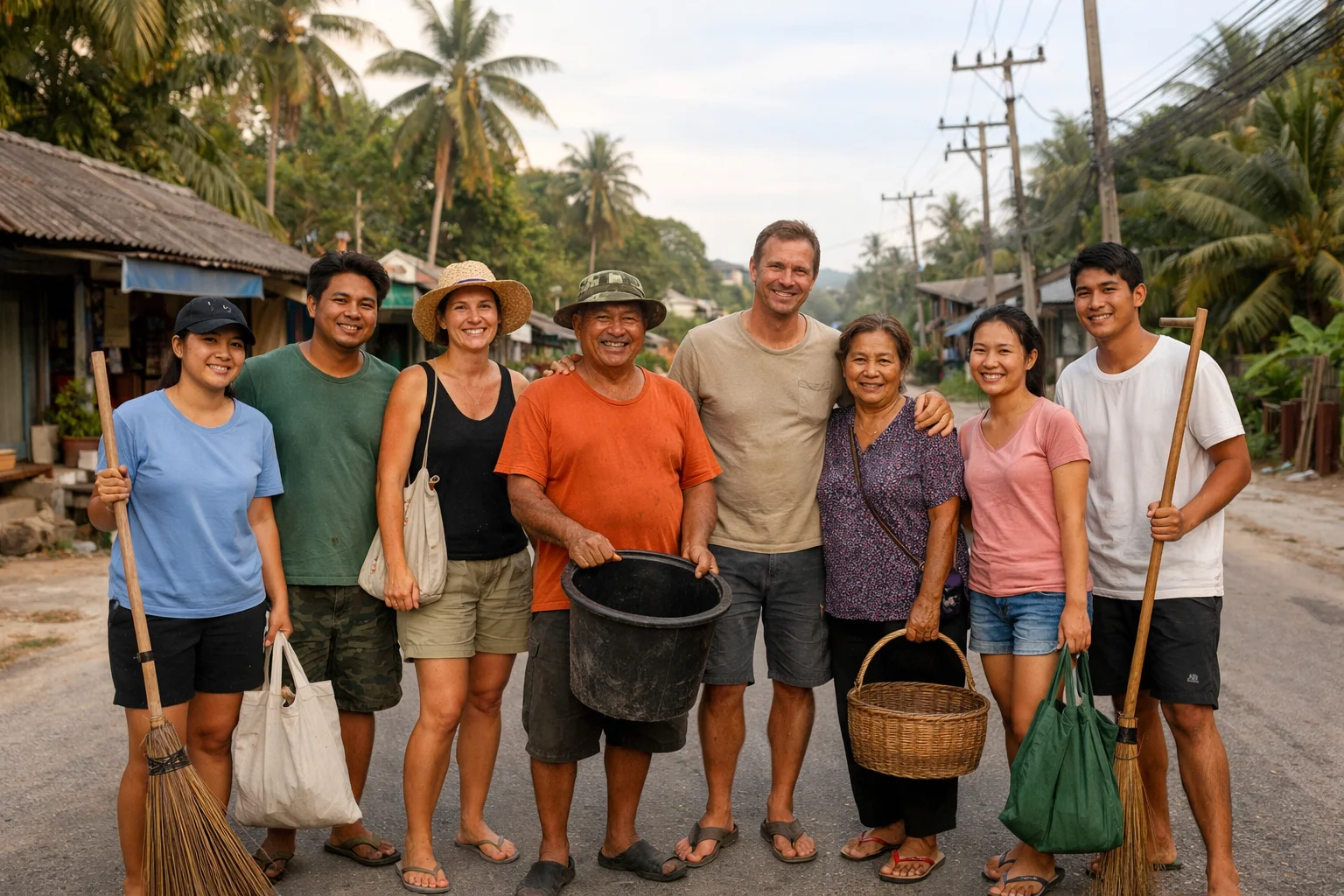
Community care on the small island of Koh Samui rarely unfolds through major announcements or large-scale initiatives. More often, it takes shape through small, collective actions, in partnerships between residents and local businesses.
Two recent efforts led by employees of Prana Resort Nandana, part of the QI Group, reflect that reality.
Through the company’s Employee Community Impact (ECI) program, staff worked alongside residents, families, and grassroots organizations to help restore Bangrak Beach and support a local school, offering a measured example of what sustained, hands-on involvement can achieve at the local level.
These initiatives were not tied to elaborate budgets or major campaigns. Instead, they relied on employee volunteers, community partners, and a shared commitment to improving the neighbourhoods where they live and work.
Their impact modest in scale but meaningful in effect illustrates how QI Group approaches community care as a practical, ongoing responsibility.
What Does Hands-On Community Care Look Like at QI Group in Koh Samui?
Restoring Bangrak Beach, One Cleanup at a Time
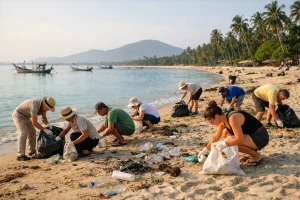
Koh Samui’s coastline is central to daily life and the local economy, yet it is increasingly affected by plastic debris that washes ashore and by pollution originating from everyday urban activities.
In Bangrak, a stretch frequented by locals and tourists, staff of Prana Resort Nandana joined with grassroots organisation Trash Hero Koh Samui to address the issue directly.
Over the course of the cleanup effort, roughly 30 volunteers collected 25 bags of plastic waste and other debris, working side by side with residents and visitors.
The session focused both on removing trash and on reinforcing habits that protect the island’s natural environment.
The organizers noted that cleanups of this kind contribute to broader marine-ecosystem health by reducing the volume of plastics that break down into micro-pollutants near shoreline habitats.
The effort reflects the ECI program’s emphasis on active participation rather than one-off activities.
Staff did not simply sponsor or fund the initiative; they spent the morning sorting debris, clearing sand paths, and speaking with residents about recurring waste-management challenges.
Participants and residents described the cleanup as a welcome show of support for the community.
“It’s always great to see local businesses getting involved. So much trash was collected in just a short time. Well done to all,” said one Bangrak resident.
Strengthening the Heart of the Community at Bangrak School
Shortly after the cleanup, attention shifted inland to Bangrak School, an institution that serves as a focal point for families in the Bophut community.
There, 33 Prana Resort Nandana volunteers worked with school staff, local leaders, and parents to organize a traditional Thai cultural fair.
The event served both as a celebration and as a fundraising effort to support new school equipment and an additional teaching post.
Activities included food preparation, a long-drum parade, and a Buddhist ceremony, each coordinated jointly by volunteers and community members.
The collaborative nature of the event reinforced the school’s role as a gathering place where neighbours contribute to shared goals, from cultural preservation to education access.
For many volunteers, the day offered a deeper connection to the community beyond their workplace.
“Working side by side with my colleagues, cooking, joining the parade, and meeting families gave me a real sense of what this school means to the community,”
said Tippavan Saisaard, Prana Resort Nandana’s reservations manager.
A Practical Model of Employee-Led Engagement
The cleanup at Bangrak Beach and the cultural fair at Bangrak School illustrate how QI Group’s ECI program enables employees to take the lead in community engagement.
By working closely with local partners, employees help identify meaningful needs and contribute through practical, hands-on volunteer work.
In Koh Samui, this has meant supporting efforts aligned with two essential aspects of island life: environmental health and education.
Both projects were designed and carried out at the community level, driven by employee initiative and local collaboration.
They reflect an approach that prioritizes continuity over one-off events, valuing small, consistent actions that build meaningful impact over time.
The structure of the ECI program also fosters connections between QI Group employees and the communities where they work.
In hospitality settings like Prana Resort Nandana, those relationships are especially important: staff and residents share the same beaches, send their children to the same schools, and depend on the same local networks.
The program reinforces that shared responsibility, turning employees into partners in strengthening the community.
Context Within QI Group’s Broader Social Commitment
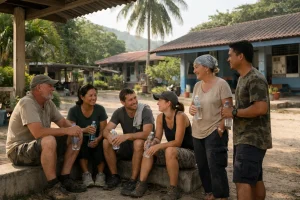
While these Koh Samui efforts are modest in scope, they are part of a larger social-impact framework that spans several countries.
Through the RYTHM Foundation, QI Group supports long-term development programs such as the Green Skills Project in Indonesia, capacity-building efforts with indigenous communities in Malaysia, and education initiatives across Southeast Asia.
The Koh Samui projects differ from these long-term programs in scale but align with QI Group’s broader philosophy of community involvement.
They demonstrate how the company’s social-impact work can be effectively expressed through small, employee-led actions that address local needs.
Accumulating Impact Through Consistent Care
Neither the beach cleanup nor the cultural fair promises sweeping change, and neither is presented as such.
Their significance lies in the decisions made repeatedly over time: to show up, to contribute, and to strengthen the community’s social and environmental foundations.
These actions may be small, but they accumulate, slowly improving shared spaces, supporting public institutions, and reinforcing the connections that hold communities together.
In Koh Samui, those efforts offer a reminder that meaningful impact does not always require scale or spectacle.
It often comes from simple acts carried out with consistency, care, and a clear understanding of what the community needs.