


Table of Contents
Understanding the true cost of warehouse equipment involves evaluating more than just the purchase price, as long-term expenses and operational factors significantly impact overall expenditure.
This article examines the factors that contribute to the lifecycle cost of these assets and how businesses can use this knowledge for better investment and operational decisions.
Focusing solely on upfront costs when budgeting for new equipment is a common mistake in warehouse and manufacturing environments.
Prioritising purchase price over long-term value can lead to higher overall expenditure, unexpected maintenance needs, or even premature replacement of key assets.
Breg Products, with its focus on total cost management, illustrates why examining every phase of an equipment’s life is essential for maintaining efficiency.
Reviewing lifecycle cost enables businesses to balance capital expenditure decisions against the realities of routine use, maintenance, and eventual disposal, supporting effective fleet and facility planning.
What Drives Lifecycle Cost of Warehouse Equipment in Modern Operations?
Understanding Lifecycle Cost and Key Cost Components

Lifecycle cost refers to the sum of all expenses incurred over the operational life of a piece of warehouse equipment.
These costs include the purchase price, installation, maintenance, energy use, repairs, downtime losses, and final disposal or resale value.
Total cost of ownership allows for benchmarking equipment by factoring in both direct and indirect costs, enabling fair comparisons between options with different initial prices or feature sets. This approach encourages a holistic perspective, focusing on sustained value over short-term savings.
The Hidden Impact of Build Quality and Environment
The specification and quality of materials influence how equipment withstands daily wear and external impacts. Choices such as high-grade steel, reinforced joints, or corrosion-resistant finishes can extend useful life and reduce servicing frequency.
Your operating environment also directly affects equipment longevity. Floor surface condition, temperature extremes, moisture, and exposure to chemicals increase stress on components, which can alter maintenance schedules or raise the risk of early failure.
Reducing Maintenance, Downtime, and Productivity Losses
Planned maintenance programmes help prevent breakdowns and reduce unplanned downtime. By contrast, only reacting to failures can result in longer interruptions and higher expenses due to emergency repairs or difficulty sourcing replacement parts.
Record-keeping routines, regular inspections, and early intervention contribute to a lower lifecycle cost.
Breg Products, by implementing systematic checks and ensuring the availability of parts, supports reduced downtime and helps maintain steady workflow across picking, replenishment, and dispatch operations.
Factoring in Safety, Compliance, and End-of-life Value
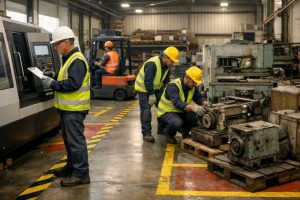
Safety features in equipment design can help reduce workplace incidents, thereby lowering indirect costs relating to injuries, insurance premiums, and regulatory fines.
Proper training and compliance routines, though sometimes overlooked in budgeting, are essential for meeting legal standards and protecting the workforce.
Disposal and end-of-life planning should be considered from the start. Equipment with higher residual value or refurbishment potential can offset replacement costs.
By anticipating when assets will need replacing, businesses can avoid rush decisions that may increase expenditure and disrupt operations.
Optimising for Ergonomics, Efficiency, and Standardisation
Good ergonomic design lessens operator fatigue and the risk of musculoskeletal injuries, which can help maintain productivity and reduce absence-related disruption.
Features such as adjustable handles, clear visibility, or lightweight castors can improve equipment utilisation across shifts and processes.
Deciding between standardised and customised equipment depends on handling profiles and process integration.
Standard equipment may offer savings due to interchangeable parts and simpler training, while tailored specifications can reduce handling damage and improve process flow in specialised environments.
For powered equipment, considering operational inputs such as energy use, charging cycles, and maintenance requirements is essential for cost-effective long-term performance.
To support informed investments, evaluate practical lifecycle-cost factors before purchase, including the equipment’s ability to meet long-term demand and adaptability needs.
Final Thoughts
Consider planned maintenance intervals and parts availability, as well as how safety, ergonomics, and compliance measures affect operating expenses.
Focusing on the cost per task completed, instead of just the cost per unit purchased, enables a more resilient and cost-efficient approach to managing warehouse equipment assets.