

Table of Contents
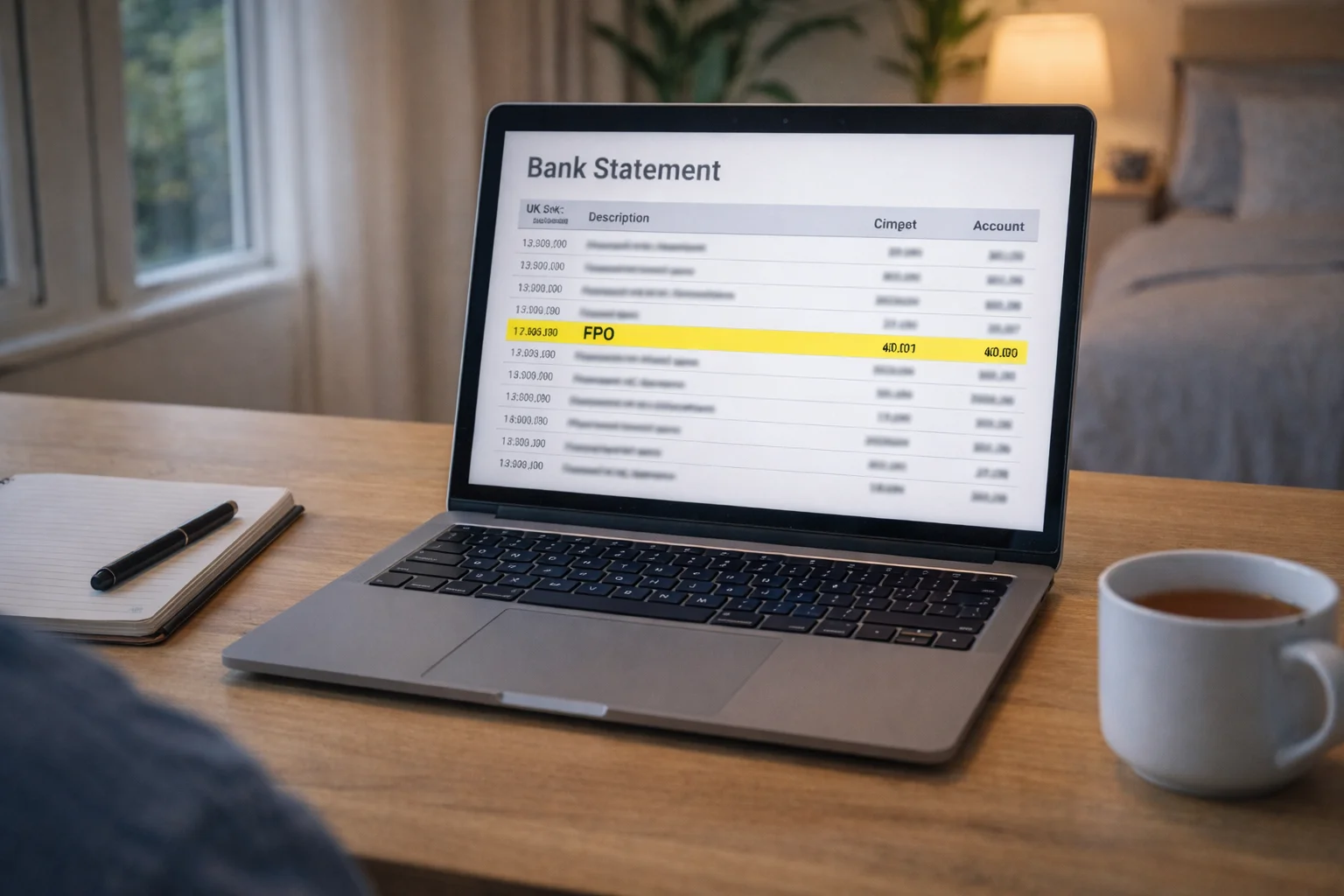
FPO on a bank statement stands for Faster Payment Outwards, which means money has been sent from your account to another account using the UK Faster Payments system. These transactions are usually processed instantly or within a few hours, making them a fast and reliable way to transfer money.
Key takeaways from this guide:
- FPO indicates an outgoing bank transfer you authorised
- Payments are typically completed within minutes or a few hours
- It is mainly used for one off transactions rather than recurring payments
- FPO differs from Direct Debits and Standing Orders in control and purpose
- Once processed, FPO payments are usually difficult to reverse
- Banks provide security measures, but users must verify payment details carefully
What Is FPO on a Bank Statement and What Does It Stand For?

FPO on a bank statement refers to Faster Payment Outwards, a widely used electronic transfer system in the UK that allows individuals and businesses to send money quickly from one bank account to another.
When this label appears on a statement, it indicates that funds have been sent out of the account using the Faster Payments network.
This system was introduced to improve the speed and efficiency of bank transfers, replacing older methods that could take several working days. Today, FPO transactions are a standard part of everyday banking, especially for people using mobile apps or online banking platforms.
FPO is typically used for one off payments, meaning it is not usually linked to recurring billing arrangements. Instead, it reflects an action taken directly by the account holder, such as transferring money to a friend, paying a service provider, or moving funds between personal accounts.
| Element | Description |
| Full Form | Faster Payment Outwards |
| Transaction Type | Outgoing bank transfer |
| Processing System | UK Faster Payments Service |
| Typical Usage | One off payments and immediate transfers |
| Visibility on Statement | Appears as FPO followed by reference details |
The appearance of FPO on a statement may also include additional identifiers such as the recipient’s name, reference number, or partial account details. These help users recognise the purpose of the transaction and confirm its legitimacy.
In modern banking, understanding transaction labels such as FPO is essential for maintaining financial awareness. Many users initially find these abbreviations confusing, especially when reviewing statements with multiple entries. However, once understood, FPO becomes one of the clearest indicators of an outgoing transfer.
How Do FPO Transactions Work in UK Banking?
FPO transactions operate through the Faster Payments Service, which connects banks and financial institutions across the UK. This system enables near real time processing of payments, significantly improving the user experience compared to traditional bank transfers.
What Happens When You Send an FPO Payment?
When a user initiates a payment, several steps take place behind the scenes to ensure the transaction is secure and accurate.
- The user enters the recipient’s account details and payment amount
- The bank performs security checks, including authentication and fraud screening
- The payment request is sent through the Faster Payments network
- The receiving bank verifies the details and credits the recipient’s account
This entire process is designed to occur quickly while maintaining strict security standards. In most cases, the recipient can access the funds almost immediately.
A payments specialist from Birmingham explained this process clearly:
“Many customers assume money just moves instantly without checks, but there are multiple verification layers happening within seconds to ensure the payment is legitimate and accurate.”
How Fast Are Faster Payment Outwards Transactions?
Speed is one of the defining features of FPO transactions. Unlike older systems such as BACS, which can take up to three working days, Faster Payments are typically completed within minutes.
| Scenario | Expected Processing Time |
| Standard FPO transfer | Within seconds to a few minutes |
| Slight delay due to checks | Up to 2 hours |
| Rare exceptions | Up to 24 hours |
Delays may occur if additional security checks are triggered, particularly for large transactions or payments to new recipients. Banks may temporarily hold the transaction to verify its legitimacy, which helps prevent fraud and unauthorised transfers.
Another factor influencing speed is the receiving bank’s processing capability. While most UK banks fully support Faster Payments, minor delays can still happen depending on system updates or technical issues.
Why Would an FPO Transaction Appear on Your Bank Statement?
FPO transactions appear on bank statements whenever money is sent out using the Faster Payments system. These entries are typically linked to everyday financial activities and are often initiated directly by the account holder.
Common scenarios where FPO may appear include transferring money to friends or family, paying for services, settling invoices, or moving funds between personal accounts. In business contexts, FPO may also be used for supplier payments or contractor fees.
| Common Use Case | Example Situation |
| Personal transfer | Sending money to a friend |
| Bill payment | Paying a utility provider manually |
| Internal transfer | Moving money between own accounts |
| Service payment | Paying a freelancer or tradesperson |
In some cases, users may not immediately recognise an FPO transaction, especially if the reference details are unclear. This can happen when businesses use trading names or abbreviated descriptions.
A banking advisor from Leeds shared a practical observation:
“We often see customers confused by FPO entries simply because the reference does not match the name they expect. Once they check the amount and timing, it usually becomes clear what the payment was for.”
Understanding the context of each transaction is important for accurate financial tracking. Reviewing the date, amount, and reference information can usually help identify the purpose of the payment.
Is FPO a Pending Transaction or a Completed Payment?

FPO transactions are generally considered completed payments, meaning the funds have already left the sender’s account and are being processed or have been received by the recipient.
However, the way banks display transactions can sometimes create confusion. Some banking apps may briefly show an FPO transaction as pending before marking it as completed, depending on internal processing stages.
| Transaction Label | Meaning | Status Type |
| FPO | Faster Payment Outwards | Completed |
| Pending | Awaiting final processing | Not completed |
| Authorised | Approved but not fully processed | In progress |
| POS | Card payment at point of sale | May be pending |
The key difference lies in timing. Pending transactions represent payments that are still being processed, while FPO typically indicates that the transfer has moved beyond the initial authorisation stage.
It is also important to distinguish FPO from card-based transactions. Card payments often go through a separate authorisation and settlement process, which can take longer to appear as fully completed.
How Is FPO Different from Direct Debit and Standing Orders?
FPO differs significantly from other common payment methods used in the UK, particularly Direct Debits and Standing Orders. Each method serves a specific purpose and operates under different rules.
| Feature | FPO | Direct Debit | Standing Order |
| Initiator | Account holder | Organisation | Account holder |
| Frequency | One off | Recurring | Recurring |
| Control | Immediate and flexible | Controlled by company | Fixed by user |
| Processing Speed | Instant or near instant | Several days | Scheduled dates |
FPO is best suited for immediate, one time payments where flexibility and speed are important. Direct Debits are typically used for regular bills such as utilities or subscriptions, while Standing Orders are ideal for fixed recurring payments like rent.
Another key distinction is control. With FPO, the user has full control over when and how much to send. In contrast, Direct Debits allow organisations to collect payments automatically, which can sometimes lead to unexpected charges if not monitored carefully.
Can You Cancel or Reverse an FPO Payment?
Cancelling or reversing an FPO payment can be challenging due to the speed at which these transactions are processed. Once the payment has been authorised and sent, it usually cannot be stopped.
Is It Possible to Stop an FPO Before It’s Completed?
There is a very limited window during which a payment may be cancelled. This typically exists only before the transaction has been fully processed by the bank.
- Immediate action is required
- The bank must be contacted quickly
- Cancellation is not guaranteed
What Should You Do If You Sent Money by Mistake?

If an error occurs, such as sending money to the wrong account, the first step is to contact the bank as soon as possible. The bank may attempt to recover the funds by contacting the recipient’s bank.
| Step | Action Required |
| Identify the error | Check transaction details |
| Contact bank | Report the issue immediately |
| Provide evidence | Share transaction reference and amount |
| Await response | Bank investigates and attempts recovery |
A financial officer from Manchester explained this situation:
“Once an FPO payment is completed, we rely on the receiving bank and the recipient’s cooperation. That is why we always emphasise checking details carefully before confirming a transfer.”
Recovery is not always successful, particularly if the recipient refuses to return the funds. This highlights the importance of accuracy when entering payment details.
What Should You Do If You Don’t Recognise an FPO Charge?
Unrecognised FPO transactions can be concerning, but they are not always a sign of fraud. In many cases, the confusion arises from unclear references or forgotten payments.
The first step is to review the transaction details thoroughly. Look at the date, amount, and reference information to determine whether it matches any recent activity.
If the transaction still cannot be identified, further action should be taken.
- Check with family members who may have access to the account
- Review recent purchases or transfers
- Contact the bank for clarification
- Report the transaction if it appears suspicious
Banks have dedicated fraud teams that can investigate unusual activity and take appropriate action. Acting quickly increases the likelihood of resolving the issue and preventing further unauthorised transactions.
Are FPO Payments Safe and Secure in the UK?

FPO payments are designed with strong security measures to protect users and reduce the risk of fraud. The UK banking system uses advanced technologies and regulatory frameworks to ensure safe transactions.
| Security Feature | Purpose |
| Authentication checks | Verifies user identity |
| Fraud monitoring systems | Detects suspicious activity |
| Confirmation of Payee | Ensures correct recipient details |
| Encryption technology | Protects data during transfer |
Despite these safeguards, users must remain vigilant. Entering incorrect details or falling victim to scams can still result in financial loss.
A compliance officer from London highlighted this balance:
“The system itself is highly secure, but human error remains one of the biggest risks. Taking a moment to verify details can prevent serious issues.”
Maintaining awareness and practising safe banking habits are essential for making the most of the Faster Payments system while minimising potential risks.
Final Thoughts on Understanding FPO Transactions
FPO is a simple yet essential part of modern UK banking. It allows individuals and businesses to send money quickly and securely without the delays associated with traditional payment methods.
By recognising what FPO means on a bank statement, users can better track their spending, identify legitimate transactions, and respond quickly if something seems unusual.
Frequently Asked Questions About FPO on Bank Statements
What does FPO mean on a bank statement in the UK?
FPO stands for Faster Payment Outwards, indicating a payment sent from your account using the UK Faster Payments system.
How long does an FPO payment take?
Most FPO payments are completed instantly or within a few minutes, although some may take up to 24 hours.
Can an FPO payment be reversed?
In most cases, no. Once processed, FPO payments are difficult to reverse unless the recipient agrees.
Is FPO the same as a bank transfer?
Yes, FPO is a type of bank transfer, specifically one processed through the Faster Payments system.
Why is FPO showing on my statement?
It appears when you send money from your account to another account, either to a person or a business.
Is FPO safe to use?
Yes, FPO is secure, but users should always double-check payment details before sending money.
What should I do if I don’t recognise an FPO transaction?
Check the transaction details and contact your bank immediately if you suspect fraud.