

Table of Contents
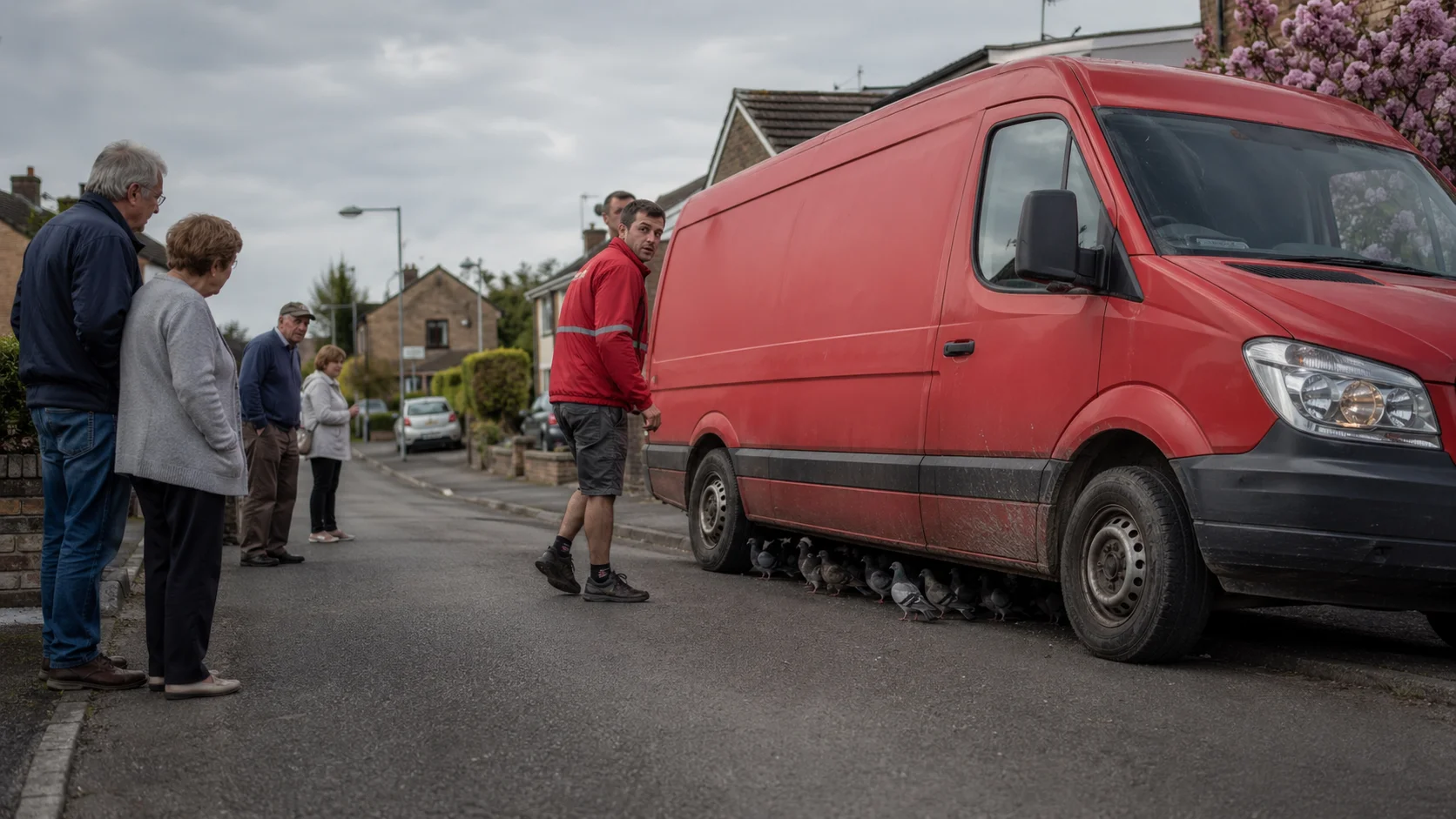
The Nailsea Royal Mail bird rescue story centres on a family of pigeons that survived for more than three weeks beneath a working delivery van, travelling daily routes unnoticed before being safely rescued by a local wildlife team.
The incident highlights both the adaptability of urban birds and the importance of human awareness in unexpected situations involving wildlife.
Key takeaways:
- Pigeons nested under a Royal Mail van in Nailsea
- The birds travelled daily between delivery locations
- A Royal Mail worker identified unusual behaviour
- Curious Critters carried out a careful rescue operation
- All birds were found healthy and relocated safely
- The case shows how wildlife adapts to human environments
- It raises awareness about vehicle checks and animal welfare
What Happened in the Nailsea Royal Mail Bird Rescue Incident?

The Nailsea Royal Mail bird rescue incident unfolded in a way that few would expect from an ordinary delivery route.
A routine working day turned into a remarkable wildlife discovery when a family of pigeons was found living beneath a Royal Mail van.
The birds had not only built a nest in a concealed section of the vehicle but had also survived repeated daily journeys between Nailsea and Flax Bourton for over three weeks.
What makes this case particularly striking is the duration of the pigeons’ stay and their ability to remain undetected.
The adult female pigeon had chosen a narrow space within the van’s undercarriage, where she laid eggs and raised her young.
By the time the discovery was made, the squabs had already developed significantly, indicating that the nesting had begun weeks earlier.
The van continued its normal delivery operations during this time. This meant the birds were exposed to constant vibrations, engine noise and movement.
Despite these challenges, the pigeons adapted and managed to thrive. Their survival demonstrates how wildlife can adjust to human environments in unexpected ways.
A few important elements define the uniqueness of this incident:
- The birds remained hidden for more than three weeks
- The nest was built in a moving vehicle rather than a static location
- The squabs developed normally despite constant travel
- The rescue was carried out without injury to the birds
This situation reflects a combination of coincidence and resilience. The pigeons selected a location that provided warmth and protection, while the vehicle’s regular movement did not disrupt their ability to care for their young.
How Did Pigeons End Up on a Royal Mail Delivery Route in Nailsea?
The presence of pigeons beneath a Royal Mail van may seem unusual at first, but when viewed through the lens of urban wildlife behaviour, it becomes more understandable.
Pigeons have long adapted to living alongside humans, often using man made structures as substitutes for natural nesting sites.
Why Do Pigeons Choose Unusual Nesting Spots?
Pigeons are highly resourceful birds. In towns and cities across the UK, they regularly select nesting sites that differ significantly from their original cliffside habitats. Ledges, rooftops, bridges and even abandoned machinery often serve as suitable alternatives.
In this case, the underside of the van offered several advantages:
- A sheltered and enclosed environment
- Protection from predators such as foxes and cats
- Warmth generated by the vehicle’s engine
- Limited disturbance during stationary periods
These conditions closely resemble the safe and enclosed spaces pigeons instinctively seek when nesting.
How Vehicles Become Unexpected Wildlife Shelters?
Vehicles are not typically considered habitats, yet they can unintentionally provide ideal conditions for certain animals. Vans that are parked overnight or used regularly create a stable micro environment. Heat retained from the engine and protection from harsh weather can make them attractive to birds looking for nesting spots.
The following table highlights how vehicle environments can support wildlife nesting:
| Feature of Vehicle Environment | Benefit for Birds |
| Engine warmth | Maintains a stable temperature |
| Enclosed framework | Provides protection from predators |
| Limited human interference | Reduces stress during nesting |
| Elevated structure | Keeps nest off the ground |
The Nailsea Royal Mail bird rescue demonstrates how easily wildlife can adapt to such environments. It also raises awareness about the need to consider hidden spaces in everyday surroundings.
Who Discovered the Pigeons Under the Royal Mail Van?

The discovery of the pigeons was made by Louise Thomas, a Royal Mail worker based in Nailsea. Her attention to detail played a crucial role in identifying the situation before it escalated into a potential risk for the birds.
She noticed unusual behaviour from a pigeon that appeared to be attempting to access the underside of a van. This behaviour stood out because it was persistent and focused on a specific area. Rather than ignoring it, she chose to investigate further.
Upon closer inspection, it became clear that the bird was not simply exploring but was returning to a nesting site. This realisation prompted immediate action and led to the involvement of a local wildlife rescue team.
The significance of this moment lies in awareness. In many similar situations, such behaviour might be overlooked. However, recognising subtle signs can make a critical difference in protecting wildlife.
How Were the Birds Safely Rescued by Curious Critters in Nailsea?
Once the presence of the pigeons was confirmed, the rescue operation was entrusted to Curious Critters, a local wildlife rescue organisation with experience in handling delicate animal situations.
The Role of Local Wildlife Rescue Teams
Wildlife rescue teams are essential in situations where animals are trapped, injured or at risk. Their expertise allows them to assess conditions quickly and take appropriate action without causing harm.
Their responsibilities often include:
- Evaluating the safety of the environment
- Using specialised tools to access confined spaces
- Handling animals with minimal stress
- Transporting them to rehabilitation facilities
In the Nailsea case, the rescuers had to work within a very confined and awkward space beneath the van.
Tools and Techniques Used in the Bird Rescue
To access the nest, the team used an A frame to lift the vehicle safely. The narrow gap in which the pigeons were located made the process particularly challenging. The birds were positioned deep within the chassis, requiring careful manoeuvring.
A wildlife rescuer familiar with such operations explained the complexity of these situations. “In many rescues, the biggest challenge is not the animal itself but the environment it has chosen. We often have to adapt our approach to reach them safely without causing panic or injury.”
Once the birds were located, they were gently removed and placed in a secure carrier. The mother remained with her young, ensuring continuity in feeding and care.
The following table outlines the key stages of the rescue process:
| Stage | Action Taken |
| Assessment | Identified nest location |
| Preparation | Secured vehicle using A frame |
| Extraction | Carefully removed birds |
| Transport | Moved to rehabilitation aviary |
| Monitoring | Ensured continued feeding |
The successful outcome highlights the importance of professional intervention in wildlife rescue scenarios.
Why Is the Nailsea Pigeon Rescue Story Gaining Attention Across the UK?
The Nailsea Royal Mail bird rescue story has attracted widespread interest due to its unusual nature. While wildlife encounters are not uncommon, the idea of birds living beneath a moving vehicle for weeks is both surprising and compelling.
Several factors contribute to the story’s appeal:
- The unexpected location of the nest
- The survival of the birds despite daily travel
- The involvement of a well known organisation like Royal Mail
- The positive outcome following the rescue
Stories like this resonate because they reveal how closely human and animal lives intersect. They also highlight moments where awareness and action lead to successful outcomes.
What Does This Incident Reveal About Animal Welfare and Royal Mail Operations?

The incident provides insight into both animal welfare considerations and operational practices within organisations that rely heavily on vehicles.
From an animal welfare perspective, it demonstrates the importance of recognising and responding to unusual situations involving wildlife. The quick action taken by the Royal Mail worker ensured that the birds were not harmed.
From an operational standpoint, it raises awareness about the need for routine checks. While vehicle inspections are primarily focused on safety and performance, there is growing recognition of environmental factors.
A transport safety advisor shared a relevant perspective. “Routine checks are usually about tyres, fuel and mechanical condition, but situations like this show there is also a need to remain aware of the surroundings. It is not about adding complexity but about noticing what does not seem normal.”
This balanced view highlights how small observations can contribute to both safety and animal welfare without disrupting daily operations.
How Do Pigeons Survive in Challenging Environments Like Delivery Vehicles?
Pigeons are known for their resilience and ability to adapt to a wide range of environments. Their success in urban areas is largely due to behavioural flexibility and strong survival instincts.
Understanding Pigeon Behaviour and Adaptability
Pigeons have evolved to thrive in environments shaped by human activity. They are comfortable nesting in confined spaces and can tolerate noise and movement to a certain extent.
Their adaptability includes:
- Returning consistently to nesting sites
- Navigating complex urban landscapes
- Adjusting feeding patterns based on availability
Feeding Habits and Care of Squabs
The survival of the squabs in this scenario indicates that the parent pigeons were able to maintain a steady feeding routine. Young pigeons rely on crop milk, a nutrient rich substance produced by the parents.
The following table explains key aspects of pigeon development:
| Stage | Description |
| Egg incubation | Lasts approximately 18 days |
| Early development | Squabs remain dependent on parents |
| Feeding | Crop milk followed by solid food |
| Fledging | Occurs after 3 to 4 weeks |
The fact that the squabs were found healthy suggests that the environment, despite its risks, provided enough stability for proper growth.
What Role Did the Nailsea Community Play in This Bird Rescue Story?
Community awareness played an indirect but important role in this incident. The observation made by the Royal Mail worker reflects a broader sense of responsibility that exists within local communities.
When individuals remain attentive to their surroundings, they contribute to early detection of unusual situations. This can be particularly valuable in urban areas where wildlife often goes unnoticed.
The response from the local rescue team further demonstrates how community based organisations support animal welfare. Their ability to act quickly and effectively depends on timely information from the public.
What Happens to Rescued Birds After Incidents Like This?

After being rescued, the pigeons were transported to a rehabilitation aviary in Backwell. These facilities are designed to provide a safe and controlled environment where animals can recover and develop without external threats.
Rehabilitation Process in Wildlife Aviaries
Rehabilitation involves several stages, each focused on ensuring the well being of the animals. The birds are monitored closely to assess their health and behaviour.
Typical care includes:
- Providing a secure and quiet environment
- Ensuring consistent feeding routines
- Monitoring physical development
- Minimising human interaction to encourage natural behaviour
When and How Birds Are Released Back into the Wild?
Release is carefully planned to ensure that the birds are fully capable of surviving independently. This usually occurs once the young birds can fly confidently and feed themselves.
The following table outlines the rehabilitation timeline:
| Phase | Purpose |
| Initial care | Stabilise and assess health |
| Development | Support growth of young birds |
| Conditioning | Encourage natural behaviours |
| Release | Return to a safe outdoor environment |
The goal is always to return the animals to the wild in a condition that allows them to thrive.
Could This Happen Again on UK Delivery Routes?
Although rare, similar incidents could occur in other locations. Vehicles that are used regularly and parked in predictable patterns may unintentionally attract wildlife.
Awareness is the most effective way to reduce the likelihood of such situations. Simple observations and routine checks can help identify potential issues early.
How Can People Help Injured or Trapped Birds in the UK?

Members of the public play an important role in supporting wildlife rescue efforts. Knowing how to respond in situations involving injured or trapped birds can make a significant difference.
Key actions include:
- Observing the situation without causing disturbance
- Contacting a local wildlife rescue organisation
- Avoiding direct handling unless necessary
By taking these steps, individuals can help ensure that animals receive the care they need while minimising risk.
Conclusion
The Nailsea Royal Mail bird rescue story highlights the resilience of wildlife and the importance of human awareness.
A simple observation led to the safe rescue of a pigeon family that had unknowingly adapted to an unusual and potentially dangerous environment.
It serves as a reminder that even in routine settings like delivery routes, unexpected situations can arise, requiring quick thinking and compassion.
The successful outcome reflects the combined efforts of individuals and local rescue teams working together to protect wildlife.
FAQs
What should you do if you find a bird trapped under a vehicle in the UK?
If you discover a bird trapped under a vehicle, avoid moving the vehicle and contact a local wildlife rescue organisation immediately. They have the expertise to handle the situation safely.
How long do pigeons take to hatch and grow?
Pigeon eggs typically hatch after around 18 days, and the chicks take approximately three to four weeks to develop before they are ready to leave the nest.
Is it common for birds to nest in vehicles?
While not extremely common, birds occasionally nest in or under vehicles, especially if the environment provides warmth and protection.
Are pigeons protected under UK wildlife laws?
Yes, pigeons are protected under general animal welfare laws in the UK, making it illegal to harm them unnecessarily.
Who are Curious Critters in Nailsea?
Curious Critters is a local wildlife rescue organisation that specialises in rescuing and rehabilitating animals in the Nailsea and surrounding areas.
Can Royal Mail drivers intervene in animal rescue situations?
Royal Mail staff can report and assist in such situations, but trained wildlife rescue teams are usually called to handle the rescue safely.
How can local communities support wildlife rescue efforts?
Communities can support wildlife rescue by reporting incidents, donating to local charities, and raising awareness about animal welfare.