


Table of Contents
Manufacturers face increasing pressure to source electronic components that consistently meet stringent quality and reliability standards.
Failures, shortages, and supply chain inconsistencies can disrupt production and lead to significant financial consequences. Understanding what underpins reliable sourcing is critical to safeguarding operational efficiency and end product performance.
In recent years, component reliability has become a priority for decision-makers due to its significant impact on manufacturing continuity and brand reputation. The consequences of late component failures, unexpected shortages, and quality concerns can result in costly downtime and product recalls.
Many organisations aim to improve their competitive position by refining sourcing strategies, including assessing specialist component suppliers such as Euroquartz within broader procurement criteria.
Identifying key factors in sourcing reliable electronic components can help prevent costly disruptions in 2026 and in the years ahead.
Defining Reliability in the Context of Sourcing
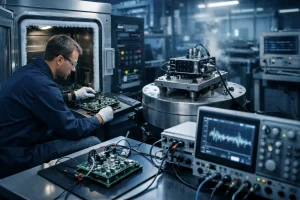
When assessing electronic components for reliability, consider performance under the full range of conditions in which they will operate. Consistency across multiple batches, as well as during long production runs, indicates a supplier’s ability to maintain high standards.
Reliability depends on how components perform under environmental stresses such as temperature variations, mechanical vibration, and repeated duty cycles.
As products are expected to function consistently over time, it is also important to examine lifecycle stability and the prospects for ongoing supply of the specified part numbers.
Beyond immediate performance metrics, reliability encompasses the component’s ability to maintain specifications throughout its rated operational lifespan.
This includes resistance to degradation from humidity exposure, electrical stress, and thermal cycling that commonly occur in real-world applications.
Manufacturers should evaluate supplier test data that demonstrates component behaviour under accelerated life testing conditions, as this provides insight into long-term failure modes and expected mean time between failures.
Understanding these reliability parameters enables more accurate prediction of maintenance requirements and warranty obligations for finished products.
Conducting Due Diligence on Suppliers Effectively
Supplier due diligence is fundamental to reliable sourcing. You should request detailed traceability and documentation that verifies the history and origin of critical components. This supports compliance with regulatory and industry standards.
Quality management systems, along with a supplier’s readiness for procedural audits, can help mitigate potential sources of risk.
Clear change-control processes and prompt notification practices protect production from unanticipated part changes that could jeopardise performance or compliance.
Evaluating a supplier’s financial stability and business continuity planning is equally important as assessing their technical capabilities. Suppliers with robust risk management frameworks, diversified manufacturing locations, and transparent capacity planning processes demonstrate greater resilience against disruptions.
Request information about their disaster recovery procedures, backup production facilities, and inventory management practices.
Additionally, examining a supplier’s track record for on-time delivery performance and their responsiveness to urgent requirements provides valuable insight into their operational reliability and commitment to customer support during critical situations.
Establishing Robust Checkpoints for Quality and Compliance

Systematic incoming inspection and strategic verification checks provide early detection of deviations before integration into assemblies. Integrating test data, screening options, and relevant certifications strengthens supply chain integrity and offers additional assurance regarding authenticity.
Counterfeit component risk can be reduced by relying on approved distribution channels and maintaining strict protocols. Inspecting for anti-counterfeit markings and supply chain paperwork can help confirm the sourcing chain’s reliability.
Building Engineering Alignment and Commercial Resilience

Close technical support from suppliers enables rapid resolution of design queries and unexpected manufacturing issues. Collaboration on specifications, tolerances, and potential part substitutions reduces uncertainty and ensures optimal matching with design requirements.
Support for failure analysis and corrective actions provides clarity when issues arise. When considering commercial resilience, account for lead times and allocation risk, using a strategic second-sourcing approach and inventory buffers for products with extended life cycles.
Evaluating total cost of ownership, rather than focusing solely on unit price, can help optimise long-term value and minimise operational risk while sourcing electronic components for manufacturing.