
Table of Contents
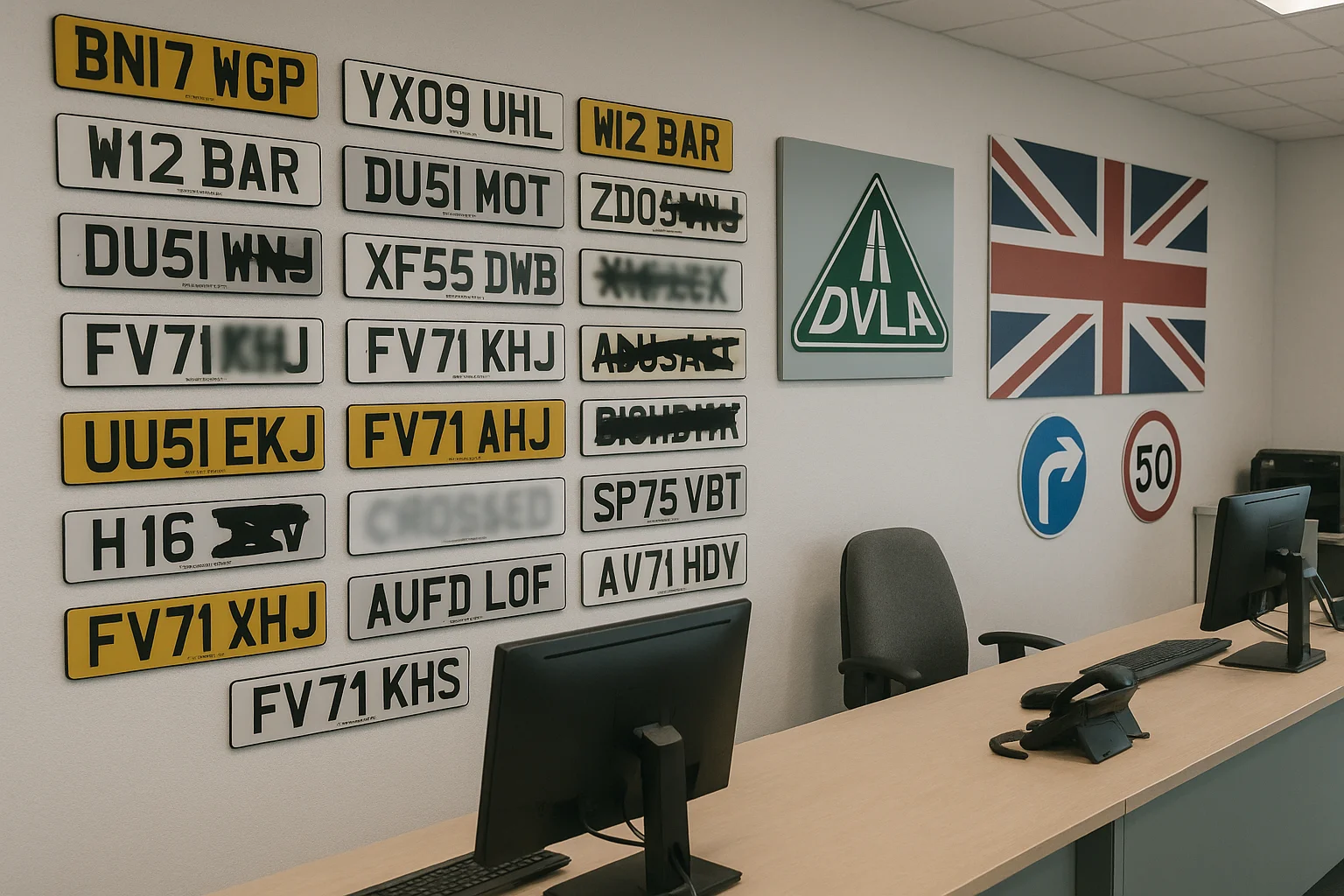
Each year, the Driver and Vehicle Licensing Agency (DVLA) in the UK conducts a thorough review of number plate combinations to ensure they meet public decency and safety standards.
As we approach 2026, the DVLA has issued a new list of banned number plates a routine but necessary process aimed at preventing offensive, inappropriate, or politically sensitive registrations from reaching public roads.
Motorists who choose to personalise their number plates should take particular care, as being found with an offensive or banned plate could result in a fine of up to £1,000.
This year’s banned list has grown significantly compared to previous years, highlighting the DVLA’s increasing vigilance amid evolving social and political sensitivities.
Why Does the DVLA Ban Certain Number Plates in 2026?
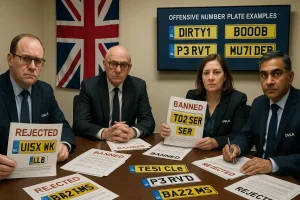
The DVLA has a long-standing procedure of reviewing and banning number plate combinations that may be seen as offensive, rude, or politically sensitive.
This process is conducted twice a year before the release of new plates in March and September.
For 2026, the DVLA has become increasingly cautious due to ongoing global conflicts, social sensitivity, and public complaints.
The primary reasons for banning plates include:
- Offensive language or abbreviations that imply profanity or vulgarity
- References to drugs, alcohol, or criminal behaviour
- Sexual content or innuendos
- Racist, sexist, or discriminatory implications
- References to political or religious groups
- Links to current global conflicts or terrorism
Plates are carefully reviewed by a panel that considers phonetic pronunciation, cultural implications, and context.
Even if a plate combination seems innocent at first glance, it may be banned if it resembles offensive content when spoken aloud or interpreted differently.
What Are the Risks of Driving with a Banned Number Plate in the UK?
Motorists who display a banned or illegal number plate face a number of legal and financial consequences.
The DVLA has the authority to take enforcement actions against those who ignore the regulations. Police also have powers to stop vehicles with suspicious or non-compliant plates.
Key risks include:
- A fixed penalty fine of up to £1,000
- The vehicle failing its MOT due to non-compliant plates
- The plate being withdrawn by the DVLA at any time
- The car being flagged for inspection or stopped more frequently by traffic officers
Even personalised number plates that were issued legally can be revoked later if the DVLA receives complaints or if global events make the combination inappropriate.
This retroactive measure is used to protect public standards and ensure registration numbers do not cause offence.
How Many Number Plates Have Been Banned for 2026?
The DVLA banned 210 number plate combinations in 2025. That number has risen sharply in 2026, with 436 registrations now banned from the upcoming plate release.
This growth in restrictions reflects the increasing vigilance of the DVLA, driven by global tensions and domestic sensitivities.
The table below highlights the increase in banned plates over recent years:
| Year | Number of Banned Plates |
| 2023 | 196 |
| 2024 | 210 |
| 2025 | 210 |
| 2026 | 436 |
This jump is one of the highest ever recorded and shows how seriously the DVLA takes concerns around public decency and social context.
The higher number also reflects the complexity of identifying potentially offensive content in a multicultural and politically aware society.
Which Number Plate Combinations Have Been Banned for 2026?
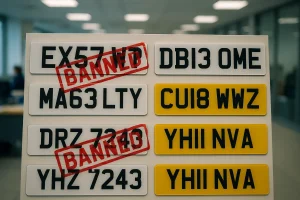
A significant number of the banned 2026 plates refer to ongoing international conflicts, sexual innuendos, and phrases that may appear harmless until spoken aloud.
The DVLA proactively blocks these combinations from being issued to avoid controversy.
Here is a table showing some of the banned plates for 2026 along with the reason for rejection:
| Registration | Reason for Ban |
| GA26 AZA | Reference to Gaza conflict |
| RU26 RUS | Refers to Russia amid geopolitical tensions |
| RU26 UKR | Reference to Ukraine |
| YE26 MEN | Possible allusion to Yemen conflict |
| MU26GER | Phonetic for “mugger” |
| BA26OMB | Suggests “bomb”, linked to terrorism |
| JE26HAD | Religious and terrorism connotation |
| AN26US | Inappropriate anatomical reference |
| BJ26 BALS | Sexual innuendo |
| BJ26 AGG | Aggressive wording |
| BJ26 STD | Reference to sexually transmitted disease |
Some of these combinations may appear subtle but can cause serious reputational damage or offence when used in public.
The DVLA uses both manual checks and automated tools to ensure that banned plates are withheld before distribution.
How Does the DVLA Decide If a Plate Is Offensive or Inappropriate?
The DVLA uses a well-defined process to determine whether a registration number is suitable for issue.
Each potential plate is reviewed carefully to prevent offensive or controversial combinations from appearing on UK roads.
Criteria Used to Assess Number Plates
Before new registration plates are released, the DVLA’s internal review committee evaluates upcoming combinations based on several core criteria:
- Phonetic resemblance to offensive language when spoken aloud
- Visual similarities to profane or obscene terms
- Links to religious, political, or criminal references
- Sexual innuendos, slurs, or discriminatory phrases
- Associations with violence, drugs, terrorism, or extremism
This means a plate doesn’t have to be explicit in its spelling to be rejected. If a combination is likely to be misinterpreted or cause offence in public, it will be banned.
Role of the DVLA Review Panel
A dedicated DVLA panel convenes twice a year to review and approve or ban registration combinations. The team often includes:
- Linguistic experts to identify phonetic issues
- Cultural advisors to interpret context and relevance
- Legal consultants to ensure compliance with public standards
This panel uses both automated filtering and manual review to flag potentially problematic plates. The final decision rests with the committee, which uses discretion to ban combinations even if they fall in a legal grey area.
Consideration of Changing Cultural and Political Contexts
The DVLA also considers ongoing events and changing cultural sensitivities when assessing plates.
For instance, a plate referring to a region experiencing political unrest or conflict may be banned out of respect for affected communities.
Recent examples include banning plates like RU26 RUS and GA26 AZA, which reference Russia and Gaza respectively both sensitive topics due to current global tensions.
Retrospective Banning of Issued Plates
While the DVLA aims to prevent offensive plates from being issued in the first place, there are rare instances where a plate is later banned after release. This occurs when:
- A plate gains new meaning through current events
- Public complaints are raised post-issue
- Media or social media attention highlights a potential problem
In such cases, the DVLA can revoke the plate and assign the vehicle a new registration number.
Can Personalised Number Plates Still Be Purchased Safely in 2026?
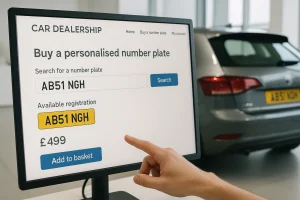
Personalised number plates remain legal and widely available through the DVLA’s online service, but motorists must adhere to the outlined regulations.
Personalisation allows drivers to express individuality, but it should never cross the line into indecency or mockery.
To safely customise a number plate in 2026:
- Use the DVLA’s official website to search and purchase
- Avoid spellings that resemble controversial words or names
- Do not alter letter spacing or layout to mimic words
- Avoid abbreviations that may be misunderstood or misinterpreted
It’s also important to check for regional slang or terms that may be offensive in certain parts of the UK or when read aloud. What may seem humorous or harmless to one person can be deeply inappropriate to another.
What Are the Legal Requirements for UK Number Plates in 2026?
In addition to avoiding offensive content, UK number plates must meet specific design and format rules.
These are enforced by both the DVLA and local police authorities to ensure clarity, readability, and compliance with national standards.
Mandatory Font and Character Specifications
All legal number plates must use the Charles Wright 2001 typeface. This is a standardised font designed for high legibility and easy identification by cameras and law enforcement.
Key font rules include:
- Characters must be a specific height and width
- No stylised or italicised lettering is allowed
- Fonts must not be stretched, compressed, or altered in thickness
Deviation from these rules can result in the plate being classed as illegal, even if the registration number itself is permitted.
Layout and Spacing Regulations
Character spacing and layout are essential aspects of number plate legality. The DVLA mandates that all plates adhere to strict guidelines regarding:
- Fixed spacing between groups (e.g., between the numbers and letters)
- No use of symbols or images between characters
- Letters and numbers must not be rearranged to create readable words or names
Plates must also maintain standard formatting, such as “AB26 XYZ”, with no attempts to manipulate the spacing for humour or messaging.
Reflectivity and Colour Requirements
To comply with UK regulations, number plates must follow these colour and reflectivity standards:
- Front plates: White background with black characters
- Rear plates: Yellow background with black characters
- Both front and rear must be reflective for visibility at night
- No background patterns, textures, or tinted covers allowed
These visual standards ensure number plates are readable by ANPR (Automatic Number Plate Recognition) systems and during routine checks.
Plate Size and Positioning on Vehicles
Plates must be rectangular and securely fixed to the vehicle. Depending on the type of vehicle (car, motorcycle, or van), there are slightly different size requirements.
General rules include:
- Plates must be of a minimum width and height depending on character count
- No custom shapes or vertical placements are permitted
- Plates must be visible from specific angles and distances
Incorrect positioning or unconventional designs may result in MOT failure or roadside fines.
Common Modifications That Make Plates Illegal
Even if a plate is legal in terms of content, physical modifications can make it unlawful. Common examples include:
- Adding coloured bolts to change the look of characters
- Using screw placements to mimic other letters
- Applying tinted films over the plate
- Using 3D gel characters in non-compliant styles
These modifications are frequently spotted by police and ANPR systems. Drivers found with such alterations can be fined and required to replace their plates immediately.
Can the DVLA Revoke a Plate After It Has Been Issued?
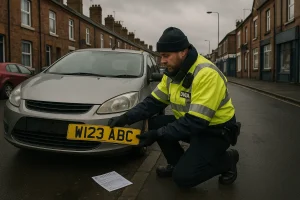
The DVLA has the authority to revoke number plates that have already been issued if they later become problematic or offensive.
This process is not common but can occur when a word or abbreviation gains a new cultural or political meaning over time.
Revocation may happen if:
- The plate becomes linked to controversial events or movements
- It is flagged by members of the public or law enforcement
- It appears in media coverage in a negative context
- The driver is using the plate in a way that draws unwanted attention
The DVLA reviews such cases individually and takes action based on the potential harm or offence caused.
Motorists who have their plate revoked are typically assigned a replacement registration free of charge, but the personalised plate itself becomes permanently withdrawn.
Conclusion
The banning of number plates is a crucial part of the DVLA’s responsibility to uphold standards of public decency, road safety, and legal compliance.
With 436 combinations banned for 2026 alone, it’s clear that the DVLA is taking an increasingly proactive approach in filtering out offensive or insensitive content.
For car owners and enthusiasts, staying informed about these bans is essential not just to avoid fines, but also to ensure that personalised plates remain a fun and respectful expression of individuality on the road.
FAQs About Banned Number Plates 2026
Will the banned plates change again before 2026?
Yes, the DVLA may update the list before release if new combinations are deemed offensive or problematic.
Can I appeal a banned number plate decision?
No, once a plate is banned by the DVLA, the decision is final and cannot be appealed.
Is it legal to sell a previously banned plate privately?
No, banned plates cannot be sold or transferred, even privately, as they are removed from circulation.
How often does DVLA review number plates?
Twice a year, before the March and September number plate releases.
Can a banned plate be unbanned in the future?
Unlikely. Once a combination is banned, it is generally withheld indefinitely to avoid potential offence.
Are custom fonts ever allowed on UK plates?
No. All plates must use the Charles Wright 2001 font without alterations in style or thickness.
What’s the difference between a banned and illegal number plate?
A banned plate is one withheld by the DVLA for being offensive. An illegal plate is one that does not meet format or visibility requirements, regardless of content.