


Table of Contents
Waste services are directly linked to operational costs for London businesses, and in many cases, they are becoming a significant financial factor rather than a background expense.
Rising disposal fees, stricter regulations, and complex urban logistics are increasing the overall cost burden.
Businesses that actively manage waste through efficient strategies and flexible services are better positioned to control expenses and protect profit margins.
Key Takeaways:
- Waste services are a recurring operational cost impacting cash flow
- London-specific factors drive higher pricing than other regions
- Recycling and waste reduction can lower overall expenses
- Flexible solutions help avoid unnecessary fixed costs
- Compliance with regulations is essential to avoid penalties
- Future costs are likely to increase due to environmental policies
How Do Waste Services Contribute to Business Operating Costs?
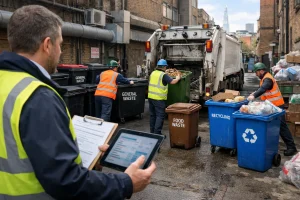
Waste services form a continuous cost layer that directly affects cash flow. Unlike one-time expenses, these services recur weekly or monthly, depending on the business type and size.
For many companies in London, waste costs are not fixed, as they fluctuate based on volume, frequency, and regulatory requirements.
The cost structure typically includes collection, transportation, processing, and disposal. Additional charges may apply for hazardous waste, bulky items, or specialised recycling.
Businesses operating in sectors such as hospitality or construction often generate higher waste volumes, leading to more frequent collections and increased costs.
| Cost Component | Description | Impact on Business |
| Collection Fees | Regular pickup of waste | Recurring monthly cost |
| Transportation | Movement to disposal sites | Higher in central London |
| Disposal Charges | Fees based on waste type | Significant cost driver |
| Recycling Services | Sorting and processing recyclables | Can reduce overall cost |
| Compliance Costs | Meeting legal requirements | Avoids penalties |
For smaller businesses, these costs may appear manageable initially, but over time they accumulate and influence profitability.
Larger businesses must allocate dedicated budgets for waste management, often negotiating contracts with private providers.
Why Are Waste Management Costs Higher in London?
London presents a set of operational challenges that make waste management significantly more expensive compared to other UK regions.
Businesses are not just paying for collection and disposal, but also for the complexity of operating within a dense, highly regulated urban environment. Each factor adds layers of cost that build up over time and directly affect service pricing.
1. Environmental Regulations
One of the biggest cost drivers in London is the strict environmental framework that waste service providers must follow.
Clean air policies, emissions standards, and sustainability targets require companies to operate low-emission or electric fleets, which are more expensive to purchase and maintain.
These upgrades are not optional, and the cost is often passed on to businesses through higher service fees.
Additionally, providers must comply with regulations around waste tracking, disposal documentation, and recycling quotas. This increases administrative overhead and operational complexity.
Businesses indirectly pay for this through higher collection charges, especially in areas where environmental enforcement is stricter. Over time, as policies continue to tighten, these costs are expected to rise further.
2. Space Constraints
Space limitations are another major factor influencing waste costs. Many businesses in central London operate in compact premises with little to no room for storing large bins or separating waste efficiently.
As a result, they cannot hold waste for long periods and must arrange more frequent collections.
This increased frequency leads to higher transport and labour costs. Instead of weekly collections, some businesses require daily or multiple pickups per week.
Limited access points, shared commercial spaces, and restricted loading areas also slow down collection processes, making each visit more time-consuming and expensive for service providers.
3. Labour and Logistics
Labour costs in London are higher than in most parts of the UK, and this directly impacts waste service pricing. Waste collection requires trained staff who operate within strict safety and compliance guidelines.
Higher wages, combined with additional training and regulatory requirements, increase operational expenses.
Logistics also play a significant role. Traffic congestion, restricted access zones, and complex route planning make waste collection less efficient.
Vehicles spend more time navigating the city, leading to higher fuel consumption and longer working hours. These inefficiencies are built into pricing structures, meaning businesses ultimately pay more for the same service compared to less congested areas.
4. New Recycling Laws
From 2025 onwards, new recycling regulations are adding another layer of cost and complexity.
Businesses are now required to separate waste streams more effectively, including food waste, recyclables, and general waste. While this supports environmental goals, it also increases operational demands.
Companies may need to invest in additional bins, staff training, and internal processes to ensure compliance.
Waste providers must also handle multiple waste streams separately, which increases collection time and processing costs.
In the short term, this can lead to higher service charges, although businesses that adapt efficiently may see cost benefits over time through improved recycling practices.
What Are Typical Waste Disposal Costs for London Businesses?

Waste costs vary depending on industry, but the following table provides a realistic breakdown of typical expenses faced by London businesses.
| Waste Type | Average Cost per Tonne | Notes |
| General Waste | £170 to £250 | Most common business waste |
| Recycling | £90 to £180 | Lower cost with proper sorting |
| Food Waste | £120 to £200 | Mandatory separation in many cases |
| Mixed Waste | £250+ | Higher due to sorting complexity |
| Hazardous Waste | £300+ | Requires specialised handling |
In addition to per-tonne charges, businesses often pay monthly service fees.
| Business Size | Monthly Cost Range | Annual Estimate |
| Small Retail | £80 to £150 | £960 to £1,800 |
| Medium Business | £150 to £400 | £1,800 to £4,800 |
| Large Operations | £400+ | £5,000+ |
These figures demonstrate how waste services can become a significant operational expense, particularly for businesses with high turnover and waste generation.
Are Waste Costs Affecting Profit Margins?
Waste services have a direct and measurable impact on profit margins. Businesses that fail to manage waste efficiently often experience rising costs that reduce overall financial performance.
A London-based operations manager working in the hospitality sector described this clearly: “I manage operations for a mid-sized restaurant group in central London, and waste costs have become a noticeable line in our monthly expenses. We used to treat it as a fixed cost, but over time we realised inefficiencies were driving it up. By analysing our waste streams, we reduced general waste collections and increased recycling. That alone saved us hundreds each month.”
This perspective highlights how unmanaged waste can quietly erode profitability. Businesses that actively review their waste output often identify opportunities to reduce costs without compromising operations.
Key financial impacts include reduced cash flow flexibility, increased pricing pressure, and limited reinvestment capacity. For industries with tight margins, such as retail and food services, even minor cost increases can have a significant effect.
How Do Waste Services Influence Business Strategy?

Waste management is increasingly being integrated into broader business strategy. Companies are recognising that efficient waste handling can lead to both cost savings and operational improvements.
Recycling plays a crucial role in reducing costs. Materials such as cardboard, paper, and certain plastics are cheaper to process compared to mixed waste. Businesses that invest in proper waste segregation systems often see lower disposal costs.
| Strategy Approach | Benefit | Outcome |
| Waste Segregation | Lower disposal fees | Reduced monthly costs |
| Reduced Collection Frequency | Lower service charges | Improved efficiency |
| Recycling Adoption | Environmental compliance | Better brand perception |
| Supplier Review | Competitive pricing | Cost optimisation |
Operational efficiency also improves when waste is managed effectively. Businesses that monitor waste generation can adjust purchasing decisions, reduce excess inventory, and streamline processes.
Compliance is another important factor. Failure to adhere to waste regulations can result in fines, which add unexpected financial burdens. Businesses must ensure that waste is handled and documented correctly to avoid legal risks.
Are Flexible Waste Solutions Reducing Financial Pressure?
Flexible waste solutions are becoming more popular among London businesses. Instead of relying on fixed contracts, companies are exploring on-demand services that align with actual waste generation.
Services like same day rubbish removal allow businesses to manage waste more efficiently by scheduling collections only when needed. This approach reduces unnecessary costs associated with unused capacity in regular contracts.
A logistics consultant working with retail businesses explained this shift: “I advise multiple small retailers across London, and one consistent issue is overpaying for fixed waste contracts.
When businesses switch to flexible collection models, they gain control over costs. In many cases, they only pay for what they actually dispose of, which makes a significant difference over time.”
This insight reflects a growing trend where businesses prioritise flexibility over traditional long-term agreements. It is particularly beneficial for industries with fluctuating waste levels, such as construction, retail, and events.
What Factors Most Influence Waste Costs?
Several variables determine the overall cost of waste services. Understanding these factors allows businesses to make informed decisions and optimise their spending.
| Factor | Description | Cost Impact |
| Waste Volume | Amount generated daily or weekly | Higher volume increases cost |
| Waste Type | General, recyclable, hazardous | Hazardous is most expensive |
| Collection Frequency | Daily, weekly, or on-demand | More frequent collections cost more |
| Location | Central or outer London | Central areas cost more |
| Contract Terms | Fixed or flexible | Long-term contracts may vary |
Businesses that monitor these factors closely often identify opportunities for cost reduction. For example, reducing waste volume through better inventory management can lower both collection and disposal fees.
Are Waste Costs Likely to Increase Further?

The outlook for waste management costs suggests continued upward pressure. Environmental regulations are becoming stricter, and landfill taxes are increasing, making disposal more expensive.
Businesses are also required to adopt better recycling practices, which may involve initial investment in infrastructure such as separate bins and staff training. While these changes may increase short-term costs, they often lead to long-term savings.
| Cost Driver | Current Trend | Future Impact |
| Landfill Tax | Increasing | Higher disposal costs |
| Environmental Regulations | Tightening | Increased compliance costs |
| Labour Costs | Rising | Higher service charges |
| Fuel Prices | Fluctuating | Transport cost variability |
Companies that adapt early by improving waste efficiency are better positioned to handle these changes. Those that delay may face higher costs and operational challenges.
Final Thoughts
Waste services are no longer a background expense. They are directly linked to operational efficiency, financial planning, and strategic decision-making.
Businesses that understand and manage these costs effectively can improve profitability and maintain a competitive edge in London’s demanding market.
By aligning waste management with operational goals, companies can transform a necessary expense into a controlled and optimised part of their business model.
Frequently Asked Questions
Are waste management costs mandatory for all London businesses?
Yes, all businesses must arrange proper waste disposal services, as commercial waste is not covered by standard council collections.
How can businesses reduce waste service costs in London?
Costs can be reduced by improving recycling, lowering waste volume, and choosing flexible collection services instead of fixed contracts.
Is recycling cheaper than general waste disposal?
In most cases, recycling is more cost-effective because disposal fees are lower compared to mixed or non-recyclable waste.
Do waste costs vary depending on business type?
Yes, industries like hospitality and construction usually pay more due to higher waste generation and specialised disposal needs.
What happens if a business does not comply with waste regulations?
Non-compliance can result in fines, legal penalties, and potential damage to business reputation.
Are on-demand waste services better than long-term contracts?
They can be more cost-efficient for businesses with fluctuating waste levels, as they allow payment only when services are needed.
Will waste disposal costs increase in the future?
Costs are expected to rise due to stricter environmental policies, increasing landfill taxes, and higher operational expenses.