
Table of Contents
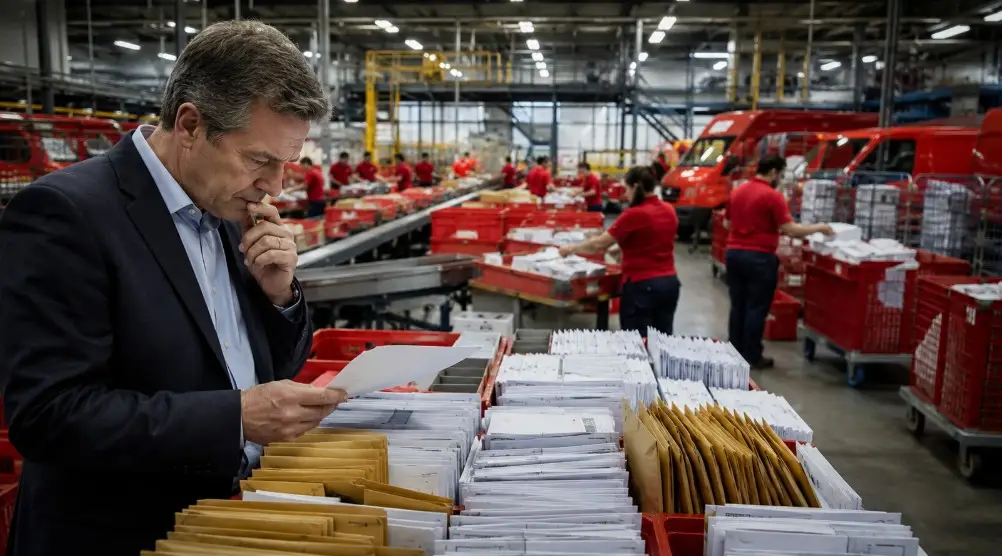
Royal Mail Wholesale will increase Access Letters prices by an average of 25% from 5 October 2026.
The change mainly affects access operators, mailing houses and organisations sending large volumes of marketing letters, bills, statements, official notices and medical appointment communications.
The 25% figure is a portfolio average rather than a flat increase applied to every product. Reported examples range from an 11.4% rise for certain large-letter advertising mail to 36.1% for an economy business letter weighing up to 100g.
The headline figure is significant, but the practical cost will differ substantially between organisations.
What Is Included in the Royal Mail Wholesale Price Increase?
The increase applies to prices charged under the Access Letters Contract. These services allow other postal operators to collect, process and sort bulk mail before handing it to Royal Mail for delivery through its nationwide network.
Services And Customers Covered:
- Access Business Mail, including economy services used for less urgent correspondence.
- Access Advertising Mail used for addressed marketing campaigns.
- Letters and large letters presented under eligible wholesale price plans.
- National, regional and zonal pricing arrangements.
- Access operators and mailing providers serving high-volume senders.
The change should not be confused with every other Royal Mail price adjustment announced during 2026.
The separate published 2026 pricing schedule includes a Business Keepsafe charge of £121 for up to 100 days from 3 August, new EU customs requirements from 1 July for goods and gifts above €45, and several earlier retail, business and surcharge changes.
From 3 May, the Fuel and Energy Surcharge rose from 11% to 16%, the equivalent Parcelforce Worldwide rate moved from 8% to 13%, and the International Surcharge increased from 6.5% to 12%. The notice period for Fuel and Energy Surcharge changes also fell from 30 days to 14 days.
Other 2026 dates include consumer, franking and account changes from 7 April, Door to Door rates from 30 March, selected letter-contract changes from 5 January and Subscription Mail prices from 2 February. These are separate from the October wholesale increase and should not be combined when calculating its effect.
When Will the New Royal Mail Wholesale Prices Take Effect?
The new Access Letters prices are scheduled to take effect on 5 October 2026. The official wholesale pricing page lists one rate card for prices from 7 April and another for letters entered under the new rates from 5 October.
Businesses should confirm when their provider will apply the new charges. The date on which mail is collected, processed or handed over may affect which tariff is used, depending on the service and contract.
Organisations should therefore request revised quotations before October, check contractual notice provisions and review campaigns that cross the implementation date. The announcement date and the effective date are not interchangeable.
Which Royal Mail Wholesale Rates Are Increasing the Most?
The reported changes vary considerably across the wholesale portfolio. Product-level information is therefore more useful than applying the 25% average indiscriminately.
Reported Product-Level Changes
Price Increase Comparison:
| Reported Service Example | Format And Weight | Reported Increase |
| Access Business Mail Economy | Letter up to 100g | 36.1% |
| Access Advertising Mail Standard | Large letter from 101g to 250g | 11.4% |
| Access Letters portfolio | Multiple services and formats | 25% average |
The economy product is intended for less urgent mail and is reported as having a delivery period of up to five days. The figures demonstrate why customers should not describe every affected item as rising by either 25% or 36.1%.
Why Do The Percentages Vary?
Access prices can vary by service standard, sortation level, format, weight, processing option and price plan. Royal Mail Wholesale offers two national plans alongside regional and zonal arrangements, meaning superficially similar mailings may not attract the same charge.
The percentage increase may also differ between business, advertising and other eligible mail categories. A customer’s weighted average will depend on the proportion of its volume assigned to each product.
What Should Customers Check In The Rate Card?
Customers should match their current product codes, formats, weight bands and price plans against the official October access price list. The page warns that applicable prices can change and directs contract holders to the files containing actual Access service prices.
Any mailing-house charge should also be separated into Royal Mail postage, processing, data, print, fulfilment and additional service costs. This creates a more reliable comparison than relying on a single headline percentage.
Who Could Be Affected By The Royal Mail Wholesale Price Rise?
The direct impact falls on access customers, but higher charges may be passed through to the organisations that use them. UK Mail, Whistl and Citipost are among the operators identified in reporting on the increase.
Potentially Affected Organisations:
- NHS bodies sending appointments, test information and patient correspondence.
- HMRC, councils and other public-sector organisations.
- Banks, insurers, lenders and pension providers.
- Utilities and telecommunications companies sending bills or notices.
- Retailers, charities and agencies using addressed direct mail.
- Print companies, fulfilment providers and mailing houses.
- Businesses sending statements, renewals or regulatory communications.
The Mail Users’ Association described the scale of the change as “unprecedented” and warned of additional pressure on organisations that rely on post to communicate with customers.
Some organisations may never receive an invoice directly from Royal Mail Wholesale. Their exposure may instead appear through revised prices from an intermediary, making an itemised quotation important.
How Does Royal Mail Access Mail Work?
Access Mail, also called downstream access mail, involves another operator completing the early stages of the postal process. The operator collects mail from customers, processes it, sorts it to the required standard and transfers it into Royal Mail’s network.
Royal Mail then completes the final delivery to homes and businesses. The regulator has stated that bulk mail represents about 63% of letters sent today and is commonly used by banks, government departments, NHS bodies and local authorities.
This arrangement is different from buying a first- or second-class stamp, paying at a Post Office branch, using Click & Drop or applying standard franking prices. It is also distinct from Special Delivery, international services and many parcel contracts.
Changing access operators may alter processing, fulfilment or management costs, but it may not remove exposure to the wholesale rise where Royal Mail continues to perform the final mile.
How Could The Increase Affect Business And Public-Sector Budgets?

A customer whose entire affected spend rose by the reported average would pay 25% more. However, that calculation is only a starting scenario because actual increases depend on the products used.
Illustrative Budget Impact
Example Cost Scenarios:
| Existing Affected Spend | Illustrative Increase | Illustrative Revised Spend |
| £10,000 | £2,500 | £12,500 |
| £50,000 | £12,500 | £62,500 |
| £100,000 | £25,000 | £125,000 |
| £500,000 | £125,000 | £625,000 |
| £1 million | £250,000 | £1.25 million |
These figures illustrate simple 25% scenarios. They are not quotations or forecasts for a particular organisation.
Why Can The NHS Cost Impact Not Be Assumed?
The NHS reportedly spent at least £100 million on postage in 2024. Applying 25% to that entire figure would produce a theoretical £25 million increase, but the available evidence does not establish that all £100 million was spent on affected Access products.
NHS bodies may use different services, suppliers, weight bands and communication methods. Some expenditure may relate to parcels, stamps, premium services or products outside the October rate card.
A reliable estimate would require the affected volume, current unit price, October unit price and any provider fees. It is reasonable to expect additional costs, but a precise NHS-wide figure cannot be confirmed from the reported total alone.
Why Is Royal Mail Raising Wholesale Letter Prices?
Royal Mail has attributed the increase to falling letter volumes, rising fuel and labour costs, and the expense of maintaining nationwide delivery to a growing number of addresses.
Access Mail volumes are reported to have fallen from 6.3 billion items in 2019–20 to about 4.2 billion currently, a decline of roughly one-third. Meanwhile, the network serves approximately 32 million UK addresses and is supported by about 130,000 colleagues.
In a customer letter signed by wholesale letters managing director Richard Travers, the company said:
“We understand that any price increase is difficult, particularly in the current economic environment.”
It added that the charges were intended to reflect more accurately the cost of providing a reliable nationwide service.
A spokesperson also said access customers would continue to receive lower prices than equivalent consumer rates.
The company reported losses of almost £800 million over four years and said its finances remained below the level considered compatible with a financially sustainable universal service.
Service performance remains relevant to customers assessing value. The official delivery performance investigation recorded that 75.7% of First Class mail arrived the next working day in 2025–26, while 90.2% of Second Class mail arrived within three working days.
The applicable targets were 93% and 98.5%. From 1 April 2026, the targets changed to 90% for First Class and 95% for Second Class.
The regulator has imposed more than £37 million in previous delivery-performance fines: £5.6 million, £10.5 million and £21 million across three successive cases. It is also considering parcel-prioritisation allegations, which Royal Mail denies.
How Should Businesses Prepare Before 5 October 2026?

Preparation should begin with product-level evidence rather than a general assumption that every mailing will cost 25% more.
Review Current Mailing Services
Pre-October Review:
- Identify every Access Letters product currently used.
- Record monthly volumes by format and weight.
- Separate economy, standard, priority and advertising services.
- Check national, regional or zonal price plans.
- Identify campaigns crossing the 5 October changeover.
- Request an itemised quotation from each provider.
- Review price-adjustment and notice clauses.
- Separate essential mail from discretionary campaigns.
This review will reveal which expenditure is genuinely exposed to the new rate card.
How Should The Financial Impact Be Modelled?
Organisations should compare the current and new unit price for each product, multiply the difference by expected volume and add any revised processing charges.
At least three scenarios are useful, the exact known product increase, a 25% portfolio-average case and a higher-cost case for services close to the reported 36.1% rise. Seasonal peaks should be modelled separately because an annual average can conceal short periods of heavy expenditure.
For direct mail, the additional cost should be assessed alongside response rate, revenue, acquisition cost and customer lifetime value. A more expensive campaign may remain viable if it produces measurable returns.
Improve Mailing Efficiency
Data quality can reduce avoidable expenditure without weakening necessary communications. Organisations can remove duplicate records, suppress invalid addresses, update customer preferences and review whether an item can lawfully fit a lower format or weight band.
Suitable communications may also be consolidated, while campaign audiences can be segmented more precisely. However, physical mail should not be removed indiscriminately where recipients are vulnerable, digitally excluded or need important information in an accessible form.
Early discussion with access operators and mailing houses will provide more practical value than waiting for the first post-increase invoice.
Conclusion
The Royal Mail wholesale price increase is a substantial development for access operators and organisations that depend on high-volume letters.
From 5 October 2026, the affected Access Letters portfolio is reported to rise by an average of 25%, with selected examples ranging from 11.4% to 36.1%.
The increase does not apply uniformly to all mail, and it is not a blanket 25% rise in consumer stamps. The final effect depends on service standards, formats, weight bands, price plans, provider contracts and mailing volumes.
Businesses and public bodies should obtain their exact October prices, review pass-through charges and calculate the impact using real volume data. That approach will produce a more defensible budget than applying the headline percentage to every postal expense.
Frequently Asked Questions
Does The Increase Apply To Letters Already Prepared?
The applicable rate may depend on when the mail enters the access network and the customer’s contract. Senders should confirm cut-off arrangements with their provider.
Are Stamp Prices Rising By 25% In October 2026?
The reported average relates to wholesale Access Letters services. It should not be described as a 25% increase in ordinary first- or second-class stamps.
Will Mailing Houses Pass On The Full Increase?
The amount passed on will depend on each provider’s pricing and contractual terms. Customers should request a breakdown of postage, processing and other charges.
Can Lighter Letters Reduce The Additional Cost?
A lighter or smaller item may qualify for a different price band when it meets the relevant specifications. Any redesign should be checked against the applicable rate card before production.
Could Direct-Mail Campaign Performance Be Affected?
Higher postage can increase campaign cost per response or acquisition. Marketers should assess the additional cost against measured revenue and customer value.
Must Public Bodies Continue Sending Physical Letters?
Requirements depend on the communication, applicable rules and the recipient’s accessibility needs. Email should not automatically replace essential correspondence.
Where Should Customers Confirm Their Exact New Prices?
Customers should consult the October Access Letters rate card and their contractual documents. Their access operator or mailing provider should also confirm the final charge applied.
Note:
The 25% figure is an average across affected wholesale services, not a guaranteed increase for every product or customer. Calculations should be labelled as illustrations unless they use confirmed product-level prices, actual volumes and contract-specific charges.