

Table of Contents
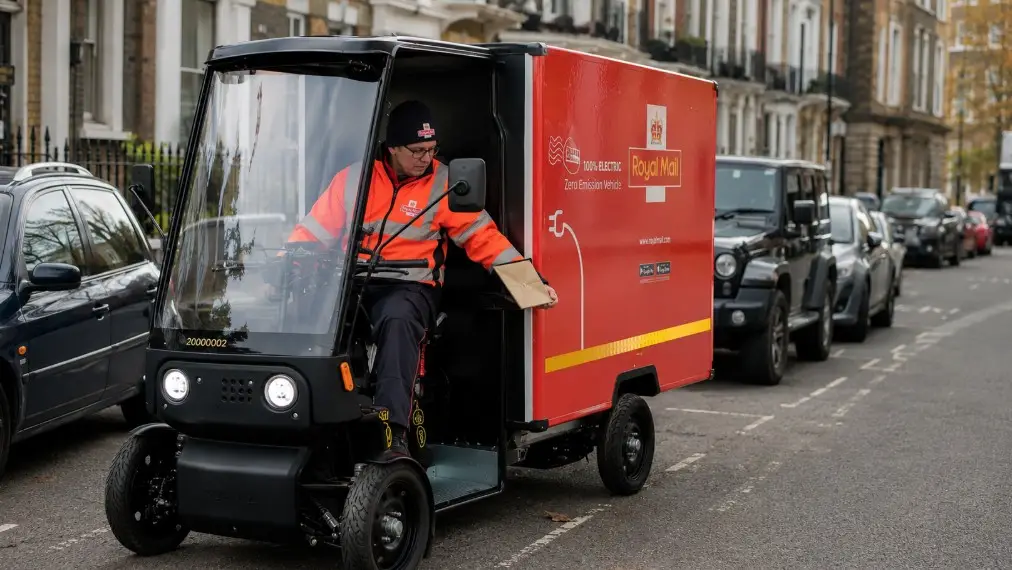
Royal Mail electric delivery bikes are being introduced as a new option for urban letter and parcel rounds.
The first fleet comprises 20 Minimal Pedal 4 electric cargo cycles, with London, Brighton and Cambridge among the cities included in the July 2026 deployment. More locations are planned, although no complete national timetable has been announced.
The four-wheeled cycles provide posties with dedicated vehicles that can carry substantial loads, access eligible cycle routes and charge from standard plug sockets.
Royal Mail expects them to streamline suitable rounds, but it has not yet published performance data showing exactly how much faster deliveries will become.
Where Are Royal Mail Electric Delivery Bikes Being Introduced?
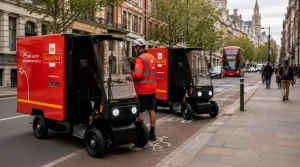
The first 20 Pedal 4 cycles are being deployed in cities including London, Brighton and Cambridge. That wording matters because it identifies confirmed locations without necessarily providing a complete list of every site involved in the first phase.
Royal Mail has not said that every delivery office or postcode within the three cities will use the vehicles. Customers may therefore see them only on selected routes where road layouts, delivery density and cargo requirements make electric cycles practical.
Urban areas offer a logical testing environment. Congested streets, limited kerbside parking and short distances between addresses can make large vans inefficient for some final-mile rounds.
Cargo cycles can also use eligible cycle lanes, cycle paths and greenways, as well as roads with speed limits of up to 30mph.
Further locations are planned, but the company has not published a national rollout date, the total number of future vehicles or the delivery offices likely to receive them next.
How Does The Minimal Pedal 4 Used By Royal Mail Work?
The Pedal 4 combines electric pedal assistance with the stability and storage capacity of a four-wheeled vehicle. Its design is intended for commercial delivery work rather than ordinary commuting.
Battery Range And Charging
The manufacturer lists a base range of up to 30km, while a two-battery configuration can extend the maximum to 60km, equivalent to approximately 37 miles.
Its two removable batteries each have a listed capacity of 1.44kWh, while the motor provides 250W of continuous rated electric pedal assistance.
A full charge is listed as taking approximately four hours. The detailed published Pedal 4 specifications also give the vehicle a maximum assisted speed of 25km/h.
Actual range may be affected by cargo weight, route gradients, weather, temperature and stopping frequency. The 37-mile figure should therefore be treated as an upper specification rather than a guaranteed distance for every postal round.
The batteries can be removed and recharged through standard three-pin sockets. This may allow the cycles to operate from delivery offices where installing dedicated electric-van chargers would be difficult because of yard space or electricity-capacity limits.
How Much Post Can The Vehicle Carry?
The Pedal 4 provides 2.5m³, or 2,500 litres, of cargo volume and supports a maximum payload of 300kg. Cargo volume describes the available storage space, while payload refers to the total permitted weight carried.
Pedal 4 Technical Specifications:
| Specification | Published Figure |
| Cargo volume | 2.5m³ |
| Maximum payload | 300kg |
| Maximum range | 60km with two batteries |
| Top assisted speed | 25km/h |
| Motor | 250W |
| Battery capacity | Two 1.44kWh units |
| Charging time | Four hours |
| Vehicle length | 3 metres |
| Vehicle width | 1 metre |
| Vehicle height | 1.95 metres |
| Listed weight | 280kg with one battery |
These measurements show why the Pedal 4 is described as a commercial cargo cycle rather than a conventional electric bicycle.
Why Has Royal Mail Introduced Electric Cargo Cycles Now?
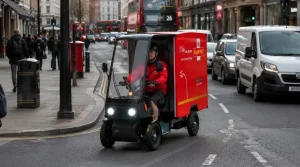
Royal Mail is testing cargo cycles as urban delivery requirements become more complex. Parcel volumes, congested roads, parking restrictions and the cost of operating larger vehicles can make conventional vans less suitable for some short, address-dense routes.
The main operational reasons include:
- Giving individual posties dedicated vehicles instead of requiring them to share vans.
- Carrying more letters and parcels than would be practical on a walking-only round.
- Reaching addresses through eligible cycle infrastructure.
- Charging removable batteries without specialist depot equipment.
- Reducing the use of oversized vehicles on routes that need less capacity.
- Expanding delivery opportunities to applicants without driving licences.
These advantages support a “right-sized vehicle” approach in which the transport method is matched to the route rather than using vans for every journey.
Patrick Bion, Minimal’s chief executive, described the decision as a signal that “right-sized electric vehicles will be central” to moving goods through cities.
That remains the manufacturer’s assessment; Royal Mail’s long-term fleet plan has not yet established how widely the Pedal 4 will be adopted.
Will Royal Mail Electric Delivery Bikes Make Deliveries Faster?
Royal Mail expects the cycles to make some delivery rounds faster and more efficient, but the size of any improvement remains unconfirmed. No comparative results have been released showing route times before and after the introduction of the Pedal 4.
Potential efficiency gains include:
- Avoiding delays caused by two posties sharing access to one van.
- Using cycleways where they provide more direct routes.
- Parking closer to delivery addresses.
- Carrying larger loads than a worker could manage on foot.
- Reducing time spent finding suitable van-parking spaces.
- Moving more easily through congested urban streets.
Royal Mail’s announcement says dedicated vehicles should help streamline routes and speed up deliveries.
That statement describes the intended outcome, not independently verified evidence that customers will receive all post sooner.
A meaningful assessment would require data on deliveries per hour, average route-completion times, battery downtime, breakdowns, maintenance costs and performance during difficult weather.
Until those results are available, claims about faster deliveries should remain carefully attributed.
How Could Royal Mail Electric Delivery Bikes Support Cleaner UK Deliveries?
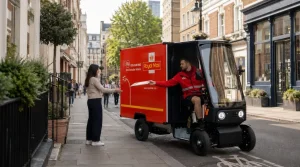
Cargo cycles could reduce local transport emissions where they replace journeys that would otherwise require petrol, diesel or larger electric vehicles. Their impact must nevertheless be viewed within Royal Mail’s much larger delivery operation.
Royal Mail’s Wider Electric Fleet
Royal Mail already operates almost 9,000 electric vans, while just over half of its delivery routes continue to be wholly or partly completed on foot. The company reports that 31% of its routes are currently zero-emission.
The cargo cycles are therefore an additional part of an established electrification programme, not Royal Mail’s first electric delivery initiative.
The company’s official zero-emission delivery strategy states that it plans to continue moving its delivery fleet towards zero-emission vehicles.
How Could City-Centre Deliveries Change?
The cycles produce no tailpipe emissions during their electrically assisted rounds. They may also reduce the number of larger vehicles entering streets where cargo bikes can carry the required volume.
Because they can use eligible cycle infrastructure, they may help reduce congestion while requiring less kerbside space than delivery vans.
Their smaller dimensions could also make them more appropriate for short journeys between closely grouped addresses.
Royal Mail delivery design manager Mark Riley said the vehicles would “help reduce emissions and improve air quality in the communities we serve”.
He also linked the no-licence requirement to wider recruitment opportunities.
Limits Of The Current Environmental Claim
Royal Mail has committed to achieving net zero across all emission scopes by 2040 and is aiming for a zero-emission final mile by 2035. Its strategy includes fleet electrification, walking routes and new delivery models.
However, the company has not published a specific carbon-saving figure for the first 20 cargo cycles.
It has also not stated how many van miles they will replace or provided lifecycle figures covering manufacturing, batteries, maintenance and electricity use.
The environmental case is credible at route level, but the overall benefit will depend on deployment scale and whether the cycles genuinely replace higher-emission journeys.
What Could The Rollout Mean For Royal Mail Posties And Recruitment?
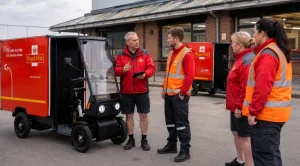
Royal Mail states that posties will not need a driving licence to operate the Pedal 4 because it is classified as an electrically assisted pedal cycle. This could make some delivery roles available to applicants who cannot drive a van.
The no-licence rule does not mean that anyone can automatically operate a vehicle on behalf of the company. Royal Mail may still apply recruitment standards, route assessments, workplace training, safety procedures and internal authorisation requirements.
For existing workers, dedicated cycles could reduce the need to coordinate rounds around shared vans. They may also allow posties to carry more mail than on foot while retaining access to routes unsuitable for larger vehicles.
The experience will differ from both cycling on a conventional bicycle and driving a van. The Pedal 4 is three metres long, one metre wide and weighs 280kg with one battery, so safe handling, braking, loading and route planning remain important operational considerations.
Could Royal Mail Electric Delivery Bikes Replace Delivery Vans?
The initial cargo cycles are more likely to complement Royal Mail’s vans than replace the national van fleet. Different delivery routes require different capacities, ranges and vehicle types.
Cargo cycles may suit compact urban rounds containing many closely spaced addresses. Vans remain necessary for longer journeys, high-volume collections, larger parcels, inter-office transport and routes where cycle access is limited.
Royal Mail’s existing fleet includes almost 9,000 electric vans, demonstrating that larger electric vehicles remain central to its plans.
Weather and geography will also influence deployment. Steep routes, long distances, heavy loads or roads without appropriate infrastructure may make a van more practical. Conversely, a full-sized van can be unnecessarily large for a short city-centre round.
The first 20 vehicles should therefore be understood as a test of route-specific transport. Royal Mail has not announced that it is abandoning vans or disclosed how many van-based rounds could eventually transfer to cargo cycles.
What Happens Next For Royal Mail Electric Delivery Bikes?
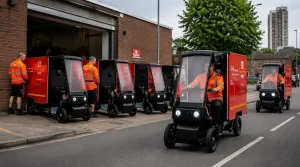
The next stage will determine whether the Pedal 4 becomes a common part of Royal Mail’s urban fleet or remains limited to selected operations.
Expansion To More UK Locations
Royal Mail’s official cargo-cycle rollout statement says further locations are planned after the first 20 vehicles are deployed.
It does not provide a complete list of cities, an expansion date or the number of additional cycles being considered.
Future decisions are likely to depend on whether delivery offices have suitable routes, storage arrangements and staff capacity. Royal Mail has not confirmed that every UK region will receive the vehicles.
What Performance Data Should Readers Watch?
The most useful indicators will include:
- Average time required to complete each route.
- Letters and parcels delivered per working hour.
- Battery range under full postal loads.
- Charging frequency and vehicle availability.
- Reliability and maintenance requirements.
- Feedback from posties operating the cycles.
- Performance in rain, cold weather and heavy traffic.
- Changes in van mileage and local emissions.
- Operating costs compared with other vehicles.
Customers in the first cities may see the red cycles on local streets, but Royal Mail has not announced changes to postal prices, delivery guarantees or customer-service standards.
The rollout concerns how selected rounds are completed rather than a formal change to delivery commitments.
Conclusion
Royal Mail electric delivery bikes represent a modest but potentially important development in UK urban logistics. The first 20 Minimal Pedal 4 cycles combine a 300kg payload, 2.5m³ of storage and a maximum two-battery range of approximately 37 miles.
London, Brighton and Cambridge are among the initial rollout locations, with further deployment planned. Royal Mail believes dedicated cargo cycles can streamline routes, reduce emissions and widen recruitment beyond licensed drivers.
The long-term outcome remains uncertain. Their value will become clearer when Royal Mail publishes operational results and confirms whether the first fleet will lead to a significantly larger UK rollout.
Frequently Asked Questions
Who Manufactures Royal Mail’s New Cargo Cycles?
The Pedal 4 is manufactured by Minimal at its microfactory in Park Royal, west London. The company describes it as a purpose-built commercial vehicle for moving goods through urban areas.
How Long Does A Pedal 4 Take To Charge?
The manufacturer lists a battery charging time of four hours. Actual fleet charging schedules may vary according to battery use and delivery-office operations.
Can The Cargo Cycles Use Cycle Lanes And Greenways?
Royal Mail says the vehicles can operate on eligible cycle lanes, cycle paths and greenways, as well as roads with speed limits of up to 30mph. Access may still depend on route conditions and applicable restrictions.
What Is The Pedal 4’s Maximum Assisted Speed?
The listed maximum assisted speed is 25km/h, equivalent to approximately 15.5mph. This is an assisted-speed specification rather than a guaranteed operating speed on every route.
Are The Pedal 4 Batteries Removable?
Yes, the vehicle can use two removable 1.44kWh batteries. Removing batteries may make indoor charging and fleet battery management easier.
Can Customers Request Delivery By Electric Cargo Cycle?
Royal Mail has not announced a system allowing customers to select the vehicle used for delivery. Route and vehicle allocation remain operational decisions.
Has Royal Mail Revealed The Price Paid For The Cycles?
Royal Mail has not publicly confirmed the commercial price paid for its first 20 vehicles. The manufacturer lists a public purchase price from £10,500, but that does not establish the terms of Royal Mail’s fleet agreement.
Note:
The rollout covers cities including London, Brighton and Cambridge; these should not be presented as the complete location list. Faster delivery, lower costs and emissions reductions are expected benefits, but Royal Mail has not yet published route-level evidence confirming their scale.