

Table of Contents
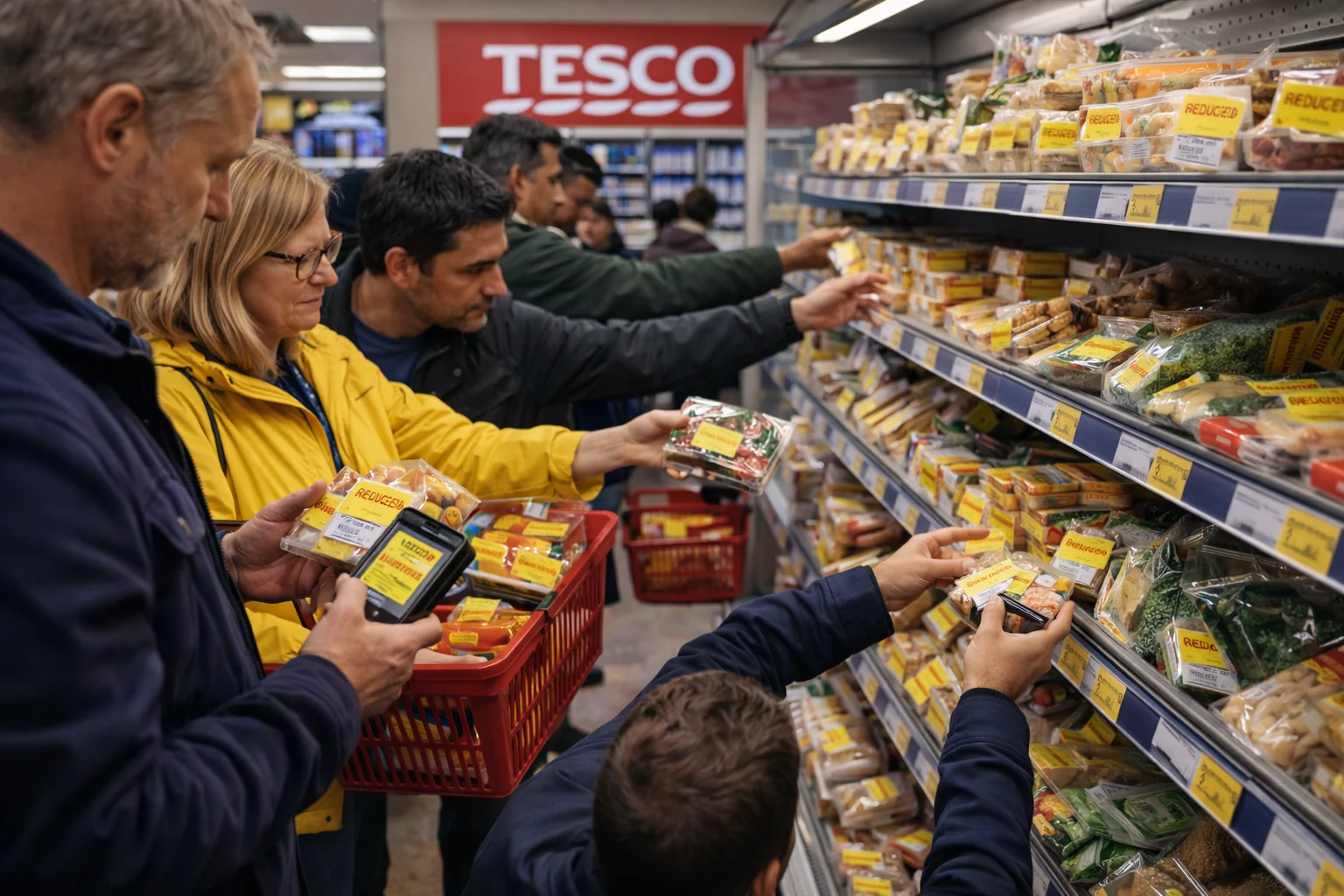
Tesco free food yellow stickers are part of a trial in selected Tesco Express stores where short dated groceries are reduced to £0 after 9:30 pm.
Instead of discarding unsold food at the end of the day, Tesco allows customers to take remaining items for free. Before these products reach shoppers, they are first offered to charities and store staff through Tesco’s redistribution process.
The trial expands Tesco’s existing yellow sticker markdown system, where groceries close to their expiration dates are discounted to clear shelves.
Understanding how these reductions work helps shoppers find cheaper food while supporting efforts to reduce supermarket food waste.
Key answers covered in this guide include:
- Tesco may reduce some short dated groceries to £0 after 9:30 pm in select Express stores.
- The initiative helps prevent food waste by redistributing unsold items.
- Standard yellow stickers mark discounted groceries nearing their expiration dates.
- Tesco reductions happen several times daily, with the biggest discounts usually appearing in the evening.
What Are Tesco Free Food Yellow Stickers and Why Are Shoppers Talking About Them?
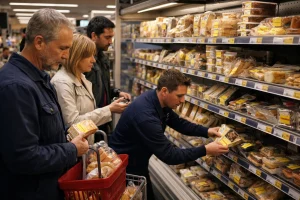
Tesco free food yellow stickers refer to heavily discounted or occasionally free grocery items that are nearing their expiration dates.
In recent discussions across the UK retail sector, these stickers have gained attention because Tesco has begun testing a system in some Express stores where certain items are marked down to £0 after 9:30 pm.
The idea is simple. Instead of throwing away perfectly edible food at the end of the day, stores allow customers to take the remaining items for free once they have been offered to charities and staff.
For many years, yellow stickers have been used by Tesco and other UK supermarkets to identify products that need to be sold quickly.
These products are still safe to consume but must be purchased before their use by or best-before dates. Because of this limited timeframe, supermarkets reduce the price significantly to encourage customers to buy them quickly.
The introduction of the £0 yellow sticker trial has made the system even more interesting for shoppers who are already familiar with reduced-to-clear sections. The trial reflects a growing trend among retailers that focuses on reducing waste while providing value to customers.
In most Tesco stores, yellow sticker products are found in specific areas designed to help customers easily identify discounted items. Shoppers who regularly look for bargains often visit these sections first when entering the store.
What Do Yellow Stickers Mean in Tesco Stores?
A yellow sticker in Tesco indicates that the product has been reduced due to a limited shelf life. The discount applied to the item depends on how close it is to its expiration date and the store’s stock levels.
Products with yellow stickers are commonly labelled with the new reduced price along with the original price. This allows shoppers to see how much money they are saving.
Typical examples of items that receive yellow stickers include:
- Fresh produce such as fruit and vegetables
- Packaged ready meals
- Bakery products, including bread and pastries
- Dairy items like milk, yoghurt and cheese
- Chilled meats and fish
These items are usually located in the reduced section of the store or placed back on their regular shelves with a visible yellow label.
The following table explains the meaning of different types of reductions shoppers might see in Tesco.
| Label Type | What It Means | Typical Discount Range |
| Early Reduction | The item is approaching its sell-by date, but still has some time left | 20% to 40% |
| Standard Yellow Sticker | The item needs to sell within the same day | 40% to 70% |
| Final Reduction | The product must sell quickly before the store closing | 70% to 90% |
| £0 Yellow Sticker Trial | Remaining unsold items are offered for free in select stores | 100% |
Many shoppers view these discounts as one of the easiest ways to reduce grocery spending while still buying quality products.
How does the Tesco £0 Yellow Sticker Trial work?
The £0 yellow sticker initiative is currently being tested in a limited number of Tesco Express stores across the UK. While the company has not publicly confirmed every participating location, the trial follows a structured process designed to prioritise food redistribution before offering items to customers.
The typical sequence works like this.
First, products approaching their expiration dates are gradually reduced throughout the day. This allows the store to sell the items at a discounted price before they become unsellable.
Second, if the items remain unsold close to closing time, they may be offered to local charities that collect surplus food from supermarkets.
Third, store staff may also have access to some remaining items.
Finally, any food that still remains may be marked with a £0 yellow sticker and placed on shelves for customers to take.
The following table shows the typical flow of surplus food handling within Tesco stores.
| Stage | Action Taken | Purpose |
| Initial Reduction | Items receive first markdown | Encourage early purchases |
| Secondary Reduction | Larger discount applied | Increase chances of sale |
| Charity Redistribution | Unsold items offered to charities | Support community programmes |
| Staff Access | Some food may be taken by staff | Reduce waste internally |
| Final Customer Access | Remaining items marked £0 in trial stores | Prevent food disposal |
This system ensures that edible food is used in the most effective way possible.
Why Tesco Introduced the Free Food Initiative?
Food waste has become a major concern across the global food industry. Supermarkets often handle thousands of products with limited shelf life, which makes stock management extremely important.
Tesco introduced the free food trial to support its wider sustainability strategy. The goal is to reduce the amount of food that ends up being thrown away while maintaining responsible stock management.
The initiative also supports Tesco’s commitment to reducing environmental impact. Food waste contributes significantly to greenhouse gas emissions, particularly when it decomposes in landfill sites.
A retail sustainability specialist explained the logic behind the initiative clearly.
“A supermarket does not want food to go to waste because it represents both an environmental issue and a financial loss. If a product cannot be sold, giving it away is often the most responsible option.”
The growing popularity of this trial among shoppers shows that consumers are increasingly supportive of solutions that reduce waste while helping households manage their grocery budgets.
How Does the Tesco £0 Yellow Sticker Trial Help Reduce Food Waste?
Food waste is a serious challenge in modern retail. Large supermarkets stock thousands of fresh items daily, and demand can fluctuate significantly depending on factors such as weather, promotions and customer behaviour.
The Tesco yellow sticker system helps address this issue by encouraging customers to purchase food that is approaching its expiration date.
When these items are sold rather than discarded, supermarkets reduce the volume of food waste generated by their operations.
Tesco’s Efforts to Cut Food Waste
Tesco has introduced several programmes aimed at improving the efficiency of food distribution and minimising waste across its supply chain.
Some of the major strategies include:
- Partnering with food redistribution charities
- Improving demand forecasting systems
- Offering discounted prices on short dated products
- Testing new initiatives such as the £0 yellow sticker trial
These initiatives work together to ensure that surplus food is either consumed, donated or repurposed rather than discarded.
The following table outlines some of Tesco’s key food waste reduction initiatives.
| Initiative | Description | Impact |
| Charity Redistribution | Surplus food donated to community organisations | Supports vulnerable groups |
| Reduced Price Labelling | Yellow stickers applied to short dated items | Encourages quick purchases |
| Improved Stock Forecasting | Data used to predict demand more accurately | Reduces overstocking |
| £0 Yellow Sticker Trial | Free food offered at closing time in some stores | Prevents disposal of edible food |
How Reduced to Clear Food Supports Sustainability?
Selling discounted food benefits both the retailer and the environment. Instead of discarding items that are still safe to eat, supermarkets can move products through the supply chain more efficiently.
Reduced items allow customers to purchase food that might otherwise go to waste. In many cases, these products can still be stored safely or frozen for later use.
A food retail analyst shared an observation about how these systems work in practice.
“When supermarkets reduce the price of food close to its expiry date, they create an incentive for shoppers to act quickly. This system allows stores to recover part of the product’s value while preventing unnecessary waste.”
Tesco’s Net Zero and Sustainability Goals
Tesco has committed to reducing its environmental impact through several sustainability targets. One of the key priorities involves cutting food waste across its operations.
Reducing waste helps supermarkets achieve broader environmental goals, including:
- Lower greenhouse gas emissions
- Improved supply chain efficiency
- Reduced landfill waste
The yellow sticker system forms a practical part of this strategy because it directly addresses the issue of unsold food at store level.
When Do Tesco Yellow Sticker Reductions Usually Happen?
Understanding the timing of Tesco reductions is essential for shoppers who want to find the best bargains.
Supermarkets do not usually reduce items all at once. Instead, they apply several rounds of markdowns throughout the day depending on inventory levels and product expiry dates.
Most Tesco stores follow a general pattern of reductions.
Morning reductions often involve smaller discounts applied to products that will expire soon but still have time left for sale. These markdowns are usually moderate and may attract customers looking for small savings.
Afternoon reductions tend to be slightly larger as stores aim to clear more items before the evening rush.
Evening reductions are where the biggest discounts appear. By this point, the store must sell remaining short dated items before closing.
The table below illustrates a typical Tesco markdown timeline.
| Time Period | Type of Reduction | Typical Discount |
| Morning | Early markdown | 20% to 30% |
| Afternoon | Midday markdown | 30% to 50% |
| Evening | Major markdown | 50% to 70% |
| Late Evening | Final reduction | Up to 90% |
| After 9:30 pm (trial stores) | £0 yellow sticker | Free items |
From the perspective of a shopper who studies supermarket pricing behaviour, the most significant savings appear during the final reduction period.
“I have noticed that supermarkets tend to apply the steepest discounts shortly before closing because they have no remaining time to sell the product. That is when bargain hunters often find the best deals.”
The new £0 yellow sticker trial extends this pattern even further by allowing stores to give away items that would otherwise remain unsold.
Where Can Shoppers Find Tesco Reduced Food and Yellow Sticker Deals?
Tesco stores are designed to make discounted items relatively easy to locate once shoppers know where to look. Reduced items are usually placed in clearly marked sections within the store.
Tesco Express Stores Participating in the Trial
The free food yellow sticker initiative is currently being tested in a small number of Tesco Express locations.
Express stores are typically smaller convenience stores located in urban areas, petrol stations or residential neighbourhoods. Because these stores have limited storage space, managing short-dated stock efficiently is particularly important.
Although the full list of participating stores has not been publicly released, the trial allows Tesco to test how customers respond to the initiative.
Reduced Sections Inside Tesco Stores
Most Tesco locations include a designated reduced area, often referred to as the reduced to clear section.
These areas commonly appear in several locations within the store.
- Chilled cabinets for ready meals and dairy products
- Bakery shelves for discounted bread and pastries
- Small clearance racks for packaged goods
The placement of reduced sections can vary between stores, but they are usually positioned where customers can easily see them.
How to Spot the Best Tesco Discounted Groceries?
Experienced shoppers often develop strategies for identifying the best deals quickly.
Some useful observations include:
- Look for yellow price labels with clearly printed discount amounts
- Visit stores close to their final reduction times
- Check multiple sections of the store because reduced items may be spread across departments
From the author’s perspective, consistency is the most important factor when searching for supermarket discounts.
“I have found that visiting the same store at similar times each week helps identify when reductions are most likely to happen. Staff routines tend to follow patterns, and regular shoppers often learn these patterns over time.”
How Can Shoppers Maximise Savings with Tesco Yellow Sticker Deals?
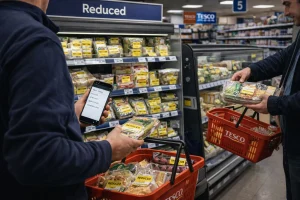
Saving money through yellow sticker deals requires more than simply spotting a reduced item. Experienced shoppers often approach these discounts strategically.
One important factor is flexibility. Because reduced items depend on daily stock levels, shoppers may not always find the exact products they planned to buy.
A retail pricing professional explained this clearly.
“The reduced section rewards shoppers who are flexible with their meal planning. If you can adapt your shopping list based on what is available, you can take advantage of the biggest discounts.”
Planning meals around reduced food can significantly lower grocery bills for households.
Some practical approaches include:
- Visiting supermarkets during evening reduction periods
- Buying discounted items that can be frozen
- Checking reduced sections before selecting full price alternatives
The following table shows how yellow sticker shopping can influence weekly grocery costs.
| Shopping Approach | Estimated Weekly Grocery Cost | Potential Savings |
| Full Price Shopping | £70 to £90 | No savings |
| Occasional Reduced Items | £55 to £70 | Moderate savings |
| Regular Yellow Sticker Shopping | £40 to £60 | Significant savings |
| Combining Reductions with Meal Planning | £35 to £50 | Maximum savings |
For many households facing rising food prices, these savings can make a noticeable difference to monthly budgets.
By understanding how Tesco’s free food yellow stickers and standard reductions work, shoppers can take advantage of opportunities that might otherwise be overlooked.
Conclusion
Tesco’s free food yellow stickers represent a new approach to managing surplus food in supermarkets. By marking certain items down to £0 after 9:30 pm in selected Tesco Express stores, the retailer aims to reduce food waste while supporting shoppers looking for affordable groceries.
Although the scheme is still in its early stages, it highlights a growing trend in the retail industry: finding practical ways to ensure edible food is consumed rather than discarded.
For shoppers, understanding Tesco markdown times, reduced sections, and yellow sticker deals can unlock significant savings. Whether items are reduced by 50% or given away for free, these discounts make it easier for consumers to stretch their grocery budgets while helping supermarkets tackle food waste.
Frequently Asked Questions About Tesco Free Food Yellow Stickers
Can anyone take Tesco £0 yellow sticker food?
Yes. If the trial is running in a store and items are marked with a £0 yellow sticker after 9:30 pm, customers can usually take them. However, items are first offered to charities and staff before being made available to shoppers.
Do Tesco yellow sticker deals happen every night?
Yellow sticker reductions typically happen daily, but the £0 free food trial may not occur every night or in every store because it is limited to selected Tesco Express locations.
What time does Tesco start reducing food prices?
Initial reductions may begin earlier in the day, but the biggest discounts often occur in the evening or just before closing time.
Are Tesco reduced items safe to eat?
Yes. Reduced items are safe to consume but are discounted because they are approaching their sell-by or use-by dates.
Do Tesco staff get first access to reduced items?
In some cases, staff and local charities may have access to surplus food before items are offered to customers as part of redistribution programmes.
Can yellow sticker items be frozen?
Many yellow sticker foods can be frozen, especially meat, bread, and ready meals. Freezing them before the use-by date can extend their shelf life.
Are other UK supermarkets offering similar discounts?
Yes. Many UK supermarkets use reduced-to-clear systems with yellow or red stickers to sell short-dated food at discounted prices.