
Table of Contents
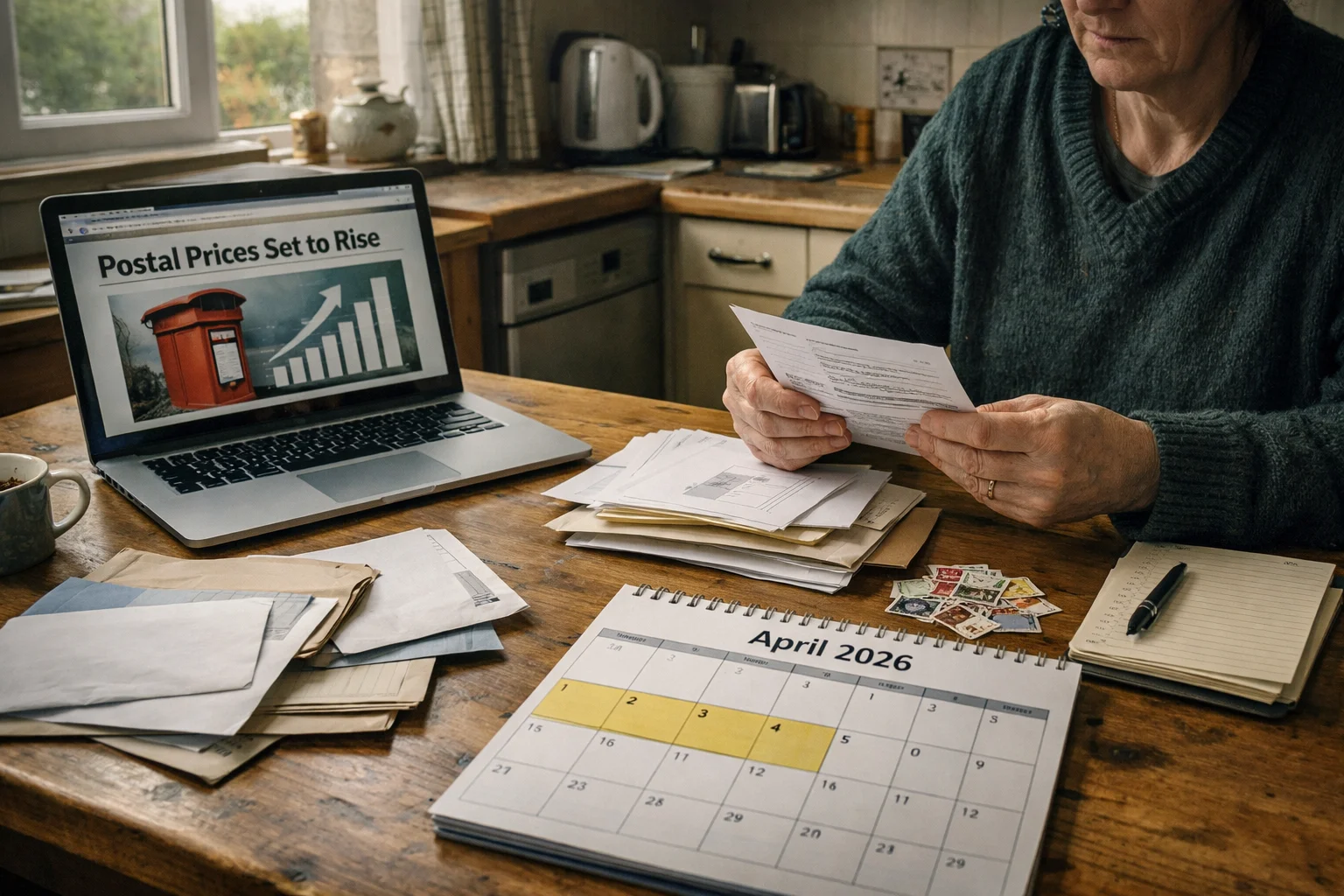
Royal Mail has confirmed that postage stamp prices in the UK will increase from 7 April 2026. From this date, the price of a first-class stamp will rise to £1.80, while a second-class stamp will increase to 91p.
The company says the change reflects rising operational costs, declining letter volumes, and the growing number of addresses that need delivery across the country.
The 2026 Royal Mail price change has also sparked debate among consumer groups and regulators, particularly due to concerns about delivery performance and service reliability.
Key points explained in this article:
- The exact date UK postage stamps are going up in 2026
- The new Royal Mail first class and second class stamp prices
- Reasons behind the Royal Mail postage price increase
- How stamp prices have increased over the past decade
- Criticism from consumer groups and regulators
- Recent Royal Mail delivery performance issues
- The impact of rising postage costs on households and businesses
When Are Postage Stamps Going Up in the UK in 2026?

Royal Mail has confirmed that postage stamps in the UK will increase in price from 7 April 2026.
This change affects both first class and second class stamps, which are the most commonly used options for sending letters across the country.
The increase is part of Royal Mail’s regular price review, which considers operational costs, delivery demand, and the sustainability of the postal network.
From April 2026, the cost of sending letters through Royal Mail will rise again following several increases in recent years.
The price of a first class stamp will increase by 10p, while second class stamps will see a smaller increase of 4p.
The price change applies to standard letter postage across the UK and reflects broader changes in how the postal service operates today.
Royal Mail has reported that the number of letters sent annually has declined dramatically over the past two decades. At the same time, the number of delivery addresses has continued to grow.
This combination means the postal network must cover a larger geographic area while delivering fewer letters.
Maintaining this nationwide service requires significant infrastructure, staffing, and transportation costs.
The new pricing structure introduced in April 2026 includes the following adjustments.
| Stamp Type | Price Before April 2026 | New Price From 7 April 2026 | Price Increase |
| First Class Stamp | £1.70 | £1.80 | 10p |
| Second Class Stamp | 87p | 91p | 4p |
The changes mean that the cost of sending standard letters continues to rise gradually as the postal service adapts to modern communication trends.
Royal Mail also notes that despite the price increases, the average adult in the UK spends relatively little on stamps each year.
According to company data, the average annual spending on stamps is around £6.50 per person.
From an industry perspective, maintaining a nationwide postal network while letter volumes decline creates a difficult balance between affordability and operational sustainability. A postal operations analyst explained the situation clearly.
“I have observed that the core challenge for postal operators today is not simply inflation or rising fuel costs. The real issue is the structural decline in letters. When the volume of letters drops but the delivery network must remain the same, the cost per letter inevitably increases.”
The April 2026 stamp price rise reflects these broader structural changes in the UK postal system.
Royal Mail continues to emphasise that the universal service obligation requires the company to deliver mail to every address in the UK at a uniform price.
This commitment remains a key part of the postal service, but it also contributes to rising costs as the network expands.
As the number of addresses grows each year, Royal Mail must continue expanding delivery routes and maintaining infrastructure even though fewer people are sending letters.
What Are the New Royal Mail Stamp Prices for 2026?
The Royal Mail stamp price increase in 2026 introduces updated rates for the two most commonly used postage options in the UK. These new prices apply to standard letters sent within the country.
The adjustments may appear small at first glance, but they represent part of a broader pattern of gradual increases in postal costs over time.
First Class Stamp Price in 2026 UK
From 7 April 2026, the price of a first class stamp will increase to £1.80. First class mail is designed to arrive on the next working day, although delivery times are not guaranteed.
This service remains popular for sending important or time sensitive documents. Many individuals and organisations still rely on first class post when quick delivery is required.
Common uses for first class mail include:
- Legal documents
- Appointment letters
- Financial correspondence
- Official notices
Despite digital communication becoming more common, physical letters continue to play a role in many sectors. Government departments, financial institutions, healthcare providers, and legal organisations still rely heavily on postal communication.
Second Class Stamp Price in 2026 UK
The price of a second class stamp will rise to 91p in April 2026. This service typically delivers letters within two to three working days.
Second class postage is generally used for non urgent correspondence and is often chosen by individuals and small businesses looking to reduce mailing costs.
Many organisations use second class postage for routine communications such as newsletters, promotional material, and general notices.
The difference between first and second class mail remains significant for high volume senders. Businesses that send hundreds or thousands of letters each month often choose second class postage to reduce operational expenses.
The following table shows a direct comparison between first and second class services.
| Feature | First Class Post | Second Class Post |
| Delivery Aim | Next working day | Two to three working days |
| Cost From April 2026 | £1.80 | 91p |
| Best Used For | Urgent mail | Non urgent mail |
| Typical Users | Legal, financial and official communication | General correspondence and marketing |
Postal services in the UK continue to provide these two options to give customers flexibility when choosing between speed and cost.
Why Are Royal Mail Stamp Prices Increasing in 2026?

Royal Mail states that the primary reason for the 2026 stamp price increase is the long term decline in letter volumes across the UK. Over the past twenty years, digital communication has significantly reduced the number of physical letters being sent.
Emails, messaging applications, online billing systems, and digital notifications have replaced many forms of traditional correspondence.
According to Royal Mail data, the number of letters sent in the UK has fallen by approximately 70 percent since the early 2000s.
At the same time, the number of delivery addresses has continued to rise as the population grows and new housing developments expand across the country. Royal Mail now delivers to around 32 million addresses.
This creates a situation where postal workers must cover more locations while delivering fewer letters.
Several operational factors contribute to the rising cost of maintaining the postal network.
- Increasing labour costs
- Higher fuel and transportation expenses
- Expansion of delivery routes
- Maintenance of sorting and logistics infrastructure
- Compliance with universal service obligations
Royal Mail’s managing director of letters explained that price adjustments are carefully considered each year.
The company must balance affordability for customers with the financial sustainability of the delivery network.
A postal logistics professional summarised the challenge clearly.
“When people ask why stamp prices keep rising, the explanation is quite straightforward. The delivery network was built for a much larger volume of letters. If that volume falls dramatically but the network stays the same, each individual letter becomes more expensive to deliver.”
Maintaining nationwide coverage is particularly expensive because Royal Mail must serve urban centres, rural villages, and remote locations at the same price.
How Much Have UK Stamp Prices Increased Over the Years?
The cost of postage stamps in the UK has risen steadily over the past decade. This increase reflects broader changes in the postal industry and the shift toward digital communication.
Ten years ago, the cost of sending a letter was significantly lower than it is today.
| Year | First Class Stamp | Second Class Stamp |
| 2016 | 64p | 55p |
| 2018 | 67p | 58p |
| 2020 | 76p | 65p |
| 2022 | 95p | 68p |
| 2023 | £1.10 | 75p |
| 2025 | £1.70 | 87p |
| 2026 | £1.80 | 91p |
This table shows how dramatically stamp prices have increased in a relatively short period.
Over ten years, the price of a first class stamp has nearly tripled. Second class stamps have also risen significantly, although at a slower rate.
Several long term factors explain this trend.
- Declining letter volumes
- Rising operational costs
- Increasing number of delivery addresses
- Growth in parcel delivery services
- Investment in modern logistics technology
Many postal services worldwide are experiencing similar challenges as digital communication continues to replace traditional mail.
An industry observer noted an important shift.
“I believe the postal service is undergoing a transformation. Letters used to be the core business of postal operators. Today parcels and e commerce deliveries are becoming far more important.”
This shift is reshaping how postal services operate and how pricing structures are designed.
Why Are Consumer Groups Criticising the Royal Mail Price Rise?

The latest stamp price increase has received criticism from consumer advocacy organisations. One of the most vocal critics has been Citizens Advice, which argues that price increases should be linked to service performance.
Many consumers have expressed frustration about delayed deliveries and inconsistent postal service reliability.
Consumer groups believe that raising prices without clear improvements in delivery performance creates additional pressure on households and businesses.
Anne Pardoe, head of policy at Citizens Advice, stated that increasing stamp prices should come with clear justification for consumers.
According to consumer advocates, several issues contribute to public dissatisfaction.
- Delayed delivery of first class mail
- Missed performance targets
- Uncertainty about when letters will arrive
- Higher costs for essential communication
Many people still rely on postal services for critical documents. Medical appointment letters, legal notices, financial statements, and official government communication are often delivered by post.
If delivery performance declines while prices rise, public confidence in the service can be affected.
From a communications analyst perspective, the frustration among consumers is understandable.
“I often hear people say they do not mind paying slightly more for stamps if the service is reliable. The problem arises when higher prices are introduced while delivery standards appear inconsistent.”
This concern has led regulators and parliamentary committees to investigate Royal Mail’s performance in recent years.
What Delivery Problems Has Royal Mail Faced Recently?
Royal Mail has faced increased regulatory scrutiny due to its delivery performance in recent years. The communications regulator Ofcom monitors the company’s ability to meet delivery targets for both first class and second class mail.
Royal Mail is required to meet specific service standards as part of the universal postal service obligation.
However, performance challenges have emerged in several regions across the UK.
Ofcom Investigation and Financial Penalties
In 2025, Ofcom fined Royal Mail £21 million after the company failed to meet its delivery targets.
The investigation revealed that a significant percentage of first class mail arrived later than expected.
| Delivery Target | Required Performance | Reported Performance |
| First Class Mail | 93 percent next day delivery | Below target |
| Second Class Mail | 98.5 percent within three days | Below target |
These findings raised concerns about the reliability of the postal system, particularly for time sensitive correspondence.
Parliamentary Scrutiny
The UK Parliament’s Business and Trade Committee also examined the performance of Royal Mail.
Members of Parliament requested explanations from company executives regarding reports of delays and service disruptions.
The committee highlighted issues that emerged during peak periods such as Christmas when certain postal areas experienced significant delivery backlogs.
Regulators and lawmakers continue to monitor the situation closely as Royal Mail works to improve its operational performance.
How Will the Royal Mail Stamp Price Rise Affect UK Households and Businesses?

The financial impact of stamp price increases varies depending on how frequently individuals or organisations rely on postal services.
For many households, stamp purchases are relatively occasional. Royal Mail estimates that the average adult spends approximately £6.50 each year on stamps.
However, the impact is greater for organisations that rely heavily on traditional mail.
Businesses that may feel the effects include:
- Small businesses sending invoices
- Legal firms mailing official documents
- Healthcare providers sending appointment letters
- Government agencies distributing notices
The cost difference between first class and second class mail can become significant for organisations sending large volumes of letters.
The following table demonstrates how mailing costs can increase for businesses.
| Number of Letters Sent | Cost Using First Class (£1.80) | Cost Using Second Class (91p) |
| 100 letters | £180 | £91 |
| 500 letters | £900 | £455 |
| 1000 letters | £1800 | £910 |
Many businesses are therefore exploring digital alternatives to reduce reliance on physical mail.
Electronic invoices, digital appointment systems, and secure online messaging platforms are becoming more common as organisations seek to reduce operational costs.
From an author perspective analysing business communication trends, a clear pattern has emerged.
“I have noticed that many companies are gradually reducing their dependence on traditional letters. Email communication and digital document systems are replacing large portions of business correspondence.”
Despite this shift, postal services remain essential for many forms of official and legal communication.
For that reason, changes to Royal Mail postage prices continue to affect both individuals and organisations across the UK.
Conclusion
Postage stamps in the UK will increase in price from 7 April 2026, with first class stamps rising to £1.80 and second class stamps increasing to 91p.
Royal Mail says the price rise reflects rising delivery costs and the sharp decline in letter volumes over the past two decades.
However, the decision has also attracted criticism from consumer groups concerned about delivery performance and service reliability.
As communication habits continue to evolve, the role of traditional postal services is changing. While letters remain important for certain types of communication, digital alternatives are increasingly replacing everyday mail.
Understanding these Royal Mail price changes in 2026 helps households and businesses plan their mailing costs and adapt to the evolving postal landscape.
FAQs
When will the Royal Mail stamp price increase take effect in 2026?
Royal Mail has announced that new postage stamp prices will take effect from 7 April 2026 across the United Kingdom. The increase will apply to both first class and second class stamps used for sending standard letters.
How much will a first class stamp cost in the UK after April 2026?
From April 2026, a first class stamp will cost £1.80. This represents an increase of 10p from the previous price.
What is the price of a second class stamp in 2026?
The price of a second class stamp will increase to 91p from 7 April 2026, following a 4p price rise.
Why does Royal Mail keep increasing postage stamp prices?
Stamp prices increase primarily due to declining letter volumes, rising operational costs, and the need to maintain a nationwide delivery network across millions of UK addresses.
How often do Royal Mail postage prices change?
Royal Mail typically reviews postage rates once a year, usually announcing price adjustments that take effect in spring.
Are Royal Mail delivery targets being met?
In recent years, Royal Mail has faced challenges meeting delivery targets. Ofcom has investigated the company and issued fines when performance standards were not met.
Is sending letters becoming less common in the UK?
Yes. Letter volumes in the UK have fallen by around 70% over the past 20 years, largely due to the growth of digital communication such as email, messaging apps, and online billing.