
Table of Contents
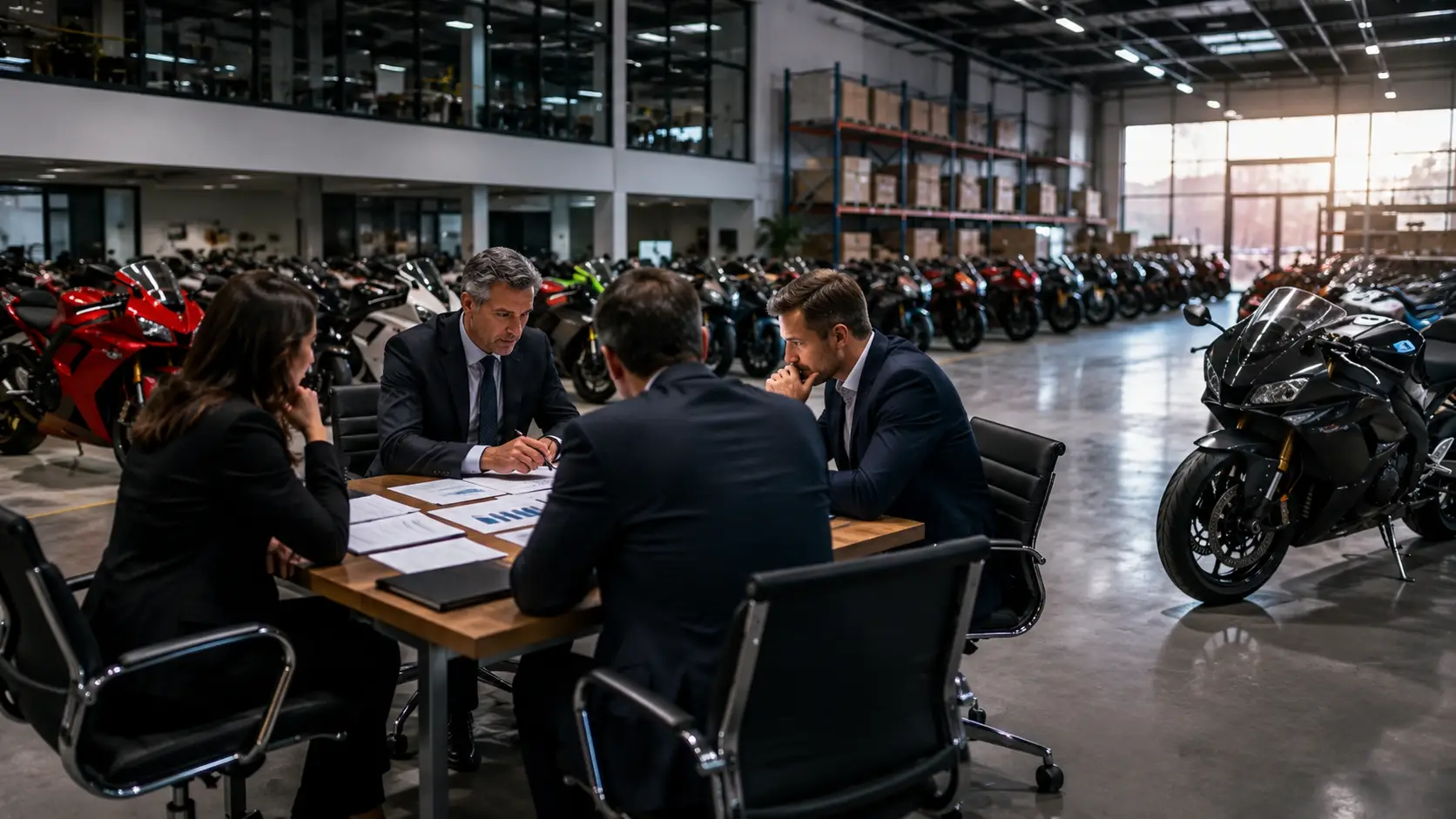
Michael Lennon, James Saunders and Robert Halliday of KR8 Advisory were appointed joint administrators of Superbike Factory Limited and Superbike Factory Group Limited on 20 July 2026. The companies stopped trading immediately following the appointments.
The administrators will now assess the companies’ finances, assets, customer obligations and creditor claims.
Possible outcomes include selling parts of the business, finding a buyer for the brand or stock, realising assets for creditors, or eventually placing the companies into liquidation.
Customers with deposits, undelivered motorcycles, bikes held at a showroom, warranty claims or outstanding payments should gather their documents and contact the administrators.
Customers who paid by credit card, debit card or motor finance may also have separate rights against their card provider or lender.
Superbike Factory Administration Summary:
| Key point | Confirmed position |
| Administration date | 20 July 2026 |
| Companies affected | Superbike Factory Limited and Superbike Factory Group Limited |
| Joint administrators | Michael Lennon, James Saunders and Robert Halliday |
| Administrator firm | KR8 Advisory |
| Immediate trading position | The companies ceased trading immediately |
| Original notice of intention | Reported as filed on 17 July 2026 |
| Latest filed accounting period | Year ended 31 December 2024 |
| Reported 2024 revenue | Approximately £82.25 million |
| Motorcycles reportedly sold in 2024 | 15,036 |
| Reported 2024 loss after tax | £18.28 million |
| Main next steps | Assess assets, contact creditors, consider sales and publish administrator proposals |
| Customer contact | Customers should use the dedicated administrator contact details provided in official correspondence |
The latest full accounts for Superbike Factory Limited were filed at Companies House on 17 September 2025 and covered the year ending 31 December 2024.
What Happened to Superbike Factory?
The first public indication of serious financial pressure was a notice of intention to appoint administrators, reportedly filed on 17 July 2026.
A notice of intention is not the same as entering administration. It provides temporary protection while directors, lenders and advisers consider rescue, refinancing or sale options.
That position changed on 20 July 2026 when joint administrators were formally appointed to Superbike Factory Limited and its parent, Superbike Factory Group Limited. The companies then ceased trading immediately.
Before its closure, Superbike Factory operated a large online used-bike business and showrooms in areas including:
- Macclesfield
- Donington Park
- Bradford
- Bristol
- Milton Keynes
- Crawley
The retailer also arranged motorcycle finance as a credit broker and operated related bike-purchasing channels.
Its website had advertised more than 3,000 motorcycles, a 90-day standard warranty and delivery or collection from its showrooms. Those offers should not now be treated as available unless the administrators or a future buyer expressly confirm otherwise.
Is Superbike Factory Definitely in Administration?

Yes. Earlier reports correctly described the company as intending to appoint administrators, but that information became outdated when the formal appointments were made on 20 July 2026.
Companies House was still displaying Superbike Factory Limited as an “active” private company when reviewed on 21 July 2026. That status should not be interpreted as confirmation that normal trading continues.
The public register can take time to display newly filed insolvency documents, while an administrator must separately notify Companies House and publish an appointment notice.
Why Did Superbike Factory Enter Administration?
The administrators’ detailed proposals are expected to provide a fuller explanation of the companies’ financial position. Until those documents are published, it would be unsafe to attribute the collapse to one single cause.
However, the most recent accounts show several warning signs.
Superbike Factory reportedly sold 15,036 motorcycles during 2024 and generated revenue of approximately £82.25 million.
Despite that substantial turnover, it recorded a loss after tax of £18.28 million and an operating loss of approximately £16.12 million. The previous year’s post-tax loss was considerably lower at £6.86 million.
Part of the 2024 loss was attributed to an impairment in the value of subsidiaries. The accounts also referred to uncertainty surrounding the availability of motor finance and changes affecting commissions received through finance agreements.
Other pressures identified in industry reporting include:
- weaker discretionary consumer spending;
- higher borrowing and operating costs;
- slower movement of used-motorcycle stock;
- the cost of operating several large retail sites;
- uncertainty in the motor-finance market; and
- the expense of rapid expansion and acquisitions.
These factors provide context, but they should not be presented as the administrators’ final conclusion unless confirmed in their formal report.
Who Owned Superbike Factory?
Enact, a private equity fund managed by Endless LLP, acquired Superbike Factory in December 2023. Endless described the transaction as a buyout and said the retailer had achieved turnover of approximately £83 million by the time of acquisition.
Companies House records also show outstanding security interests in favour of Endless LLP, National Westminster Bank and DF Capital Bank.
Secured creditors generally rank ahead of ordinary unsecured creditors when money is distributed from an insolvent company’s assets.
There is not currently sufficient verified evidence to claim that private equity ownership caused the administration. That assessment would require the administrators’ findings, financing documents and a detailed review of trading performance.
What Happens Next in the Superbike Factory Administration?
An administrator is a licensed insolvency practitioner who takes control of an insolvent company’s affairs, business and property.
Under the normal administration process, the administrators must assess whether they can:
- rescue the company as a going concern;
- achieve a better result for creditors than an immediate liquidation; or
- sell assets to make distributions to secured or preferential creditors.
The administrators generally have eight weeks to prepare proposals explaining how they intend to manage the case. Those proposals are sent to creditors, employees and Companies House.
Possible outcomes for Superbike Factory include:
A Sale of the Business or Brand
A buyer could acquire the Superbike Factory name, websites, intellectual property, customer database, stock, equipment or selected showroom operations.
Because the companies have ceased trading, a straightforward continuation of the existing operation may be more difficult. Nevertheless, individual assets or parts of the business could still attract buyers.
A buyer would not necessarily assume every historic deposit, warranty or customer claim. The terms of any sale would determine which liabilities, if any, transfer.
A Sale of Motorcycle Stock and Other Assets
The administrators may sell motorcycles, spare parts, workshop equipment, property interests and other assets. Stock could be sold to another retailer, through trade channels or by auction.
The proceeds would be applied in accordance with insolvency priorities and the administrators’ costs. Ordinary customers and suppliers are usually unsecured creditors unless they have separate ownership, insurance, card-payment or finance protections.
Liquidation After Administration
If no viable rescue or sale produces a better result, the companies could move from administration into creditors’ voluntary liquidation or be dissolved after the administration is completed.
Administration and liquidation are therefore related but legally different processes.
What Should Customers With Deposits or Undelivered Bikes Do?
A customer who has paid for a motorcycle but has not received it should not rely solely on previous showroom or sales-team assurances.
The customer should:
- preserve the order confirmation, invoice and terms;
- save bank, card or finance records;
- keep emails, text messages and delivery arrangements;
- note the motorcycle’s registration and vehicle identification number, where known;
- contact the joint administrators;
- contact the card provider or finance lender where applicable; and
- submit a creditor claim if instructed to do so.
The administrators will decide whether an order can be completed, whether the motorcycle belongs to the company and whether the customer has a claim against the insolvent estate.
Can a Customer Recover a Credit-Card Deposit?

A customer may be able to make a claim under Section 75 of the Consumer Credit Act when the cash price of the motorcycle or other purchase is more than £100 and no more than £30,000.
Section 75 can apply even when only the deposit was paid on a credit card, provided the wider transaction meets the legal requirements. The credit-card company can be jointly responsible where the retailer breaches its contract or misrepresents the purchase.
Customers who paid by debit card may ask their bank about chargeback. Chargeback is a card-scheme process rather than a statutory right, and time limits often apply.
What If the Bike Was Bought Through Finance?
Customers should not stop making finance payments without speaking to their lender.
The finance agreement is normally with a separate lender, not the motorcycle dealer. That agreement can remain in force even after the broker or retailer enters administration.
Where a bike has not been supplied, is misdescribed or has serious faults, the finance provider may have responsibilities under consumer-credit law.
Customers should contact the lender directly and make a formal complaint where appropriate.
The Financial Ombudsman Service can consider eligible complaints about faulty vehicles, misrepresentation and motor-finance agreements after the lender has had an opportunity to respond.
What Happens to Bikes Left for Servicing, Sale or Part Exchange?
Motorcycles physically held at a Superbike Factory site do not necessarily belong to the insolvent company.
A customer may still own a motorcycle if it was:
- left for servicing or repair;
- delivered for an inspection or valuation;
- placed with the business for sale;
- awaiting a part-exchange transaction that had not completed; or
- paid for and specifically allocated to that customer.
Ownership can depend on the contract, payment status and whether legal title had passed. A V5C registration document is useful evidence but is not, by itself, conclusive proof of legal ownership.
Affected owners should contact the administrators promptly and provide:
- proof of purchase;
- the V5C and registration number;
- the vehicle identification number;
- photographs;
- service or consignment agreements;
- payment records; and
- correspondence showing why the motorcycle was at the premises.
Customers should not attempt to enter a closed showroom or remove a motorcycle without the administrators’ authorisation.
Are Superbike Factory Warranties Still Valid?
The answer depends on who provided the warranty.
A warranty backed and administered solely by Superbike Factory may become an unsecured contractual claim against the company. Recovery could be limited if there is insufficient money available for unsecured creditors.
A separately insured or third-party warranty may continue if the independent provider remains solvent and the policy terms cover the claim.
Customers should check:
- the warranty certificate;
- the provider’s legal name;
- whether the cover is insurance-backed;
- the claims telephone number;
- exclusions and servicing requirements; and
- whether premiums were actually transferred to the provider.
The statutory rights that originally applied to the sale do not simply disappear, but enforcing those rights against an insolvent retailer can be difficult. A finance provider or credit-card issuer may provide an alternative route in qualifying cases.
What Does the Administration Mean for Employees?

Employees may be retained temporarily to help the administrators secure records, manage assets or support a sale. Others may be made redundant.
Employees whose employer is insolvent can potentially claim certain amounts from the National Insurance Fund, including:
- statutory redundancy pay;
- unpaid wages;
- accrued holiday pay;
- statutory notice pay; and
- certain unpaid commission or overtime.
For redundancies taking place from 6 April 2026, the weekly amount used for several insolvency payments is capped at £751. Statutory redundancy pay can normally cover up to 20 years of eligible employment.
Employees generally need a case-reference number from the insolvency practitioner before applying. A redundancy claim must normally be made within six months of dismissal.
What Should Suppliers and Other Creditors Do?
Suppliers, landlords, contractors and customers owed money should register their claims with the administrators when invited.
They should provide:
- unpaid invoices;
- contracts and purchase orders;
- statements of account;
- evidence of goods supplied;
- details of goods subject to retention-of-title clauses; and
- evidence supporting any ownership or security claim.
Submitting a claim does not guarantee full repayment. Returns depend on the value of the assets, administrator costs and the legal priority of secured, preferential and unsecured creditors.
A supplier claiming ownership of unsold goods under a retention-of-title clause should obtain professional advice before taking action.
Could Superbike Factory Reopen?
The existing companies have ceased trading, so customers should not assume that showrooms will reopen under the present ownership.
However, the brand or selected assets could be sold. A purchaser might later relaunch the website, acquire stock or reopen certain sites under a new company.
Such a transaction would not necessarily restore old warranties, deposits or supplier balances. Customers should check the identity and company number of any future operator rather than relying only on the familiar trading name.
Final Takeaway
The Superbike Factory administration moved quickly from a notice of intention on 17 July 2026 to the appointment of joint administrators and immediate cessation of trading on 20 July.
The administrators must now identify the companies’ assets, determine ownership of motorcycles held at their premises, review customer and employee claims and decide whether any part of the business can be sold.
Customers should preserve their documents, contact the administrators and approach their card provider or finance lender where applicable. Employees should wait for their insolvency case-reference information before submitting government payment claims.
The most important distinction is that administration does not guarantee either rescue or closure. A sale remains possible, but historic deposits, warranties and creditor claims will be handled according to their contracts and UK insolvency law.
Frequently Asked Questions
When did Superbike Factory enter administration?
Superbike Factory Limited and Superbike Factory Group Limited entered administration on 20 July 2026, when KR8 Advisory representatives were appointed as joint administrators.
Has Superbike Factory stopped trading?
Yes. The administrator announcement stated that the affected companies ceased trading immediately following the appointments.
Who are the Superbike Factory administrators?
The joint administrators are Michael Lennon, James Saunders and Robert Halliday of KR8 Advisory.
What should someone do after paying a Superbike Factory deposit?
They should retain all purchase and payment records, contact the administrators, notify any finance provider and ask their card issuer about Section 75 or chargeback where relevant.
Will customers still receive motorcycles they ordered?
This is not guaranteed. The administrators must establish whether the motorcycle is available, who owns it and whether completing the transaction would be legally and commercially appropriate.
Should motor-finance payments continue?
Customers should normally continue making payments unless the lender instructs otherwise. Any dispute over an undelivered or faulty motorcycle should be raised directly with the finance provider.
Can a customer collect a bike from a closed showroom?
Only with the administrators’ permission. Customers should provide proof of ownership and wait for an authorised collection process.
Will employees receive redundancy pay?
Eligible employees may claim statutory redundancy and certain unpaid amounts through the government’s Redundancy Payments Service, subject to service requirements and statutory limits.
Could another company buy Superbike Factory?
Yes. The brand, websites, motorcycles, property interests or selected operations could be sold. No completed sale had been confirmed when this article was reviewed.
Note: This article has been reviewed against Companies House, Insolvency Service, MoneyHelper and administrator-related guidance.