

Table of Contents
Sustainability has become an important part of commercial refurbishment. Businesses often discard materials during upgrades, even when they still have practical value. The challenge is recognising which materials still have value.
Modern organisations have been facing growing pressure to reduce waste, lower carbon emissions, and create sustainable workplaces. In such scenarios, repurposed lighting offers a different way forward. It transforms otherwise discarded materials into durable lighting solutions for commercial environments, and hence, waste can be reduced. This approach supports sustainability, delivering distinctive lighting designs that are suitable for modern commercial projects.
Why Commercial Refurbishments Should Look Beyond Disposal?
In refurbishments there are often lots of discarded materials. But in reality, this does not always mean the materials have reached the end of their useful life. Repurposed lighting gives these materials a new use. Air conditioning ducts, structural beams, handrails, copper pipes, and even vintage objects can become functional lighting fittings, instead of landfill waste. This solution allows valuable materials to continue serving commercial spaces in an entirely new manner.
Sustainability Delivers Lasting Performance
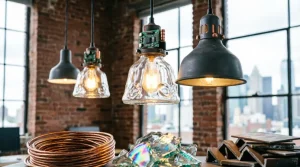
Before choosing repurposed lighting, many businesses question its reliability and quality in comparison with newly manufactured alternatives. For commercial projects, reliability remains just as important as sustainability. Repurposed lighting addresses both priorities. With this, every fitting follows a structured process that includes collection, cleaning, inspection, disassembly, reprocessing, assembly, and rigorous testing.
Throughout the process, high-quality accredited lighting components are integrated. DRK Lighting’s ‘Coffee Beam’ downlight is a practical example. This product is produced through 3D printing, using discarded coffee bean husks. It demonstrates the capability of repurposed lighting in reforming waste materials into high-performance commercial lighting instead of discarding them completely.
Every Repurposed Fixture Tells a Different Story
Many commercial interiors aim to create memorable spaces without relying on generic products. Standard lighting often achieves functionality, but it rarely adds character. This is where repurposed lighting creates additional value.
Reclaimed materials naturally introduce distinctive finishes, textures, and visual details that cannot be replicated through mass production. Project-specific options, including bespoke glass, custom finishes, and lighting upgrades, also help create solutions tailored to individual commercial environments.
Creating Commercial Spaces That Stand Apart
Many commercial interiors aim to create memorable spaces without relying on generic products. Reducing waste is only one part of the story. Long-term sustainability also depends on extending the useful life of existing materials.
This is where repurposed lighting creates additional value. The process reduces demand for newly manufactured products and helps lower the environmental impact associated with production and disposal. It also contributes to a smaller ecological footprint through longer product lifecycles and more efficient usage of existing resources. The process allows you to create a commercial interior with a distinctive identity.
Circular Thinking Creates Better Commercial Outcomes
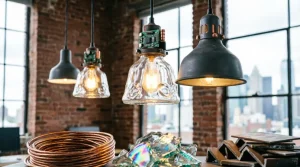
Sustainable commercial lighting depends on making better use of existing resources. Repurposing is only one part of a broader sustainability approach. Upcycling, remanufacturing, and LED conversions also help extend product life and help reduce unnecessary waste.
Instead of discarding usable materials, continue serving commercial spaces differently. As sustainability becomes a bigger priority, you can support this shift by making better use of existing materials through repurposing.
A Change In Approach With Repurposed Lighting
Repurposed lighting is changing the approach of commercial projects towards sustainability. It goes beyond simply diverting waste from landfill. With repurposed lighting, existing materials can be transformed into durable, energy-efficient, and visually distinctive lighting solutions.
Through structured engineering, rigorous quality testing, innovative technologies such as 3D printing, and tailored commercial designs, repurposing demonstrates that sustainability and performance can work together. As more organisations have been looking beyond traditional replacement, turning commercial waste into long-term lighting solutions is becoming a practical strategy. This helps create more sustainable commercial interiors that combine sustainability, functionality, and distinctive design.