

Table of Contents
The Daniel Kretinsky Royal Mail payout has attracted significant attention in 2026 following a £114 million payment made by Royal Mail’s parent company, International Distribution Services (IDS), after Kretinsky’s £3.6 billion takeover.
IDS states the payment was used to service acquisition debt, but critics have raised concerns given Royal Mail’s ongoing delivery performance challenges and regulatory scrutiny.
Key Highlights:
- £114 million was paid following the takeover.
- IDS says the payment covered acquisition debt interest.
- Royal Mail remains under pressure over delivery performance.
- Ofcom investigations and service reforms are ongoing.
- The debate raises questions about ownership and accountability.
What Is the Daniel Kretinsky Royal Mail Payout Controversy About?

The controversy centres on a £114 million payment made after Czech billionaire Daniel Kretinsky completed the takeover of IDS, Royal Mail’s parent company.
Critics question the payout because Royal Mail is facing delivery performance issues and ongoing regulatory scrutiny.
Although the company says the payment was not a traditional dividend, its timing has drawn attention from politicians, customers and industry observers.
The debate focuses on whether financial priorities are aligned with maintaining service standards, transparency and accountability at one of the UK’s most important public service providers
“Maintaining public trust requires transparency around major financial decisions, particularly when service performance remains under regulatory review,” said an Ofcom spokesperson in response to ongoing concerns surrounding postal performance.
The debate therefore extends beyond the payment itself and into broader questions about governance, accountability and investment priorities.
Why Was £114m Paid Out by Royal Mail’s Parent Company?
According to IDS, the £114 million payment was made to a UK-based parent entity and ultimately used to service interest obligations connected to the debt that financed Daniel Kretinsky’s £3.6 billion takeover.
Was the £114m Payment a Dividend or Debt Interest?

One of the biggest sources of confusion is the distinction between a dividend and debt servicing.
Payment comparison:
| Type of Payment | Purpose | Direct Benefit to Owner? |
| Dividend | Distribution of profits to shareholders | Yes |
| Intra-group Payment | Transfer within corporate structure | Not necessarily |
| Acquisition Debt Interest | Covers borrowing costs used to finance a takeover | Indirectly supports ownership structure |
IDS has stated that while a dividend was paid within the ownership chain, the funds were used to meet interest payments on acquisition debt rather than being distributed directly to Daniel Kretinsky or EP Group.
This distinction is important because acquisition debt is a common feature of leveraged buyouts and corporate takeovers.
How the £3.6bn Takeover Financing Fits In?
When EP Group acquired IDS, the transaction involved substantial borrowing. As with many large acquisitions, financing costs continue after the deal closes.
Timeline of key events:
| Event | Timeline |
| EP Group increases stake in IDS | Prior to takeover |
| £3.6bn takeover announced | 2024 |
| Acquisition completed | 2025 |
| IDS delisted from stock market | 2025 |
| £114m payment disclosed | 2026 |
| USO reforms begin implementation | 2026 |
Understanding this timeline helps explain why the payment emerged after the acquisition rather than before it.
However, critics argue that regardless of technical classifications, substantial sums leaving the business attract attention when service quality remains a concern.
Who Is Daniel Kretinsky and How Did He Gain Control of Royal Mail?

Daniel Kretinsky is a Czech billionaire investor whose business interests span energy, retail, media, logistics and infrastructure.
Before acquiring Royal Mail’s parent company, he was already one of IDS’s largest shareholders.
His investment thesis appears to focus on Royal Mail’s long-term strategic value. While traditional letter volumes continue to decline, parcel delivery remains a significant growth opportunity driven by e-commerce and changing consumer habits.
Royal Mail also possesses several assets that remain difficult for competitors to replicate, including:
- Nationwide delivery coverage.
- Established customer trust and brand recognition.
- Extensive logistics infrastructure.
- Growing parcel locker and collection network.
- Regulatory protections under the USO framework.
These factors help explain why Kretinsky viewed Royal Mail as an attractive long-term investment despite its operational challenges.
Why Has the £114m Royal Mail Payout Attracted Political and Public Scrutiny?
The payment has become controversial because it comes during a period when Royal Mail continues to face criticism over delayed deliveries, rising stamp prices and regulatory investigations.
Letter Delays and Missed Delivery Targets
Royal Mail delivered only 75.7% of first-class mail on time during the latest reporting period, significantly below Ofcom’s target of 93%.
For many customers, the debate is not about accounting terminology. Instead, it is about whether resources should prioritise service improvements before supporting takeover-related financing costs.
Ofcom Fines, Investigations and Service Pressure
Royal Mail was fined £21 million by Ofcom for missing delivery targets and now faces further regulatory scrutiny following another year of underperformance.
Regulatory concerns include:
- Missed first-class delivery targets.
- Missed second-class delivery targets.
- Ongoing quality-of-service investigations.
- Compliance with Universal Service obligations.
- Customer complaints and reliability concerns.
These issues have increased public attention on any major financial movements involving the company.
Rising Stamp Prices and Customer Frustration
The cost of a first-class stamp has risen significantly in recent years, reaching £1.80 in 2026. For consumers and small businesses, rising prices combined with delivery delays create a perception gap between customer experience and corporate financial decisions.
“Customers ultimately judge postal operators on reliability and value rather than ownership structures or financing arrangements,” noted a senior postal industry analyst commenting on the ongoing debate.
The scrutiny surrounding the £114m payment reflects that broader public sentiment.
How Do IDS Profits, Executive Pay and Royal Mail Performance Connect?

Financial results released by IDS reveal a mixed picture. While revenues increased to approximately £13.6 billion, pre-tax profits declined significantly due to one-off costs, including takeover-related expenses and regulatory provisions.
Financial performance snapshot:
| Metric | Latest Result |
| Group Revenue | £13.6bn |
| Pre-Tax Profit | £141m |
| Royal Mail Revenue | £8.4bn |
| Parcel Volumes | 1.4bn |
| Addressed Letters | 5.7bn |
| CEO Pay Package | £6.9m |
The sharp increase in CEO Martin Seidenberg’s remuneration also attracted attention. His pay package rose to £6.9 million following accelerated share awards triggered by the takeover.
Although much of the increase stemmed from one-off takeover arrangements, critics argue that executive compensation remains a sensitive issue when operational performance continues to face criticism.
The debate illustrates how financial results, executive rewards and service quality are increasingly interconnected in the public eye.
What Do Universal Service Obligation Changes Mean for UK Customers?
Alongside the payout controversy, Royal Mail is implementing significant changes to its Universal Service framework.
The reforms are designed to address declining letter volumes while improving long-term operational efficiency.
Second-Class Saturday Deliveries Being Scrapped
One of the most noticeable changes involves second-class letter deliveries. Under approved reforms, Saturday deliveries for second-class post will end, while weekday delivery frequencies will also be adjusted.
For many households, this change may have limited impact because digital communication has reduced dependence on traditional letters.
However, some rural communities, older residents and small businesses may notice slower delivery schedules for non-priority correspondence.
What First-Class Post and Parcel Customers Should Expect?
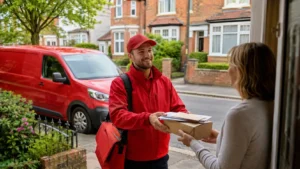
Importantly, several aspects of the service remain unchanged.
Protected services include:
- Nationwide postal coverage.
- First-class letter services.
- Parcel collection and delivery operations.
- Regulatory oversight by Ofcom.
- Customer complaints procedures.
Royal Mail argues these reforms will create a more sustainable operating model while helping the company focus resources on improving reliability.
“Modernising the Universal Service is essential to balancing customer expectations with the realities of declining letter volumes,”
said IDS chief executive Martin Seidenberg when outlining the reform programme.
The success of these changes will ultimately depend on whether customers see measurable improvements in service quality.
What Happens Next for Royal Mail Under Daniel Kretinsky’s Ownership?
The future of Royal Mail will likely be judged by outcomes rather than ownership structures.
Daniel Kretinsky has committed to investing £500 million over five years to improve operations, expand parcel capabilities and strengthen service performance.
At the same time, management hopes that USO reforms and operational changes will help reverse years of missed delivery targets.
For customers, employees and businesses, the key question is straightforward: will service reliability improve?
The £114 million payment has intensified scrutiny of Royal Mail’s finances, but long-term success will depend on whether investment commitments translate into better customer experiences, stronger regulatory compliance and sustainable profitability.
As Ofcom investigations continue and reforms take effect across the network, 2026 may prove to be a defining year for Royal Mail’s future under its new ownership.
Conclusion
The Daniel Kretinsky Royal Mail payout highlights the complex relationship between takeover financing, corporate governance and public service responsibilities.
While IDS maintains the £114 million payment was used to service acquisition debt rather than reward shareholders directly, questions remain due to ongoing delivery failures and regulatory scrutiny.
Ultimately, Royal Mail’s success under its new ownership will be judged by whether promised investments lead to meaningful improvements in service quality and customer trust.
Frequently Asked Questions
Is the £114m payment the same as a dividend paid directly to Daniel Kretinsky?
No. IDS states the payment was used within the ownership structure to service acquisition debt interest rather than being paid directly to Daniel Kretinsky.
Why has the payment generated controversy?
The payment coincides with ongoing concerns about delivery delays, rising stamp prices and regulatory investigations.
How much did Daniel Kretinsky pay to acquire Royal Mail?
His EP Group completed a takeover of IDS valued at approximately £3.6 billion.
What is acquisition debt?
Acquisition debt refers to borrowing used to finance a corporate takeover or purchase.
Has Royal Mail been fined by Ofcom?
Yes. Royal Mail received a £21 million fine after failing to meet required delivery targets.
Are second-class Saturday deliveries ending?
Yes. Approved USO reforms will remove Saturday second-class letter deliveries across the UK.
Will Royal Mail continue operating nationwide?
Yes. Royal Mail remains subject to nationwide service obligations and ongoing regulatory oversight.